Sa Talaia is the highest point on Ibiza, about 475 metres above the south-west coast. The walk up goes through pine forest, and the view takes in the whole island.
Cool morningsbest time
Sant Antoninearest area to stay
8.0 kmfrom IBZ, straight line
Sa Talaia is the mountain that gives the south-west of Ibiza its shape and its name. At about 475 metres it is the highest point on the island, reached by forest tracks and a quiet upper road rather than by any technical climb. This guide covers the way up, the best hours, the rules of the natural park and what to carry.
01
What Sa Talaia is
Sa Talaia is the highest point on Ibiza, about 475 metres above sea level, in the municipality of Sant Josep de sa Talaia. It is not a rocky peak but a broad, pine-covered hill, and the road and tracks up it pass through shaded forest for most of the way. The summit carries the masts that mark the mountain from the sea, and from the open ground on top the whole island is laid out below, coast, salt pans and all.
The mountain gives its name to the municipality and to the natural park that surrounds it, the Sa Talaia, Cap Llentrisca and Cala d'Hort park, which protects the south-west corner of the island, its cliffs, coves and the seabed offshore. The climb is a walk rather than a scramble: no ropes, no exposure, no specialist kit and no technical ground anywhere. What it asks for is time, water and a morning that starts early enough, because the best hours are gone by midday in summer.
From the top, the whole island is laid out below: the coast, the salt pans and the sea to Formentera.
02
How to get there
The usual approach is by road from the Sant Josep side, where a minor road climbs the flank of the mountain towards the top. Signposting is small and easy to miss in the pines, so check a current map rather than trusting memory or a phone screen. Parking is informal, on verges and in small clearings, and there is no proper car park; in summer the first cars arrive early and the last spaces go quickly. The surface is rough in places, so drive slowly, because walkers and cyclists use the same narrow road.
Without a car, the walk can start from Sant Josep de sa Talaia, which has buses from Eivissa and Sant Antoni during the day. Check the island bus operator for current times, because services thin out in winter and some seasonal lines stop altogether. From the village the climb is longer and follows lanes and tracks before the forest proper begins. Sant Antoni de Portmany is the nearest place to stay, and the drive from there is short.
Pine-covered hills seen from Sa Talaia, Ibiza's highest point03
The walk up
The walk up is mostly on forest tracks and the quiet upper road, under Aleppo pine for long stretches. The gradient is steady rather than brutal, and the shade keeps it comfortable for much of the year. Because the road bends and the trees block the view, the climb feels longer than it looks from the coast: allow more time than the distance suggests, stop often, and let the height arrive as a surprise rather than a target.
Near the top the pines thin and the ground opens out, with the coast of Sant Josep on one side and the plain towards Eivissa on the other. The last stretch passes the installations that serve the mountain and reaches the broad summit area. Some fenced ground may be closed to the public; respect any gate or sign without argument, and take the view from the open ground beside it. The descent follows the same way down, and it takes less effort but nearly as long.
Forest shadeAleppo pines cover most of the climb, which keeps the walking cool even in early summer.
The upper roadThe final approach follows the quiet road, where traffic is light and slow.
Summit groundThe top is open and stony, with room to sit clear of the installations.
The descentCome down the way you came; the tracks are easy to lose in fading light.
04
The best time to go
Sa Talaia faces south-west, so the afternoon sun is full on the upper slopes and the forest holds the heat. Cool mornings are the answer: start early, climb in shade and come down before the middle of the day in summer. In July and August the heat is at its strongest and there is little breeze until the summit. Carry more water than a beach day would need, and turn back if the heat is winning.
Out of season the walk changes character. From late autumn to spring the air is clearer, the pines give shade where it is wanted and the summit is often washed clean by recent rain, with Formentera and the sea between the islands standing out sharply. Winter mornings can be cold and windy up there, and the light goes early, so plan the descent with daylight to spare. Many coastal businesses close from November to April, so bring what you need.
05
Rules and doing it lightly
Sa Talaia sits inside a protected natural park, and the rules are the ordinary ones that keep such places intact. Stay on the tracks and the road, do not cut across the forest or move stones to build cairns, and take nothing away: not a pine cone, not a plant, not a stone from the old walls. Fires and stoves are out of the question at any time of year. Smoking in the pines is the single most careless thing you can do here.
Water is the other discipline. Ibiza is a dry island, the mountain has no taps, no springs and no kiosks, and everything you drink has to be carried up and the empty bottles carried down. Take a bag for your own litter and, if you are that sort of person, a little more than your own. The pine forest is flammable, thin-soiled and slow to recover, and the dry-stone walls that cross it have stood for centuries. Carry a refillable bottle and fill it before you leave the coast.
Stay on trackCutting through the pines causes erosion that takes years to heal on these thin soils.
No firesBarbecues, stoves and cigarettes are banned in the forest, and the risk peaks in summer.
Take it downEverything carried up comes back down, including fruit peel, bottle tops and tissues.
Leave the lizardsThe Pitiusan wall lizard is endemic to these islands; watch it, do not catch or feed it.
Park with carePull fully off the road and never block a gate, a track or a turning place.
The bell wall of the church of Sant Josep de sa Talaia, the village below the summit, Ibiza
Protect itThis is a protected mountain, not a viewpoint with facilities. Stay on the track, carry your litter down and leave the pines, stones and walls as you find them.
06
What to bring
The list is short and the mountain punishes anyone who skips it. Water first, more than a beach day would need, because the climb is steady and the shade is warm rather than cool. Then footwear with grip, since the upper road is rough and the summit ground is loose. A hat, sun cream and a light layer for the wind on the ridge cover the rest. A charged phone and a paper map are worth carrying. Sunglasses and a buff are small things that make a difference on a bright ridge.
Food is worth thinking about, because there is nothing to buy on the mountain and, out of season, little open on the coast either. A proper breakfast before you start and something in a pocket for the top is enough. If you walk late, take a torch or use the phone light, and tell someone where you are going and when you expect to be back. Walking poles help on the descent, when tired legs and loose stones meet.
WaterCarry more than you expect to drink; there is no refill anywhere on the route.
FootwearTrainers with grip are enough, but the loose summit ground rewards proper soles.
Sun and windA hat, sun cream and a thin windproof layer cover most conditions on the ridge.
FoodA snack for the top, and a meal planned for afterwards in Sant Josep or Sant Antoni.
07
What is nearby
The south-west corner of Ibiza is dense with reasons to slow down. Cala d'Hort is the cove below the mountain, with the view across to Es Vedrà, the limestone islet that rises about 380 metres out of the sea and cannot be landed on. The coast road continues to the cliffs and viewpoints of Cap Llentrisca, and the beaches of Cala Comte and Cala Bassa lie further north. Ses Salines and its salt pans are a drive east, on the other side of Eivissa.
Sant Josep de sa Talaia is the nearest village for a coffee or a meal, a small town with a church and a square that stays awake for most of the year. Sant Antoni de Portmany, on the bay to the north, is the nearest area to stay and the obvious place for a sunset on this coast. Eivissa and Dalt Vila are a straightforward drive east on the main road. The airport is closer still, on the same side of the island.
08
Practical notes
Access to the upper mountain can change. Fire risk, maintenance work and the installations at the top sometimes close a gate or a stretch of road, and the hours of any barrier are not fixed from season to season. Before setting out, check with the Consell d'Eivissa or the natural park office, and read any sign at the entrance rather than driving past it. There are no facilities, no toilets and no shade on the summit itself. Note the natural park office contact before you lose signal.
Mobile coverage is patchy on the upper slopes, so do not rely on a phone for navigation. The emergency number is 112. The nearest medical help and the nearest fuel are down in Sant Josep or Sant Antoni. If you are visiting between November and April, check that anywhere you plan to eat afterwards is open, because many coastal places shut for the winter. Sunset from the summit needs a known descent.
Check before you goGates, fire closures and road conditions change through the year. Check with the Consell d'Eivissa or the natural park office before driving up, and believe the signs when you arrive.
Where to wake up
Stays near Sa Talaia
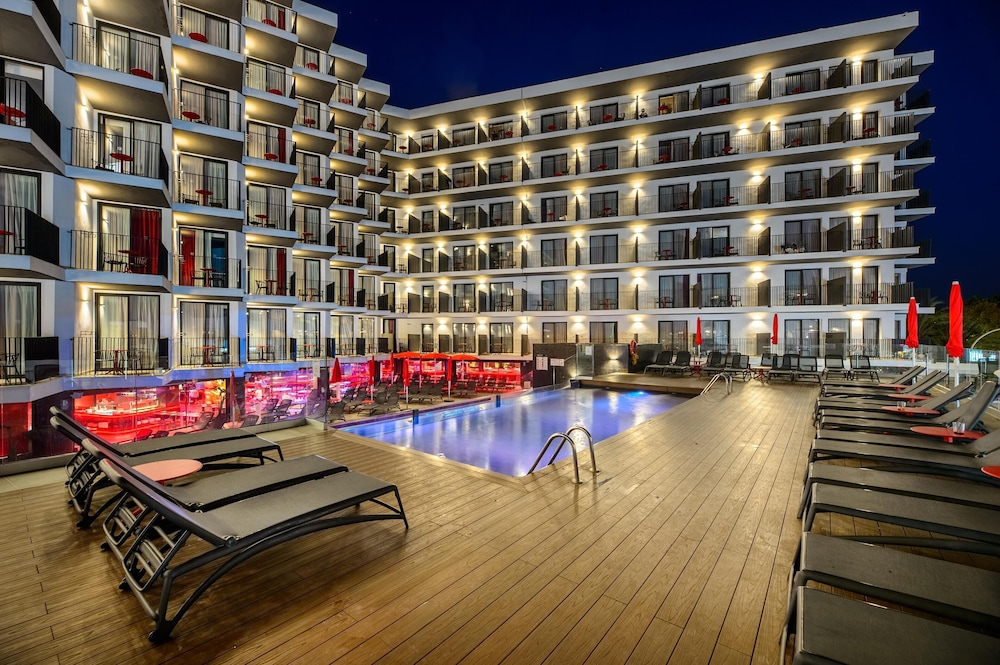
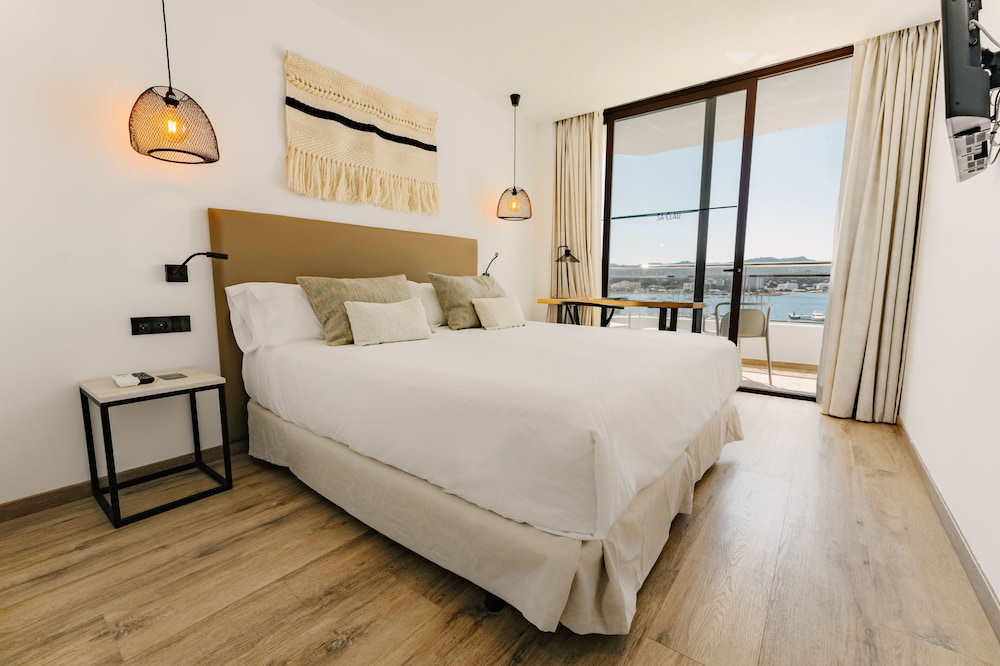
Stays near Sa Talaia: the first 6 of 134 stays in the IMPT hotel database in or close to Sant Antoni de Portmany, the nearest area to Climb Sa Talaia, five-star first, then four-star, then by guest score. Each button opens live prices for your dates in the IMPT app.
Sa Talaia is the highest point on Ibiza, about 475 metres above sea level, in the municipality of Sant Josep de sa Talaia. The summit is broad rather than pointed, and the way up is a walk on forest tracks and a quiet road, not a climb. No special equipment or previous experience is needed, only water, grip and time.
How long does the walk up Sa Talaia take?
It depends where you start. From the upper road the climb is short; from Sant Josep de sa Talaia it is a longer walk on lanes and forest tracks. Rather than fixing a time, plan around daylight and heat: start early, keep the descent inside the cooler hours, and leave margin for stops.
Do you need a car for Sa Talaia?
Not strictly. Buses run to Sant Josep de sa Talaia from Eivissa and Sant Antoni, and the walk can start there, though it adds distance and road walking to the day. With a car the approach is shorter, but parking near the top is informal and fills early in summer. Check the island bus operator for current times.
When is the best time of year to walk Sa Talaia?
Spring and autumn are the kindest, with clearer air and gentler temperatures. Summer works if you start early and carry more water than feels necessary, since the south-west slopes hold the afternoon heat. Winter mornings can be cold and windy on the ridge, and the light goes early, so plan the descent with daylight in hand.
Is Sa Talaia suitable for children?
Older children usually manage it, because the gradient is steady rather than steep. The summit ground is loose and stony and some areas may be fenced, so keep them close at the top. Take water for everyone, start early, and be ready to turn back without regret if the heat or the mood changes.
Can you drive to the top of Sa Talaia?
A minor road climbs high on the mountain, but access to the upper stretch and the summit area can be closed for fire risk, maintenance or work on the installations there. Barriers and hours are not fixed. Check with the Consell d'Eivissa or the natural park office, and read the signs at the entrance before driving up.
What can you see from the top of Sa Talaia?
On a clear day the whole island is below you: the coast of Sant Josep, the salt pans, the plain towards Eivissa and the sea stretching to Formentera. Es Vedrà and its islets sit off the south-west coast. Cloud, haze and summer heat can flatten the view, so early morning and the months after rain give the sharpest light.
Are there facilities or water on Sa Talaia?
There are none. Sa Talaia has no taps, springs, cafés or toilets, and nothing to buy on the way up or at the top. Carry all the water you need and take every bottle and wrapper back down with you. Food, drink and shelter wait in Sant Josep de sa Talaia or Sant Antoni de Portmany, where most places stay open year-round.
Is Sa Talaia a protected area?
Yes. Sa Talaia lies within the Sa Talaia, Cap Llentrisca and Cala d'Hort natural park, which protects the south-west corner of Ibiza. That means staying on tracks, leaving plants, stones and wildlife alone, and lighting no fires at any time of year. The Pitiusan wall lizard, found only on these islands, lives on the mountain.