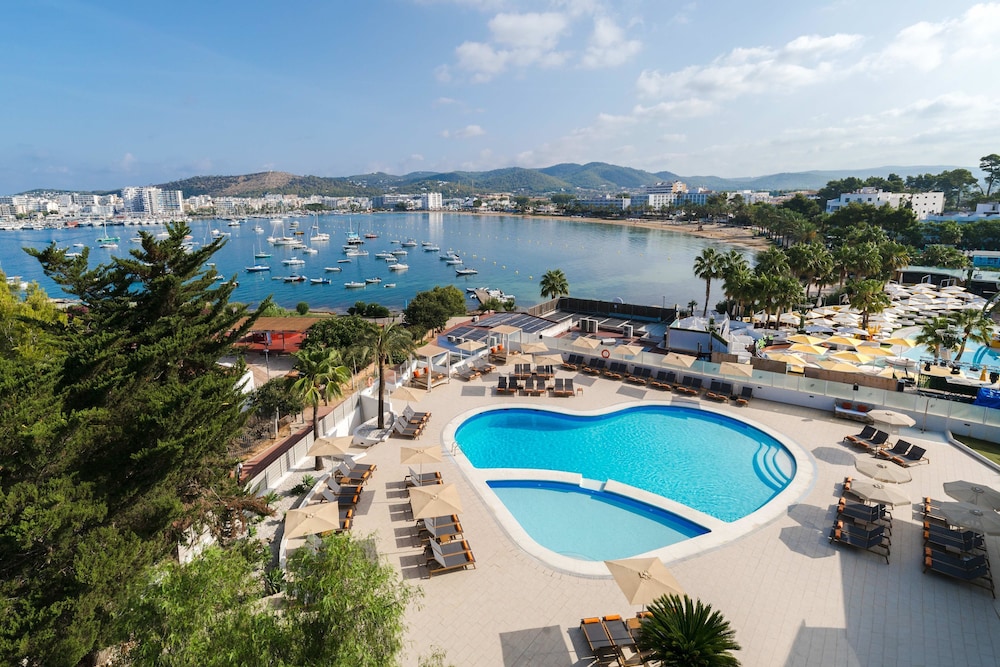
A west-facing bay with a town behind it, a sunset shore in front, and some of the island's best coves a short drive away. Sant Antoni works as a base for the whole west coast.
13.4 kmfrom IBZ, straight line
134stays in the IMPT hotel database
Westcoast
Sant Antoni de Portmany is one of the main towns of Ibiza and the natural base on the west coast. It sits on a bay that opens due west, which is why the sunsets draw crowds to the north shore and why the water stays calm. Buses, boats and roads meet here, so the coves and villages of the west are easy to reach.
01
A bay that faces west
The bay of Sant Antoni de Portmany opens due west, with the town at the head of it and low ground closing the southern side. Nothing blocks the horizon, so the sun goes down over open water for much of the year and the light stays on the water after it has gone. That is the geography that shaped the rest: a promenade along the shore, working boats in the harbour, and an evening trade that runs from late spring to early autumn.
The north shore is where the sunset is watched. A line of terraces and bars faces the water there, and on summer evenings the road behind them fills early. It is busy and often loud, and it is not the whole of Sant Antoni. A street or two inland the town becomes ordinary again, with a church square, bakeries and shops that stay open through the winter. The harbour sits between the two, and ferries to the mainland leave from it in season.
02
The town behind the strip
Behind the waterfront, Sant Antoni is one of the main towns of Ibiza: a parish church on the rise above the port, a grid of streets that predates the tourist years, and a resident population that stays through the year. The fishing harbour still works. In the morning, before the coaches move, the cafés fill with people who live here rather than people on holiday. The pace at eight in the morning is entirely different from the pace at nine at night.
The town is compact enough to cross on foot. The church square sits above the port, and from it the streets run down to the water in a rough grid. Most of what a visitor needs, from buses to pharmacies to the post office, is within a few minutes of the bay. That practicality is easy to miss when the waterfront is crowded, and it is the reason the town keeps working after the season ends.
Yachts on a calm sea in Sant Antoni harbour, Ibiza
In the morning the bay belongs to the town; by evening it belongs to the sunset.
03
Beaches in and around the bay
The town has a beach of its own at the head of the bay, and the coast either side adds more. To the north, Cala Gració and the smaller Cala Gracioneta sit in pine above clear water, both reached on foot or by a short bus ride. South of the bay, Port des Torrent is shallow and calm, which makes it the easiest choice with young children. All three are small, and all three fill quickly in August.
The better-known coves lie a little further out. Cala Salada and Cala Bassa are a short drive south, Cala Conta and Cala d'Hort further again, the last with the shape of Es Vedrà on the horizon. Parking at the smaller coves is limited and is controlled in high summer, so an early start or a bus is the sensible approach. Access rules change; check with the Consell d'Eivissa before setting out by car.
Cala GracióThe nearest proper cove to the town, with pines, a sandy floor and a path along the rocks.
Port des TorrentShallow water and a long curve of sand, good for families and easy to reach by bus.
Cala SaladaA small cove of clear water and a steep path down; parking fills early in summer.
Platges de ComteWest-facing platforms and sand where the sunset is the main event; check access in high season.
Cala d'HortSand and pebbles with a direct view of Es Vedrà; the road in is narrow and busy at sunset.
04
Inland, Sa Talaia and the villages
Inland from Sant Antoni the island turns dry and quiet. Sa Talaia, at about 475 m the highest point on Ibiza, rises to the south and is climbed by road and on foot; on a clear day the whole west coast and the sea between the islands are below. Around it lie terraces of almond and olive, dry stone walls and the small villages of Sant Mateu and Santa Agnès, where blossom comes in late winter.
Further south, the coast road ends in footpaths above Es Vedrà. The islet is a nature reserve, with Es Vedranell and the western islets, and landing is not allowed. The Torre des Savinar and the cliffs near it give the classic view, and the walk in from the road takes longer than people expect. Take water; there is none on the path. Es Vedrà rises about 380 m straight out of the water, and the light on it changes through the afternoon.
05
Evenings and food in town
Eating here follows the Spanish clock more than the tourist one. Lunch is the main meal for many residents, and dinner starts late; kitchens in the town usually run well into the night in summer. The cooking is coastal and plain: fish landed at the port, rice dishes, grilled vegetables, almond cakes. Places on the waterfront charge for the view; a street back, the same food is often simpler and cheaper.
The sunset is the fixed point of the evening. On the north shore people gather on the rocks and the terraces about an hour before it goes, and the atmosphere is closer to a public event than a quiet drink. If that is not what you want, watch from the south side of the bay, from the rocks below Sa Talaia, or from one of the west-facing coves, and eat afterwards in town.
Fish and riceLook for the day's catch and rice cooked to order; both are the backbone of west coast cooking.
Late dinnerKitchens in the town run late in summer, so eating at ten is normal rather than late.
The back streetsA street or two from the water, the cooking is simpler and the pace calmer.
Winter hoursOutside the season many kitchens close or shorten their week; check before walking out.
Turquoise water and cliffs near Sant Antoni de Portmany, Ibiza06
Who Sant Antoni de Portmany suits
Sant Antoni suits people who want a base with buses, boats and shops on the doorstep, and who do not mind company in the evening. It works well without a car: the airport bus stops here, the coves are reachable by bus or on foot, and the coastal paths start from the town. Families use the shallow beach at the head of the bay and Port des Torrent to the south.
It suits less well anyone looking for a quiet village in August, or a place where the evening is about eating rather than watching the sun go down. For that, look north to Sant Joan de Labritja and Portinatx, or inland to Santa Agnès. The town is at its best in May, June, September and October, when the waterfront is busy but the streets behind it are still quiet. Outside those months it is either crowded or half closed.
Without a carBuses, boats and paths cover the coast, so a hire car is not essential for a short stay.
FamiliesShallow water at the head of the bay and at Port des Torrent, with everything within walking distance.
Sunset and nightlifeThe north shore is the island's centre for both; light sleepers should choose the south side.
Quiet seekersLook at Santa Agnès, Sant Mateu or the north of the island instead, especially in August.
07
Getting there and getting around
Ibiza Airport is about 13.4 km from Sant Antoni de Portmany in a straight line, in the south-east; by road the distance is a little longer. Buses run between the airport and the town, with more frequency in summer, and taxis wait outside the terminal. Driving takes a straightforward route north and west, and the town is well signed from the main road. Journey times depend on traffic, which is heaviest in July and August.
Once here, the town is small enough to walk. Local buses link the town with the beaches and coves along the coast, and the seasonal network is wider than the winter one. Sant Antoni also has ferry routes to the mainland in season, which makes it possible to arrive or leave without passing through Ibiza Town. Timetables are seasonal and change; check with the operator before planning a day around one.
Check before you goBus and ferry timetables thin out sharply outside summer, and some coastal services stop altogether. Confirm times with the island bus operator and the ferry companies before you commit.
08
When to go, and going lightly
May, June, September and October are the easiest months: warm water, open businesses and room to move. The sea is typically about 18-19 °C in May, 22-23 °C in June, 25-26 °C in August and 23-25 °C in September, and about 14-15 °C in February and March. August is the busiest month, when the bay, the car parks and the sunset shore are all full at once.
Much of the tourist economy closes roughly from November to April. Many hotels, beach bars, boat trips, seasonal buses and a good number of restaurants shut, and flights and ferries are fewer. The town itself stays open: the church, the port, the shops and a core of places to eat carry on for the people who live here. Do not count on finding a particular place open in winter.
The bay sits beside posidonia meadows, the seagrass that keeps the water clear and the sand in place. Anchoring over the meadows is regulated by a Balearic decree, and mooring buoys are installed in some bays in summer. Swim and anchor with care, use the buoys where they exist, take rubbish back to the town, and check the current rules with the Consell d'Eivissa or the natural park office.
Protect itPosidonia meadows grow from the shallows to about 30-40 m and are protected by Balearic decree. Anchor over sand, use the summer buoys, and ask the Consell d'Eivissa about current rules.
Where to wake up
Stays in Sant Antoni
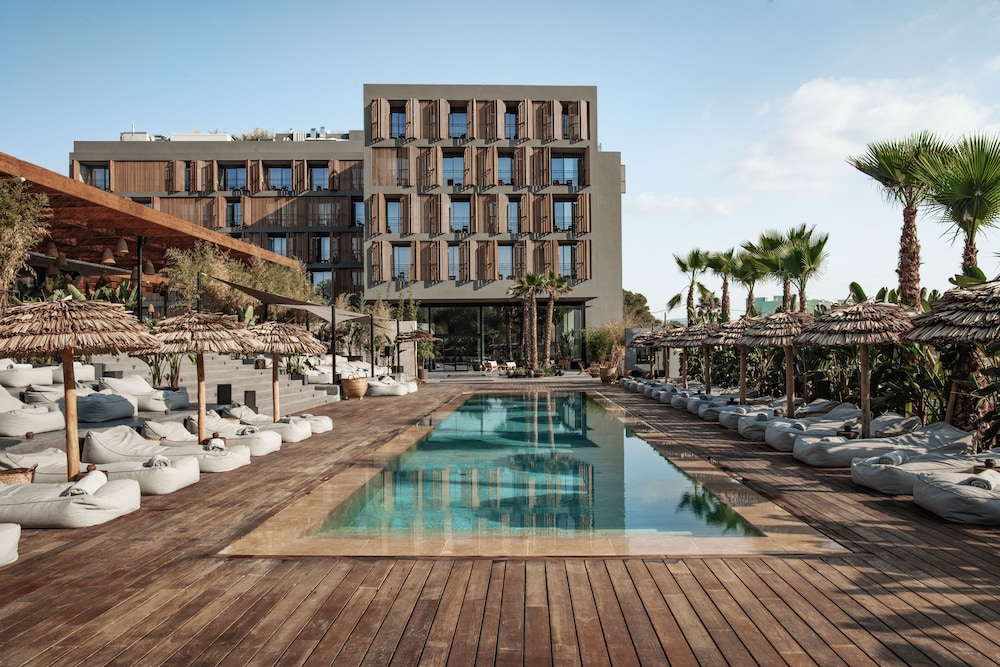
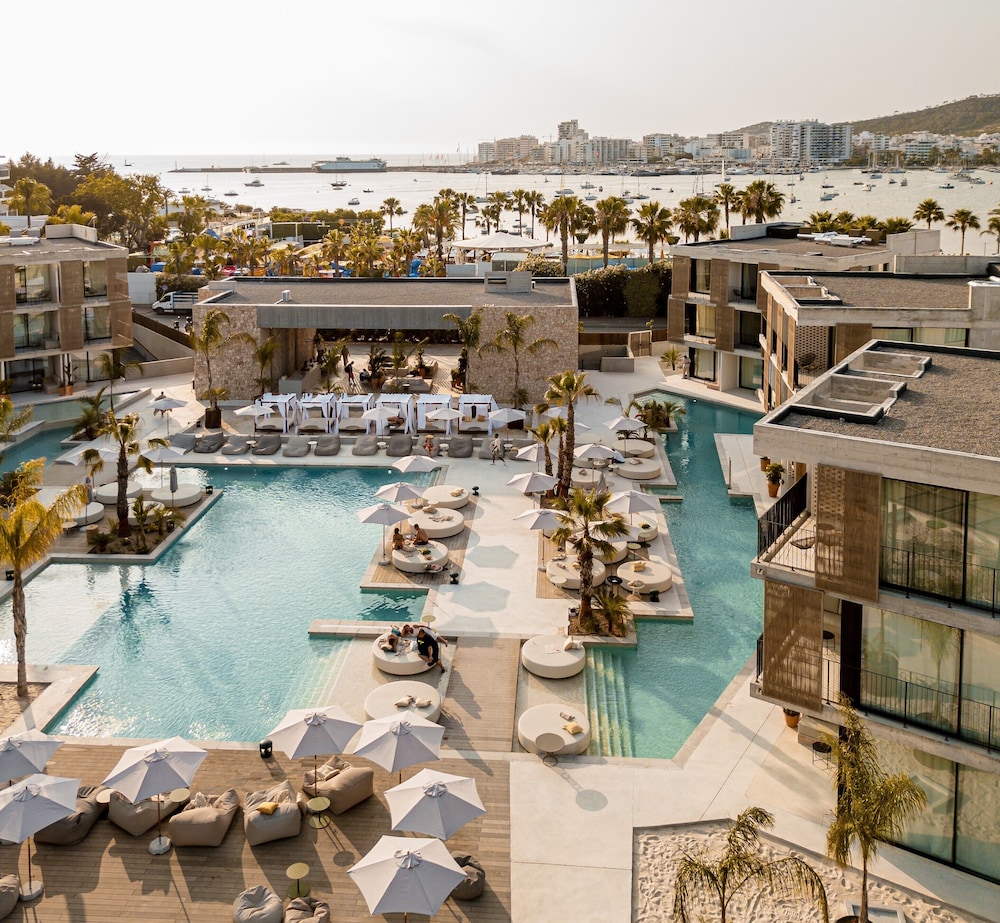
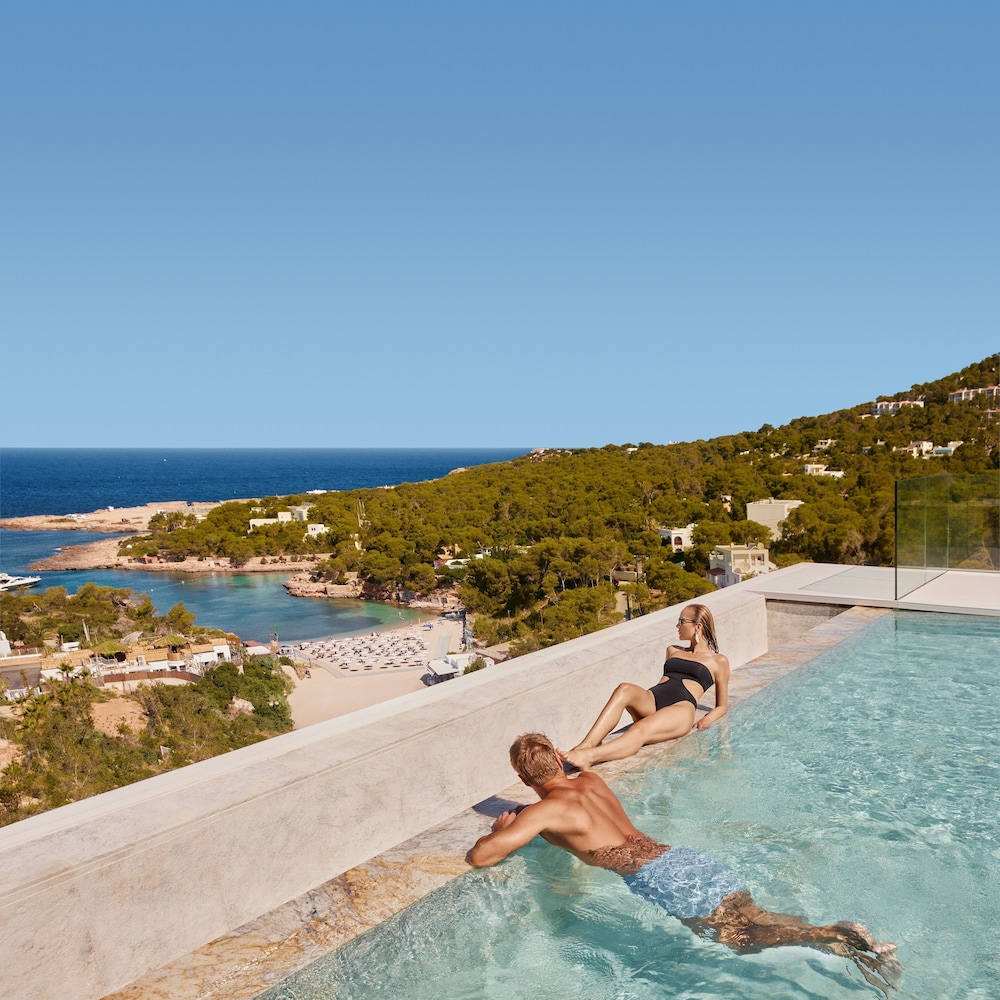
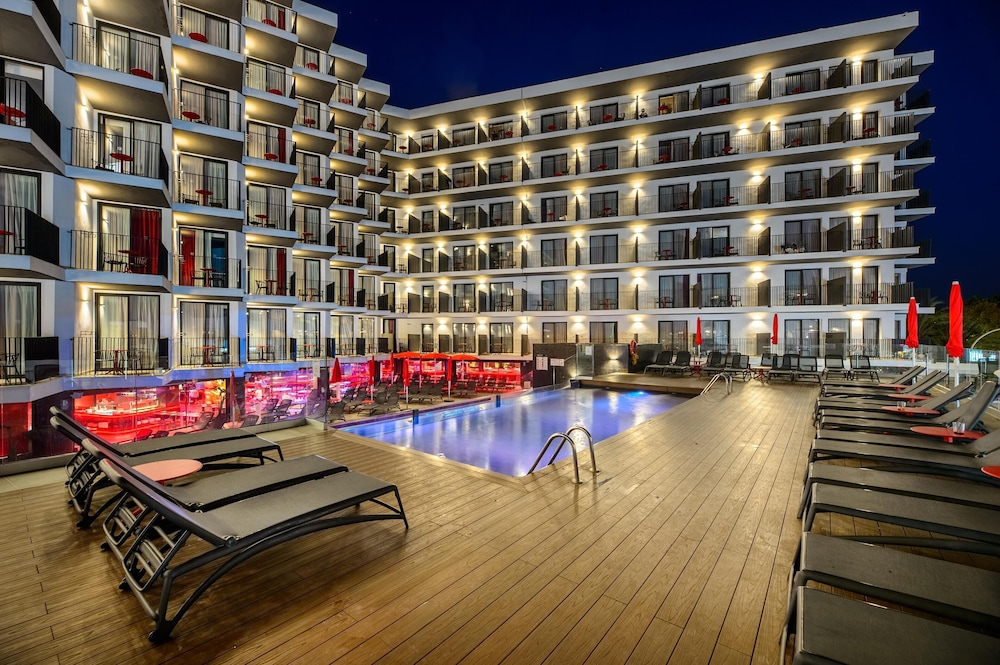
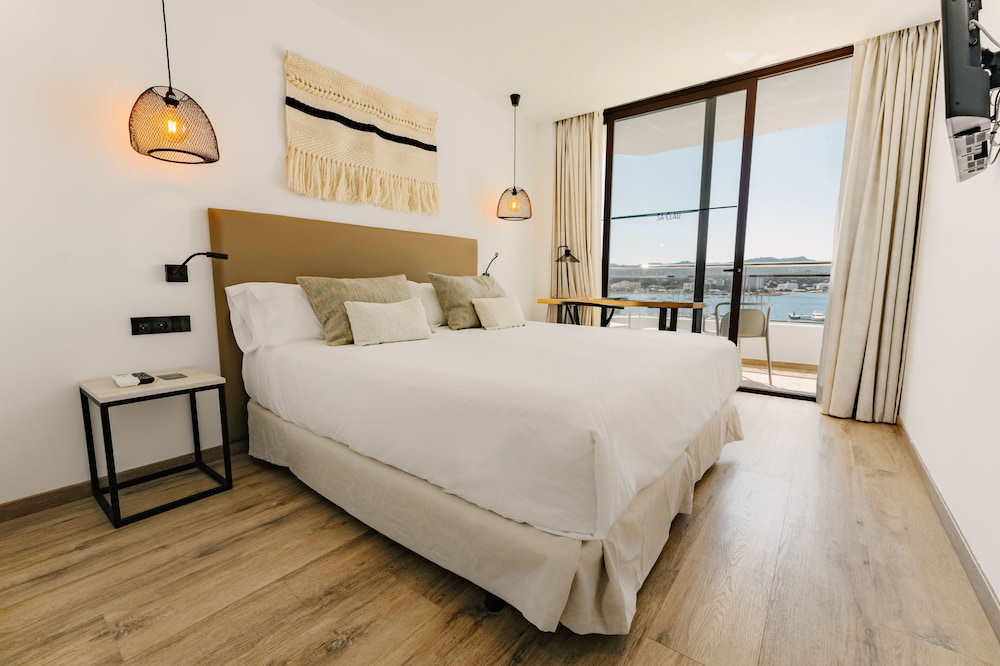
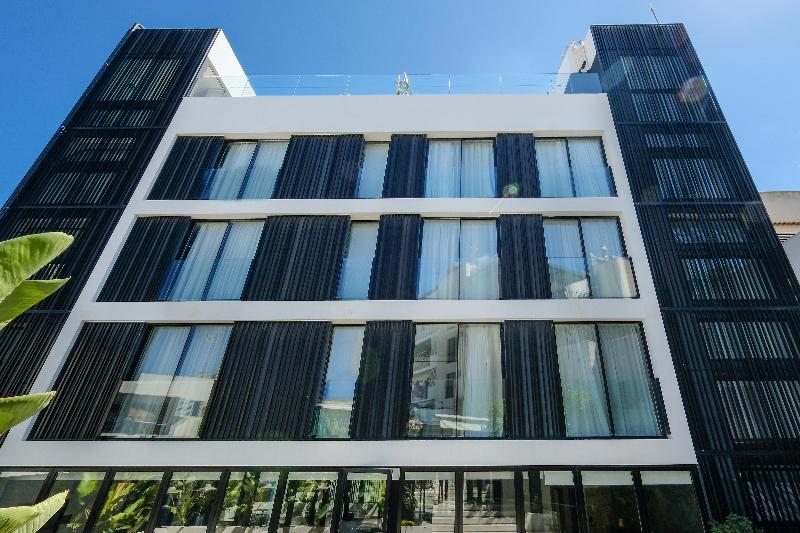
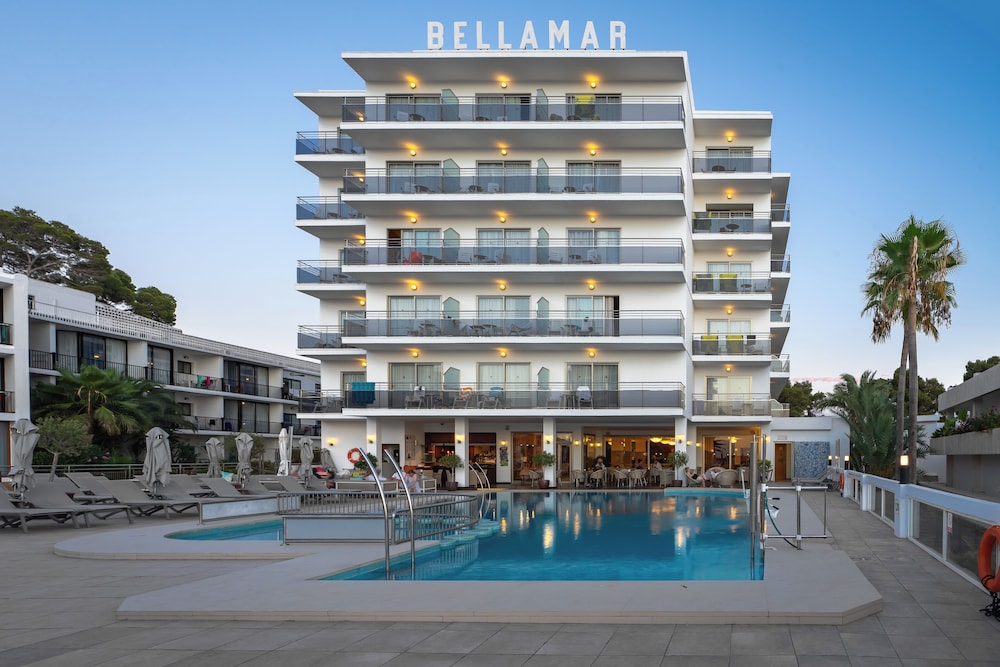
Stays in Sant Antoni: the first 12 of 134 stays in the IMPT hotel database in or close to Sant Antoni de Portmany, five-star first, then four-star, then by guest score. Each button opens live prices for your dates in the IMPT app.
Sant Antoni de Portmany sits on the west coast of Ibiza, in the municipality of the same name, at the head of a bay that opens due west. It is about 13.4 km in a straight line from Ibiza Airport, and the road route is a little longer. It is the main base on the west of the island.
How do you get to Sant Antoni de Portmany from Ibiza Airport?
Buses link Ibiza Airport with Sant Antoni de Portmany, with more services in summer than in winter, and taxis wait outside arrivals. By road the route runs north and west and is straightforward; the straight-line distance is about 13.4 km, with the drive a little longer. Check the island bus operator for current times.
Can you stay in Sant Antoni de Portmany without a car?
Yes. The town is compact and walkable, buses connect it with the airport, Ibiza Town and the nearby coves, and the coastal paths start from the edge of the bay. Ferries to the mainland also leave from Sant Antoni in season. Seasonal buses are fewer outside summer, so check timetables before relying on one.
Which beaches are within walking distance of Sant Antoni de Portmany?
The town beach at the head of the bay is the closest, and Cala Gració and the smaller Cala Gracioneta can be reached on foot along the coast to the north. Port des Torrent is a short bus ride south. All are small and busy in August, so early mornings are easier.
Is Sant Antoni de Portmany only about nightlife?
No. The sunset shore and the nightlife are concentrated on the north side of the bay, while the town behind it is residential, with a parish church, a working fishing harbour, shops and cafés that stay open all year. Inland are almond terraces, Sa Talaia and the villages of Sant Mateu and Santa Agnès.
When is the best time to visit Sant Antoni de Portmany?
May, June, September and October give warm sea, open businesses and space on the beaches. July and August are the busiest, when the bay, the coves and the sunset shore are crowded at once. Winter is quiet and much is closed, though the town itself keeps running for the people who live there.
What closes in Sant Antoni de Portmany out of season?
Roughly from November to April, many hotels, beach bars, boat trips, seasonal buses and a good number of restaurants close, and flights and ferries are fewer. The town stays open for the people who live there. Do not assume a particular place will be open in winter; check before you plan around it.
Where do you watch the sunset in Sant Antoni de Portmany?
The north shore of the bay is the established place, with terraces and rocks facing the water, and it fills about an hour before sunset in summer. Quieter options are the south side of the bay, the west-facing coves nearby, and the cliffs above Es Vedrà further south. Arrive early and stay put; the light after sunset is often the better part.
Is Sant Antoni de Portmany a good base for the west coast of Ibiza?
It is the most practical base on the west. Buses and roads run south to Cala Salada, Cala Bassa, Cala Conta and Cala d'Hort, and north to Santa Agnès and the coast towards Portinatx. Sa Talaia and Es Vedrà are within reach for a half day, and the airport is close.