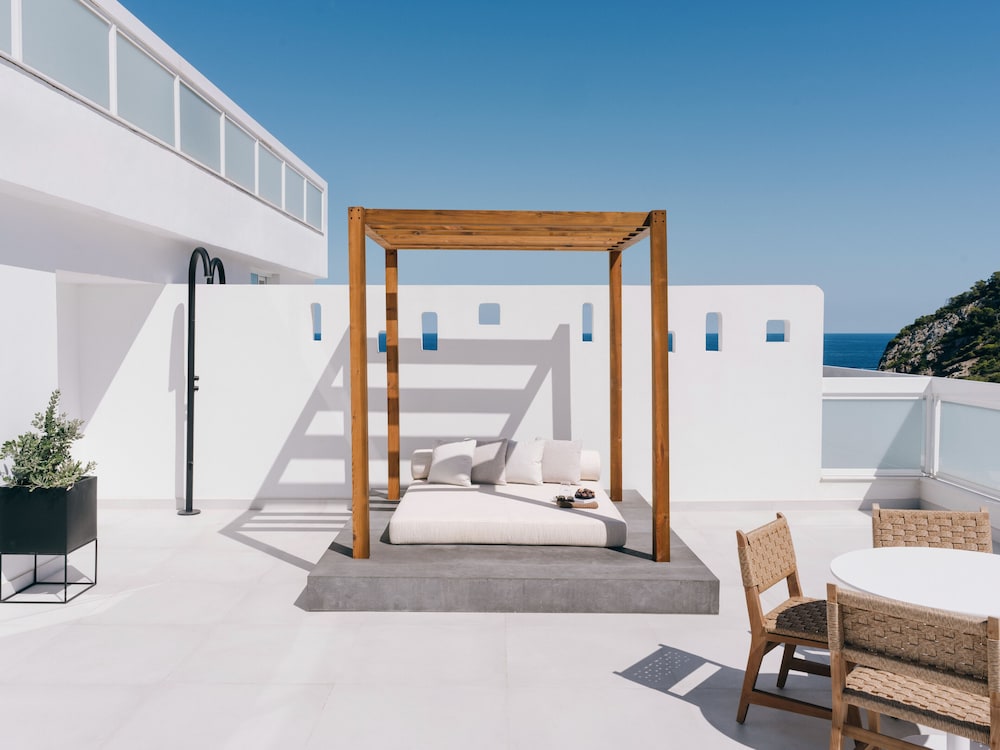
A municipality rather than a resort: a river valley, whitewashed villages and an east-facing coast of small coves, with a working town at the centre of it.
238stays in the IMPT hotel database
3area guides
Ibizaisland
Santa Eulària is a municipality on the east coast of Ibiza, not a single resort. It takes in a river valley, several villages, a working town and a coast of small coves and pine. This guide covers what the area is like, where its beaches are, how to reach it from the airport and when to come.
01
A municipality of its own
Santa Eulària is one of the five municipalities of Ibiza, an administrative area that runs from the edge of Ibiza Town up the east coast towards Sant Joan de Labritja. Its main town carries the same name, and the confusion is common. The municipality is the useful unit here: a river valley, low hills, pine woods and a long coast, with several villages inside it. It is not a resort with a hinterland; it is a working piece of the island that happens to have beaches.
The character is different from the south and the west. There is no long sandy bay and no strip of large buildings along the water. Instead the town has a small port, a promenade used by people who live there in winter, and a hill above it with a church. The coast faces east and north-east, so mornings are bright, afternoons are shaded, and the sea is often calmer than on the sunset side.
02
Towns and villages
The town of Santa Eulària sits where the valley meets the sea, with its church on the hill above the water and the port below. Inland, Santa Gertrudis de Fruitera is a small crossroads village with whitewashed houses, and Sant Carles de Peralta is a low, spread-out village near the northern coast. Jesús and Puig d'en Valls lie closer to Ibiza Town and feel more suburban, with quick access to the city.
Along the coast there are small settlements at Cala Llonga and Es Canar, and quieter clusters at Es Figueral and further north. These are villages first and resorts second: there is a school, a pharmacy, a bakery and a bar that opens in February. That is the practical difference between this municipality and a place built for July. The main town has its own guide on this site, covering the streets around the church hill and the port.
Santa Eulària townThe municipal centre, with the church hill, the port and most of the year-round services.
Santa Gertrudis de FruiteraAn inland crossroads village, useful as a base for the middle of the island.
Sant Carles de PeraltaA scattered village near the north coast, with a church and a Saturday market in season.
Cala LlongaA deep inlet on the coast south of the town, with a beach and a small winter core.
Es FigueralA quiet northern bay where most of the seasonal trade shuts outside summer.
The arcaded courtyard of the Puig de Missa church, Santa Eulària des Riu, Ibiza03
The beaches and coves
Cala Llonga is the largest family beach in the municipality: a deep inlet with pines on both sides and shallow water at its head. South of it the coast turns rockier, with small coves reached on foot or by boat. Es Canar is a smaller bay further north, with a beach that shelves gently and a seasonal trade along the front. Cala Llonga and Es Canar each have their own guide on this site.
North of Es Canar the coastline becomes the best part of the municipality for anyone who wants quiet. Cala Mastella and Pou des Lleó are small, rocky and reached by narrow lanes. Cala Boix has darker sand and a breeze that makes it a poor choice for an umbrella. Water quality is monitored through the season and the flags on the beach tell you what you need to know.
None of these beaches is a secret and none is undiscovered. In August the car parks fill by mid-morning and the small coves take whatever number of people the lane delivers. Outside July and August the same places are close to empty on weekdays. The east coast has no sunset, which keeps the evening crowds on the other side of the island and leaves the water here flat and clear.
04
The valley and the dry island
The town gives its name to the valley behind it, which has been farmed for centuries. Almond, olive, fig and carob grow on terraces, and vegetable plots sit where the ground is deeper. Rain that falls in autumn and spring runs down the valley floor towards the sea; in a dry winter it barely arrives. Water is the limit on everything here, and the whole island depends on wells, aquifers and desalination.
That scarcity shapes how the place looks. Fields are small, walls are dry-stone, and houses collect rain from their roofs. The traditional finca here is a working building rather than a decorative one: a cistern, a threshing floor, a shed for tools and a fig tree for shade. Walking the lanes inland in February, when the almond is out, shows the valley at its best.
05
Nature and the seagrass
The sea off this coast is a meadow. Posidonia oceanica, a flowering seagrass found only in the Mediterranean, grows from the shallows to about 30 or 40 metres, and the dead leaves that wash up on the sand in spring are part of the same system. The meadows hold the sand in place, keep the water clear and shelter the fish. Anchoring over them is regulated by a Balearic decree.
Mooring buoys are installed in some bays in summer, and the rules on where you may anchor change with them. On land there is no large natural park inside the municipality; what is protected is the coast itself, the pine woods and the terraced farmland, much of which is closed to new building. The UNESCO listing shared by Ibiza and Formentera takes in the posidonia meadows between the two islands.
Protect itDo not anchor over the seagrass. Use the buoys where they are installed and check the current Balearic rules before you drop anchor.
06
Culture and history
The hill above the town carries the parish church, built as a fortified refuge in the centuries when this coast was raided from the sea. The pattern repeats across the Pitiusas, where the church was often the only stone building strong enough to hold people through a night. Around it the town grew slowly: a few streets, a small port, and a market for the valley's oil, figs and produce.
A small ethnography museum in the town explains the rural life behind it, in a traditional house with its tools, kitchen and press. Inland, the villages keep their own churches and their festivals, which are local rather than staged. In season the Wednesday market at Es Canar and the Saturday market at Sant Carles bring residents, growers and visitors into the same few streets. Both are busiest in the morning.
The town beach at Santa Eulària des Riu, Ibiza
The church was often the only stone building strong enough to hold people through a night.
07
Food and markets
The municipality eats from the valley and the sea. Fish comes in from the small port and from the market in Ibiza Town; vegetables come from the plots inland; almonds and olives from the terraces. Bread and cheese are made on the island, and the dishes that belong here, a fish stew with potatoes and a minted cheesecake among them, appear in the villages more often than along the front.
Markets matter more than shops. The Wednesday market at Es Canar runs in season and mixes produce with clothes and crafts; the Saturday market at Sant Carles does the same inland. Both are as much a social occasion as a place to buy. In the main town the daily round is simpler: a bakery, a fish counter, a fruit shop and a bar that serves a proper lunch.
FishLanding at the small port and sold the same day when the boats come in.
Valley vegetablesTomatoes, peppers and greens grown on the plots inland from the town.
Almonds and olivesFrom the terraces; oil and preserved fruit are sold locally.
Market morningsWednesday at Es Canar in season, Saturday at Sant Carles.
08
Getting there and around
Ibiza Airport (IBZ) sits about 7 km south-west of Ibiza Town, in the municipality of Sant Josep de sa Talaia, so Santa Eulària is not the nearest coast to it. The straight-line distance from the airport to the town is shown on this page. The road is longer, because any route goes through or around Ibiza Town. Do not read a straight line on a map as a drive.
Buses link the airport with Ibiza Town, and from there with Santa Eulària and the coast villages. More lines run in summer than in winter. A car makes the inland villages and the northern coves much easier, but parking in the town and at the popular bays is limited in high season. Taxi ranks are in the town and at the airport, and demand outstrips supply in August.
Check before you goBus lines, seasonal services and beach parking change through the year. Check the island bus operator and the Consell d'Eivissa before you build a day around a timetable.
09
When to go, and who stays
May, June, September and early October are the best months. The sea is warm enough from June, the light is long and the coast is not yet full. July and August are hot, busy and expensive, and the small coves fill early. Winter is quiet: many hotels, beach bars, boat trips and restaurants close roughly from November to April, while the main town stays open and the villages carry on with ordinary life.
This is the municipality for people who want a town rather than a resort, and a coast with more rock than sand. Families do well at Cala Llonga and Es Canar. Walkers, cyclists and anyone staying out of season do better in or near the main town, where the year-round services are. There are 240 stays listed on this site for the municipality, from village houses inland to apartments near the water.
In the townYear-round services, a port and the church hill, best outside July and August.
Cala LlongaFor shallow water and a family beach with a small winter core.
Es CanarFor a gentler bay and a seasonal front that closes in winter.
Inland villagesFor quiet lanes, almond blossom and a base for the middle of the island.
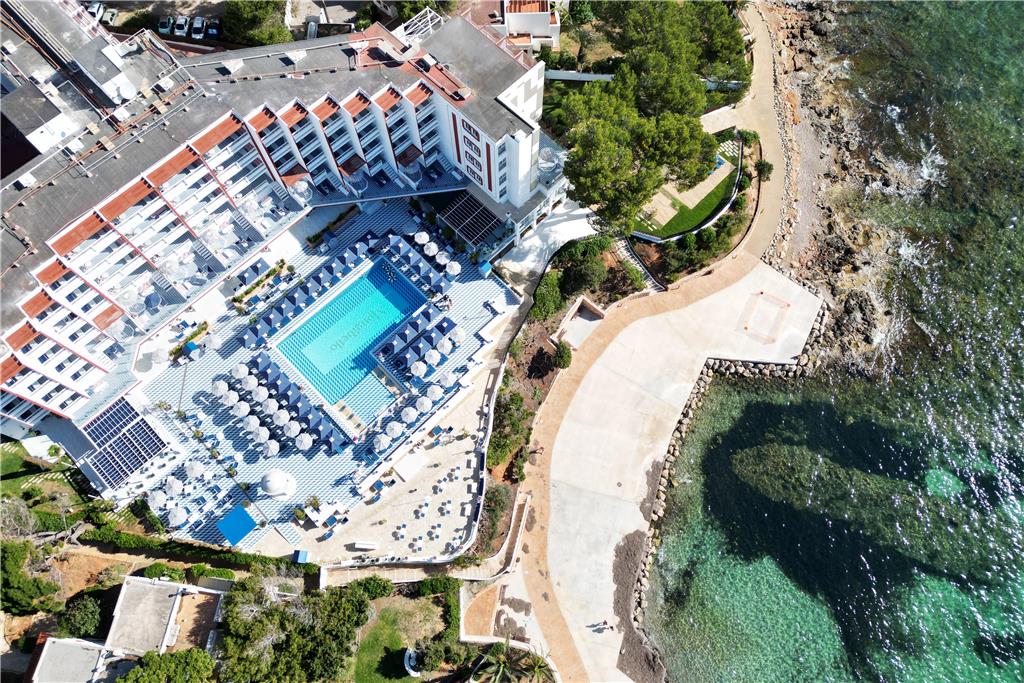
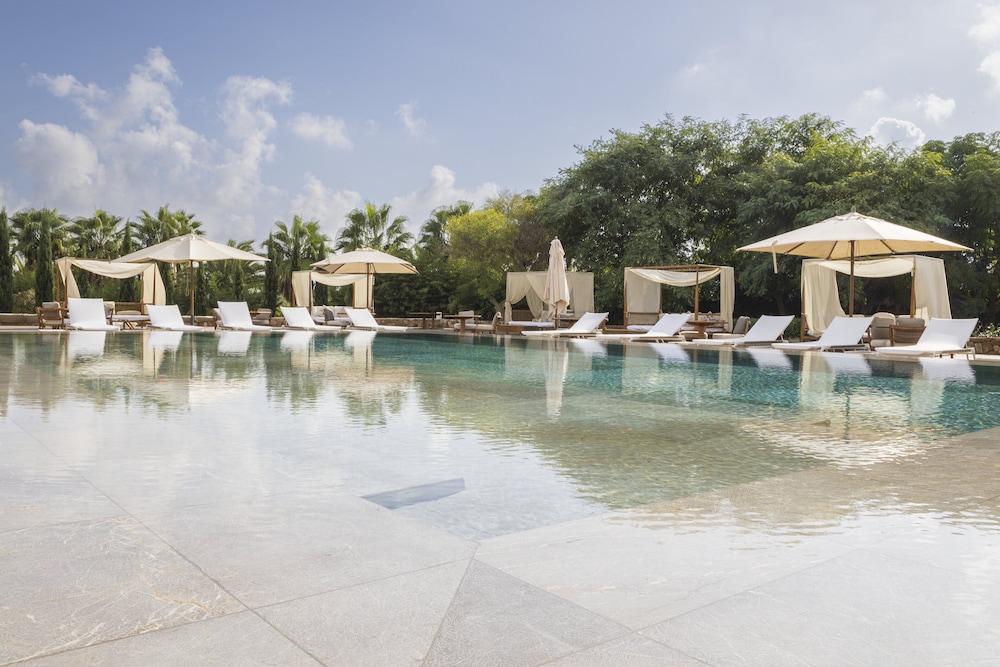
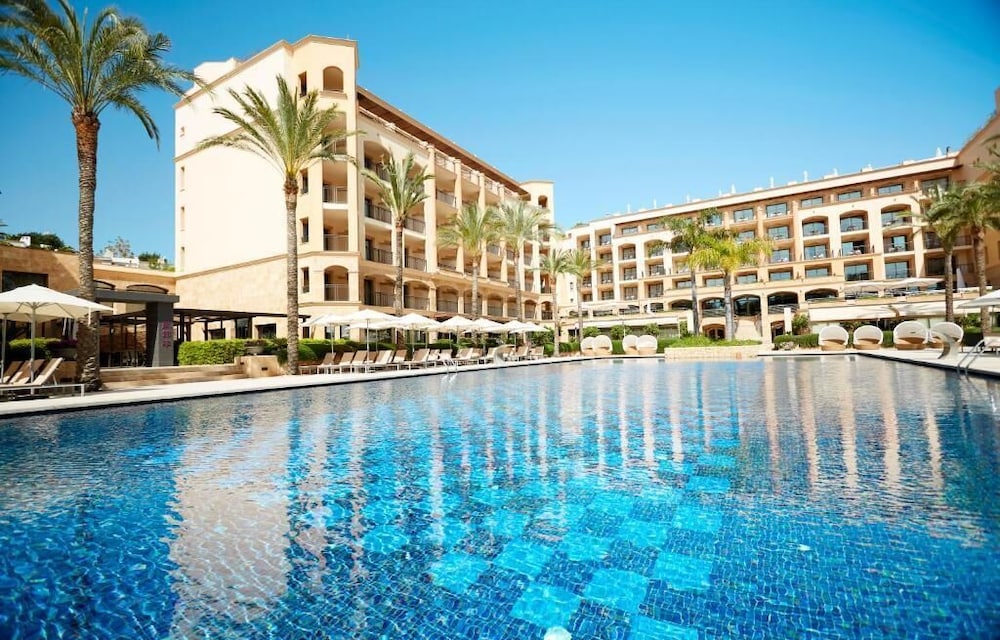
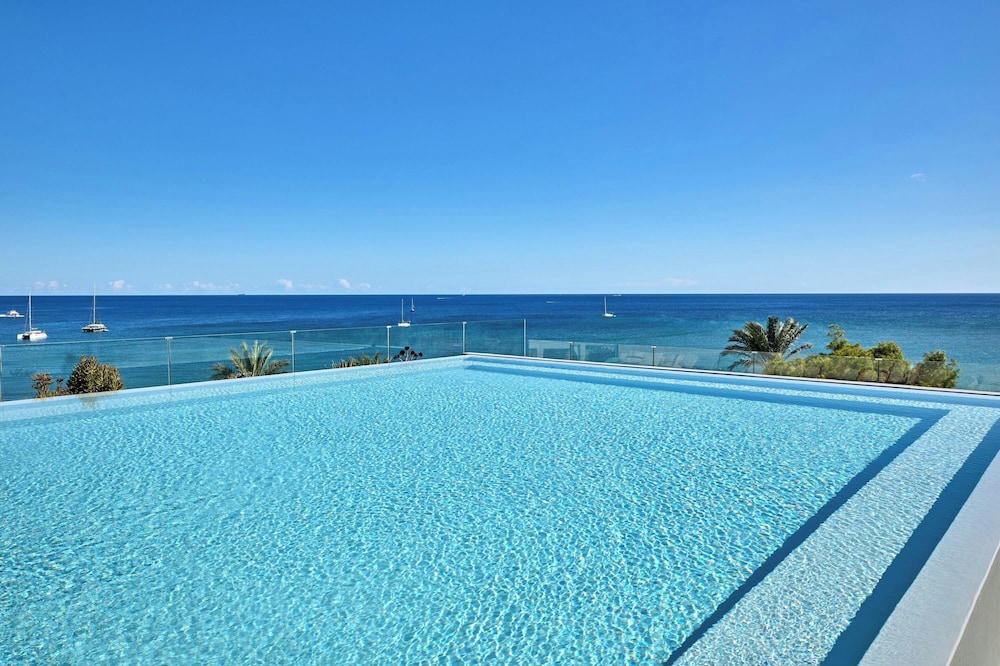
Stays in Santa Eulària: the first 9 of 238 stays in the IMPT hotel database in or close to Santa Eulària des Riu, five-star first, then four-star, then by guest score. Each button opens live prices for your dates in the IMPT app.
Santa Eulària is a municipality on the east coast of Ibiza, running from the edge of Ibiza Town north towards Sant Joan de Labritja. Its main town of the same name sits at the mouth of a river valley, with the church on the hill above the port. The municipality also contains Santa Gertrudis de Fruitera, Sant Carles de Peralta, Cala Llonga and Es Canar.
How far is Santa Eulària from Ibiza Airport?
Ibiza Airport (IBZ) lies about 7 km south-west of Ibiza Town, in Sant Josep de sa Talaia, and Santa Eulària is on the opposite side of the city. This page shows the straight-line distance from the airport to the town. Any road route is longer, and traffic around Ibiza Town in summer adds to it, so allow more than the map suggests.
Do you need a car to visit Santa Eulària?
Not for the main town, Cala Llonga or Es Canar, which are served by buses from Ibiza Town, with more lines in summer than in winter. A car helps for the inland villages, the northern coves and the small beaches reached by narrow lanes. Parking in the town and at popular bays is limited in high season, so check before relying on it.
Which beaches in Santa Eulària suit families?
Cala Llonga is the easiest: a deep inlet with pines on both sides and shallow water at its head. Es Canar is smaller and shelves gently, with a seasonal front behind it. Both have the usual summer services and monitored water quality, with flags on the sand telling you what the day is like. Outside July and August they are far quieter.
Is Santa Eulària busy in August?
Yes. August is the peak, and the car parks at the popular coves fill by mid-morning. The town, the promenade and the beaches at Cala Llonga and Es Canar are at their fullest, and taxis are hard to find at the busiest hours. June, September and early October are calmer, with warm sea and long light, and May suits walking better than swimming for most people.
What closes in Santa Eulària out of season on this trip?
Much of the tourism business closes roughly from November to April: many hotels, beach bars, boat trips and restaurants, along with some seasonal buses. The main town keeps its bakery, pharmacy, fish counter and year-round bars, and the inland villages carry on as ordinary places. Winter flights and ferries are fewer, so check timetables before fixing dates.
What is the market at Es Canar in Santa Eulària?
It is a seasonal Wednesday market in Es Canar, mixing produce with clothes and crafts, and it draws people from across the island. The Saturday market at Sant Carles de Peralta does something similar inland. Both are as much a social occasion as a place to shop, and both are busiest in the morning. Check the current days before you go, as they can change.
Is there a natural park in Santa Eulària?
There is no large natural park inside the municipality. What is protected is the coast itself, the pine woods and the terraced farmland, much of it closed to new building. Offshore, the posidonia meadows are the reason the water is clear and the sand stays put. Anchoring over them is regulated by a Balearic decree, and mooring buoys are installed in some bays in summer.
Who should stay in Santa Eulària rather than the south of Ibiza?
People who want a working town rather than a resort, and a coast of small coves rather than one long sandy bay. Families settle well at Cala Llonga and Es Canar, while anyone staying out of season is better placed in or near the main town, where services run all year. The inland villages suit those who want quiet and a base for the middle of the island.