Dalt Vila is the walled hill at the centre of Eivissa, with the port below it and ferries to Formentera leaving from the quay. It is the one part of Ibiza that works in every season.
6.5 kmfrom IBZ, straight line
74stays in the IMPT hotel database
Southcoast
Dalt Vila is a good base if you want a town rather than a resort: the old town, the beaches of Talamanca and Figueretes, the airport buses and the Formentera ferry all sit within a short distance. The trade-off is summer noise and difficult parking. For a quiet cove at the door, look elsewhere on the island.
01
A town inside its walls
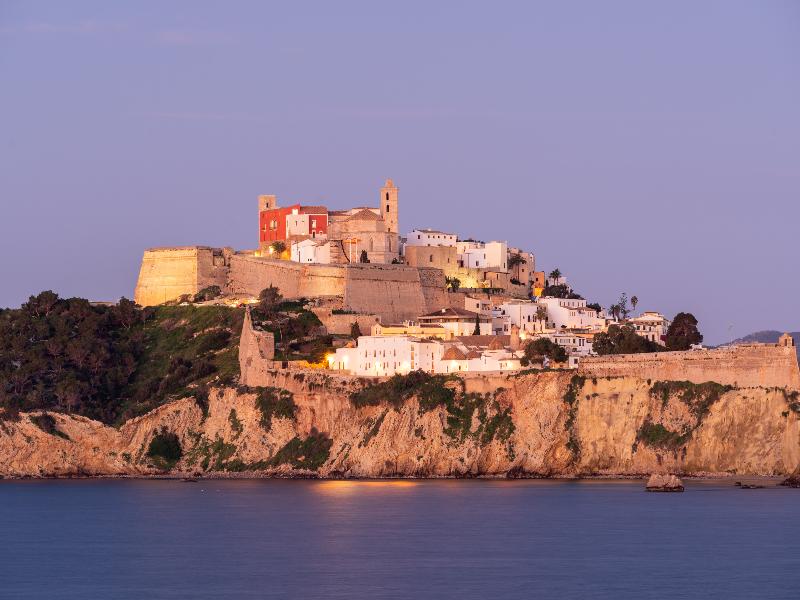
Eivissa is a working town with a walled hill at its centre. Dalt Vila climbs from the port through stone gateways to the cathedral at the summit, and the Renaissance walls that enclose it were built in the 16th century. Inside, the streets are narrow, paved and steep, lined with whitewashed houses and small squares. The upper town is part of the UNESCO World Heritage Site listed in 1999, together with the posidonia meadows, the Phoenician settlement of Sa Caleta and the necropolis of Puig des Molins.
Below the walls, the town runs down to the water: the old quarter of sa Penya, the Rambla, the market hall and a long waterfront where the ferries and the fishing boats share the harbour. This is the part of Ibiza that works in every month of the year, with schools, offices and a permanent population. Visitors tend to move between the two levels on foot, a short climb that feels longer in the heat of August.
02
The port and the ferries
The harbour below Dalt Vila is the island's main port, and it does several jobs at once. Fishing boats land their catch on one side, yachts and sailing boats moor along the marinas, and ferries leave for the mainland and for the other islands. Ferries to Formentera run from here to La Savina, with fast crossings of about 30-35 minutes and conventional crossings of about an hour. Ibiza Town also has routes to Palma, Barcelona, Valencia and Dénia, and Sant Antoni has mainland sailings in season.
The port is also where the town takes its evening walk. The waterfront fills after sunset with people moving slowly between the old quarter and the marina, and the ferries come and go through it all. Sailings are frequent in summer and much thinner in winter, so a crossing planned for May or October needs checking with the operator rather than assuming the summer pattern holds. Tickets are bought at the quay or in advance, and the crossing is short enough to make Formentera a day out rather than a journey.
Ibiza Cathedral's tower above the old houses of Dalt Vila03
Beaches near the town
The nearest sand to Dalt Vila is at Talamanca, a sheltered bay across the water to the east, and at Figueretes, just south of the old town. Neither is wild: both sit against the town and are reached on foot or with a short bus ride. Talamanca looks back at the walls and the cathedral, which gives it the better view of the two. Both shelve gently, which suits families and weak swimmers, and neither has any surf to speak of.
South of the town, the sand runs for a long way at Playa d'en Bossa, backed by a long strip of seasonal bars and shops. Beyond it the road continues into Ses Salines Natural Park, where the beaches sit behind dunes and salt pans and the water is clear over posidonia meadows. That last stretch is the one to choose if the town itself feels too built up. Buses run south through the season; parking is limited and busy in high summer.
West of town, the coast changes character: Cala Salada and the coves towards Sant Antoni de Portmany are a drive rather than a walk, with rock and pine rather than long sand. They are busier at sunset than at midday, and access roads and parking are controlled in summer. A car or a scooter makes the difference here; buses serve some of these coves in season, and timetables change. Check locally before setting out in the evening.
TalamancaSheltered bay across the water from Dalt Vila, reached on foot or by a short bus ride.
FigueretesThe town beach south of the old quarter, with a promenade and shallow water.
Playa d'en BossaLong sand south of town, busiest in July and August, with seasonal bars behind it.
Ses SalinesDune-backed beaches inside the natural park, further south along the same road.
04
What to see on foot
The upper town itself is the sight. You enter through one of the stone gateways, climb through the streets to the cathedral at the top, and walk the bastions where the walls look out over the harbour and the sea. The cathedral, the bastions and the viewpoints are all within the walls; a museum of contemporary art occupies part of the old town, and small chapels open and close on their own schedules.
Just outside the walls, the Phoenician-Punic necropolis of Puig des Molins is one of the sites that carried the island onto the UNESCO list, and it sits a short walk up the hill from the town. The walk there passes through ordinary residential streets. Further out, near the airport, the Phoenician settlement of Sa Caleta is a low ruin above the coast. Both are outdoor sites with limited shade, and opening arrangements change, so check with the Consell d'Eivissa.
The wallsRenaissance fortifications from the 16th century, with bastions and viewpoints over the port.
The cathedralAt the top of the hill, at the end of the climb through the old streets.
Puig des MolinsPhoenician-Punic necropolis on the hill just outside the walls.
Sa CaletaPhoenician settlement near the airport, a short drive from town.
From the bastions the whole harbour lies below, and on clear days Formentera sits on the horizon.
05
Who the town suits
Eivissa suits anyone who wants a town rather than a resort: a place with a year-round population, a working port and everything within walking distance of the harbour. It works well without a car, since buses leave from the town for the beaches and other parts of the island, and the ferry to Formentera leaves from the port. It suits first visits, short stays and anyone travelling in the quieter months. It is less suited to travellers who want a cove at the door and nothing else.
The trade-off is noise and traffic. Parts of the town and the waterfront are loud late into the night in summer, and the streets around the port fill quickly. Parking near the walls is limited and controlled, and driving into the old town is not an option. Anyone who wants early nights and empty roads should look at the quieter coasts and treat Ibiza Town as a day out rather than a base.
Without a carBuses, ferries and the old town on foot cover most of a short stay.
First visitsThe port, the walls and the Formentera crossing are all here.
Out of seasonThe town stays open when the coastal businesses close.
Light sleepersThe waterfront and parts of the old quarter are noisy in summer.
A stone tower and whitewashed walls in a Dalt Vila lane, Ibiza Town06
Evenings and food
Eating runs late here. The town's kitchens tend to open for dinner when the light has gone, and the tables along the port and in the small squares of the old quarter fill slowly through the evening. Fish is the thing to order, along with the island dishes that turn up on most menus: bullit de peix, a fish stew served with rice, and sofrit pagès, a heavy meat dish for cooler evenings. Vegetarian cooking exists but is not the strength of the local repertoire.
In winter the town eats with the people who live in it. Many waterfront places close roughly from November to April, while others stay open for the resident trade, mostly in the streets behind the port and around the market. Summer is the opposite: tables spread onto the quays, the choice is wider and booking ahead matters in July and August. The change is part of the island's rhythm rather than a fault.
07
Arriving and getting around
Ibiza Airport sits about 6.5 km south-west of Ibiza Town in a straight line, and the road route is a little longer. Buses link the airport with Ibiza Town and continue to Sant Antoni, Santa Eulària and the south beaches, with more lines running in summer than in winter. Taxis wait at the terminal and there are car-hire desks there. Check the island bus operator for current lines and times before arriving.
Once in town, the old quarter, the port and the nearest beaches can be covered on foot. The climb to Dalt Vila is a walk rather than a stroll, and comfortable shoes matter more than transport. Buses leave from the town for the island's other coasts, and the ferry to La Savina leaves from the port itself. A car is useful for the west coast and the smaller coves, less so for a stay spent between the harbour and the walls.
Driving into the upper town is not an option: the gateways are narrow, the streets are stepped in places and access is controlled. Parking sits outside the walls and around the marina, in marked zones that are paid and time-limited in the centre, with restrictions tightening in summer. A car left near the port is convenient for day trips, but for a short stay in town it is often more trouble than it is worth.
Check before you goParking zones, ferry timetables and summer access rules all change. Check the Consell d'Eivissa and the ferry operators before travelling.
08
When to go, and lightly
Late spring and early autumn are the easiest months: warm sea, open businesses and fewer people on the walls. July and August are hot and crowded, with the waterfront at its busiest and the old town best walked early in the morning or after sunset. Winter is mild and quiet. The town itself stays open year-round, but many seasonal businesses close roughly from November to April, and flights and ferries are fewer.
Visiting lightly means using the town on its own terms. Tap water on the island comes largely from desalination, so it is worth treating as a resource rather than a given. In the water, the posidonia meadows that helped earn the UNESCO listing are protected: anchoring over them is regulated by a Balearic decree, and mooring buoys are installed in some bays in summer. The sustainable tourism tax is charged per person per night by the accommodation; rates change, so check the Govern de les Illes Balears.
Protect itThe meadows below the town are the reason the water looks as it does. Moor on a buoy where one is provided and never anchor over seagrass.
Where to wake up
Stays in Ibiza Town
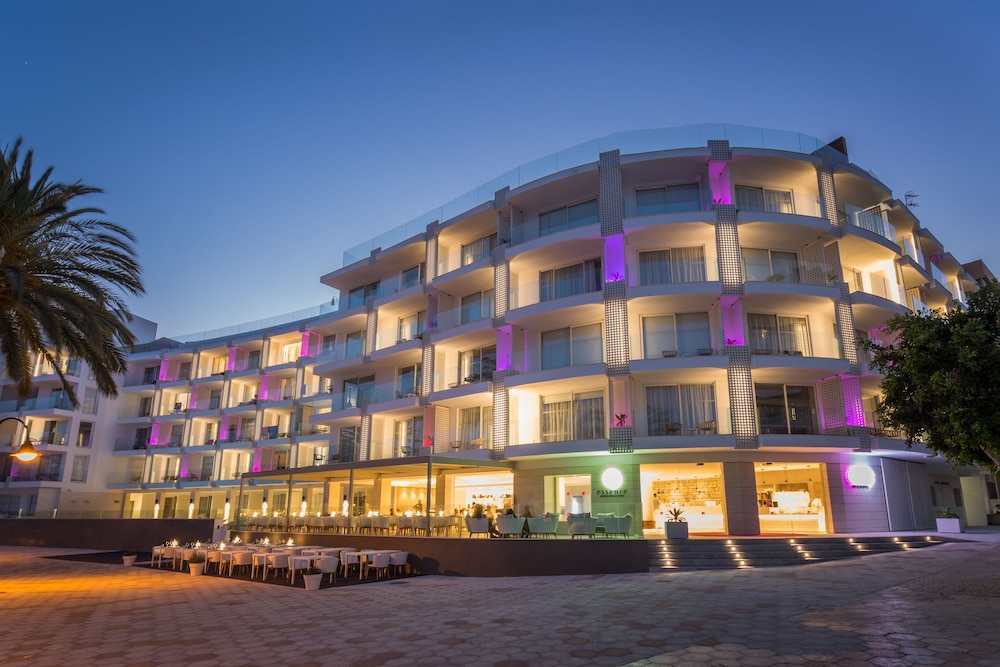
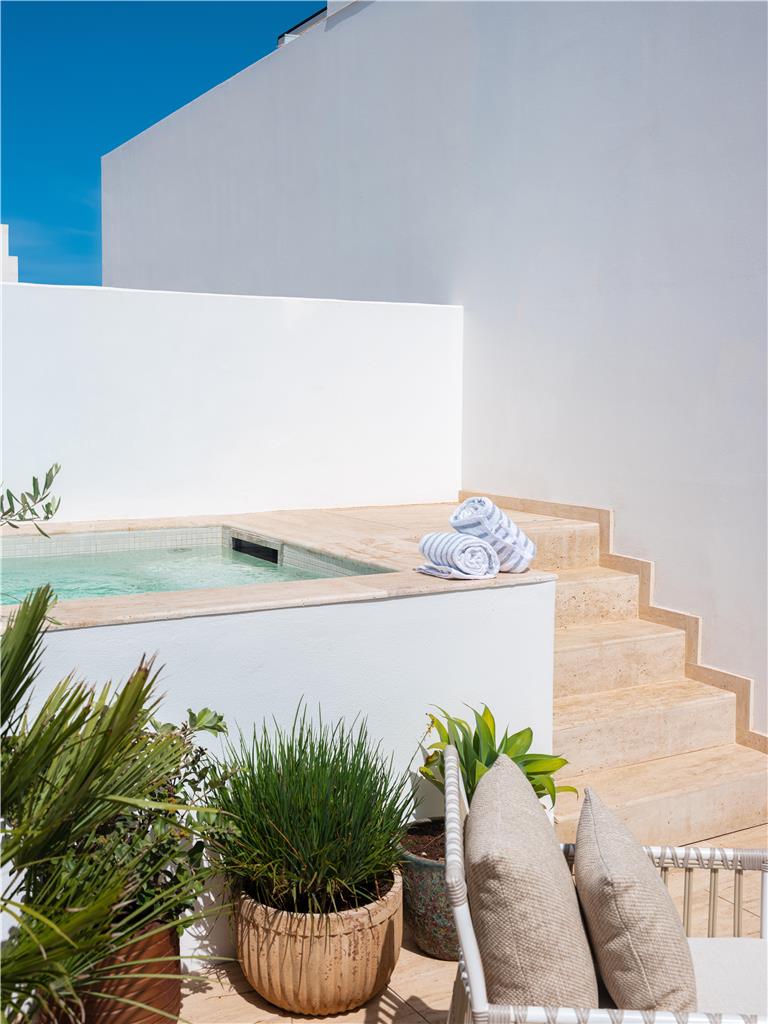
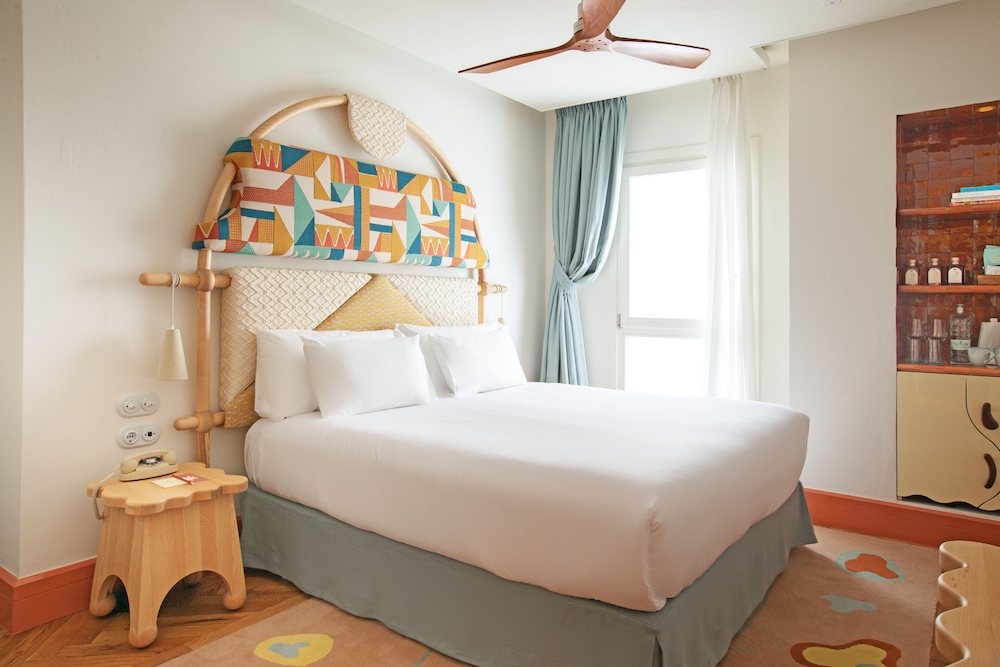
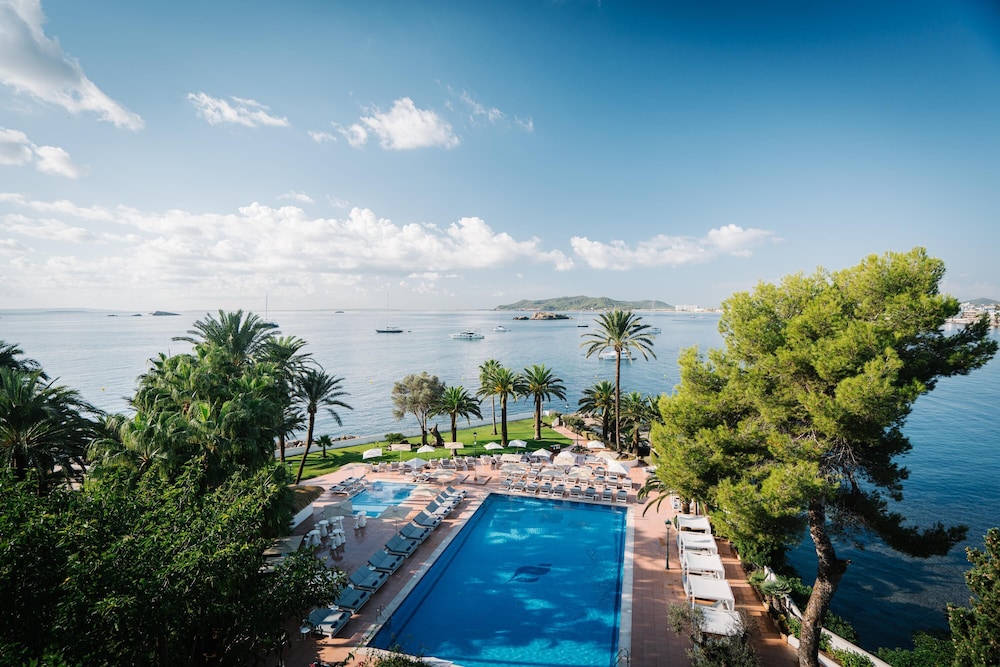
Stays in Ibiza Town: the first 12 of 74 stays in the IMPT hotel database in or close to Dalt Vila and Ibiza Town, five-star first, then four-star, then by guest score. Each button opens live prices for your dates in the IMPT app.
Ibiza Airport is about 6.5 km south-west of Ibiza Town as the crow flies, and the road route is a little longer. Buses link the airport with the town, and taxis wait outside the terminal. Lines and times change with the season, so check the island bus operator before travelling.
Is Dalt Vila a good base without a car?
Yes. The old town, the port and the town beaches are all walkable, buses leave from the town for other parts of Ibiza, and the ferry to Formentera departs from the port. A car helps for the west coast and the smaller coves, but parking near the walls is limited and controlled in summer.
What can you see inside Dalt Vila?
The upper town is the sight: stone gateways, steep paved streets, whitewashed houses, the 16th-century Renaissance walls with their bastions, and the cathedral at the top. A museum of contemporary art occupies part of the old town. The Phoenician-Punic necropolis of Puig des Molins is a short walk outside the walls.
Which beaches are closest to Ibiza Town?
Talamanca lies across the water to the east and Figueretes just south of the old town, both reached on foot or by a short bus ride. Further south the sand runs for a long way at Playa d'en Bossa, and beyond it the beaches of Ses Salines sit inside the natural park.
How do you get from Ibiza Town to Formentera?
Ferries leave Ibiza Town port for La Savina on Formentera. Fast crossings take about 30-35 minutes and conventional ferries about an hour. Sailings are frequent in season and fewer in winter, so check the operators for current timetables before planning a day trip or a longer stay.
Can you drive into Dalt Vila?
No. The gateways are narrow and access to the upper town is controlled, and some streets are stepped. Parking sits outside the walls and around the marina, in marked zones with time limits in the centre and tighter restrictions in summer. Check local signs and the Consell d'Eivissa before driving in.
Is Ibiza Town open out of season?
The town stays open year-round, with a resident population, a working port and shops and services that do not depend on summer. Many seasonal businesses along the waterfront and on the coasts close roughly from November to April, and flights and ferries are fewer, so some planning helps.
How long do you need to see Dalt Vila?
Half a day covers the gateways, the streets and the cathedral, with time on the bastions for the view over the harbour. A full day adds the necropolis of Puig des Molins and a walk down to the port and the town beaches. The climb is steep, so allow for heat in midsummer.
Why is Dalt Vila a UNESCO World Heritage Site?
Dalt Vila was listed in 1999 as part of the site called Ibiza, Biodiversity and Culture. The listing covers the fortified upper town, the Phoenician settlement of Sa Caleta, the necropolis of Puig des Molins, and the posidonia meadows and coastal ecosystems between Ibiza and Formentera.