The Renaissance ramparts above Eivissa's port are open to anyone with a pair of flat shoes. The climb is short, the view is long, and the stone is 16th century.
All yearbest time
Ibiza Townnearest area to stay
6.6 kmfrom IBZ, straight line
The walls of Dalt Vila are the Renaissance ramparts that ring the old town of Eivissa, on the hill above the port. You can walk along several stretches of the top, past bastions and gateways, with the harbour below and the island's interior behind. No ticket is needed, it is open all year, and it takes as long as you let it.
01
A wall you can walk on
Dalt Vila is the old town of Eivissa, the walled hill above the port. Its Renaissance ramparts were built in the 16th century, and the cathedral stands at the top of the climb. The whole ensemble forms part of the UNESCO World Heritage Site 'Ibiza, Biodiversity and Culture', listed in 1999, together with the posidonia meadows between Ibiza and Formentera, the Phoenician settlement of Sa Caleta and the necropolis of Puig des Molins. The listing treats the sea and the stone as one subject.
The walls are not a monument behind glass. You enter through the Portal de ses Taules, the gate at the top of the harbour ramp, and from there the bastions open out above the port. Paths run along the top of several stretches, between the parapets, with the town's lanes dropping away on one side and the water on the other. On a clear day the low outline of Formentera sits on the horizon. Nothing here is roped off; the town simply carries on around you.
02
Getting up from the port
Ibiza Airport is about 7 km south-west of Ibiza Town, in Sant Josep, and buses link it with the town and with the island's main beaches. More lines run in summer than in winter, and the island bus operator publishes the current ones. From wherever you stop in Eivissa, the old town is a walk: the port sits at the foot of the hill, and the climb to the Portal de ses Taules takes a few minutes.
Cars cannot go inside the walls, and parking around the port and the Marina fills quickly in summer. Arriving on foot, by bus or by bike avoids the search entirely, and early morning is the coolest ascent and the least crowded. The climb is cobbled and steep in places, with steps between the lanes and uneven surfaces underfoot. There is more than one way up, including entrances on the landward side, so the ascent does not have to repeat itself on the way down.
The path along the ramparts up to the cathedral in Dalt Vila, Ibiza03
When to walk the walls
The ramparts are open public space and can be walked all year. Spring and autumn give the kindest conditions: warm stone, soft light, and room to stop on a parapet without stepping around anyone. In high summer the middle of the day is punishing on the unshaded stretches, so early morning and the hour before sunset work better. In winter the town stays open even when much of the coast closes down for the season.
Light matters more than expected. In the morning the eastern walls take the sun and the harbour lies in shadow; in the evening the effect reverses and the stone turns amber. Weekdays outside July and August are quietest. Whatever the season, the walk rewards slowness: the view changes at every bastion, and the lanes inside the walls are the reason to come down through the town rather than turn back at the top. In July and August the evening is the only sensible window.
Check before you goShort stretches of the ramparts close from time to time for repair or for an event inside the old town. The Consell d'Eivissa and the tourist office in Eivissa keep the current picture.
04
The walk, gate to gate
There is no fixed route. The natural line is to enter at the Portal de ses Taules, climb through the lanes to the cathedral plateau, then follow the bastion tops wherever a path runs and come down on the far side. Allow more time than the map suggests; the stopping is what takes the time. Sit on a step, look at the harbour, and let the town work on you for a while. Nothing here needs to be rushed.
Two things are worth building in. The cathedral at the top is the pivot of the hill, and the lanes below it, whitewashed and narrow, hold small squares, chapels and viewpoints that appear without warning. The other is the edge: wherever the parapet opens, stop. Much of what makes the walk memorable is not a sight at all but the shift in height, the noise of the town falling away and the wind arriving off the water.
Start at the gateEnter by the Portal de ses Taules, where the ramp rises from the harbour into the shade of the walls.
Climb to the cathedralThe lanes lead up to the highest point of the town, with the cathedral and its square at the top.
Take the parapetWherever a path runs along the top of a bastion, follow it and look back at the port below.
Descend slowlyCome down through the lanes on the landward side so the walk ends in streets rather than steps.
05
Rules on the ramparts
Dalt Vila is a residential quarter as well as a monument. People live behind the doors in the lanes, so ordinary courtesy covers most of it: a quiet voice, no blocking of doorways, no climbing on the masonry. The stone is soft limestone, and the edges of the parapets are worn by centuries of hands. Sitting on them is normal; standing on them, or prising at loose stone, is not. Nor is taking a fragment home as a souvenir.
The upper town has no bin on every corner, and what you carry up you may have to carry down. Fires and cooking are out of place on the walls. Photography is fine, though a tripod spread across a narrow lane is not. The walls are also a place of work for the people who maintain them: when a stretch is closed off, the reason is usually good, so take another way round and come back another day.
The Renaissance walls of Dalt Vila on the rock above the sea, Ibiza Town
Protect itThe ramparts are 16th-century masonry on soft limestone. Climbing the parapets or scratching names into the stone speeds a wear that is slow and costly to put right.
06
Doing it lightly
The walk leaves no trace if it is done with a little thought. Take your rubbish down with you, refill a bottle rather than buying a new one at every turn, and use the public fountains where they exist. Choose the bus or a bike for the approach where that is practical. The old town is small enough that the lightest way to see it is also the easiest, and the most rewarding.
Heat is the real hazard on the walls, not distance. The stone holds the sun, and the shade inside the lanes is uneven. Carry more water than the walk seems to need, wear a hat on the open stretches, and treat the middle hours of a July or August day as a time to be indoors. Out of season the same walk is a different thing: quiet, cool and often empty, with the whole ridge to yourself.
A town inside walls asks only that you treat the doorway you pass as somebody's front door.
07
What to bring
Footwear decides the day. The surfaces are cobbles, worn steps and polished stone, which turn slick with a little rain and glare in the sun. Flat shoes with grip are the sensible choice; sandals with no back are not. A hat, sunglasses and a refillable bottle cover the rest. In spring and autumn a light layer helps on the exposed bastions, where the wind is stronger than in the streets below. In rain the steps are the place to slow down most.
Bring less than you think you will need. The lanes are narrow, the steps are many, and a heavy bag becomes a nuisance on the parapets. A small bag with water, a camera and a jersey is enough. If you plan to eat in the old town afterwards, note that kitchens keep their own hours and that many places close between November and April, so check before building the day around a table.
Grippy shoesCobbles and worn stone steps are slippery when wet and hot underfoot in the afternoon.
WaterA refillable bottle, filled before the climb, matters more than any other item on the list.
Sun coverA hat and sunglasses for the open bastions, where there is no shade at all.
A light layerThe wind on the exposed walls is stronger than in the lanes below, in every season.
08
Nearby and practical notes
The old town continues below the walls. The lower quarters run down to the port, the cathedral square sits at the top of the climb, and a museum of contemporary art occupies a building inside Dalt Vila. The Phoenician-Punic necropolis of Puig des Molins lies just outside the walls, and the Phoenician settlement of Sa Caleta is a short drive west along the coast. All of these form part of the same UNESCO listing, and seeing them makes the walls easier to read.
Nothing about the walk needs booking. The town is open, the gates are open, and the only fixed points are the opening hours of the cathedral, the museum and the tourist office, which change with the season; check with the Consell d'Eivissa or the tourist office in Eivissa before relying on them. Toilets, cafés and shade are in the streets below rather than on the walls, so plan the climb around them. The walk ends near the port, which makes the rest of the day easy to plan.
Puig des MolinsThe Phoenician-Punic necropolis just outside the walls, part of the same UNESCO listing.
Sa CaletaThe Phoenician settlement on the south-west coast, another element of the World Heritage Site.
La MarinaThe lower quarter between the walls and the port, good for a drink after the descent.
Museu d'Art ContemporaniContemporary art in a building inside Dalt Vila; opening hours change with the season.
Where to wake up
Stays near the walls of Dalt Vila
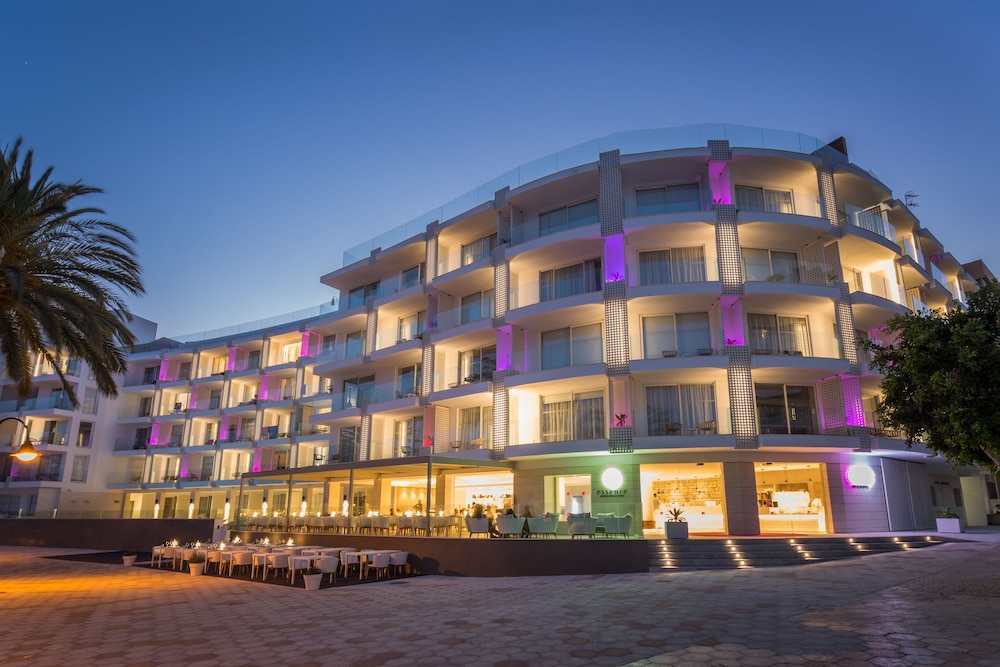
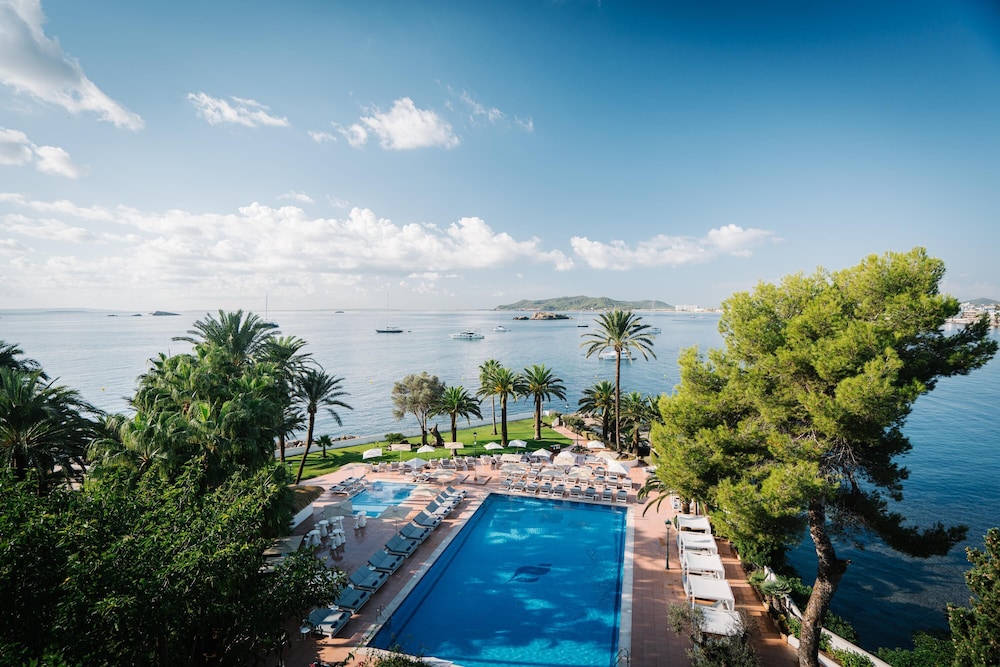
Stays near the walls of Dalt Vila: the first 6 of 74 stays in the IMPT hotel database in or close to Dalt Vila and Ibiza Town, the nearest area to Walk the walls of Dalt Vila, five-star first, then four-star, then by guest score. Each button opens live prices for your dates in the IMPT app.
The ramparts are public space and there is no charge to walk along the stretches that are open, nor to wander the lanes of the old town. The cathedral and the museums inside the walls set their own entry arrangements and opening hours, which change with the season, so check with the Consell d'Eivissa or the tourist office before a visit built around them.
How do you reach the walls of Dalt Vila from Ibiza Town?
From the port, the climb starts at the Portal de ses Taules, the gate at the top of the harbour ramp, a few minutes on foot from the waterfront. Buses from the airport and the island's beaches stop in and around Eivissa. Cars cannot enter the walls, and parking near the port and the Marina fills quickly in summer.
When is the best time to walk the walls of Dalt Vila?
Spring and autumn give the best combination of light, temperature and space. In summer, walk early in the morning or in the hour before sunset, when the stone has stopped holding the heat. Weekdays outside July and August are quietest. The town itself stays open all year, even when much of the coast closes from November to April.
Can you walk all the way round the Dalt Vila walls?
Not in one unbroken circuit. Paths run along the top of several bastions, and other sections are reached through the lanes inside the town, so the walk is a series of stretches linked by streets and steps rather than a continuous loop. The result is a route you assemble yourself, and a short one.
How hard is the climb up to Dalt Vila?
Short but steep in places, with cobbles, worn steps and uneven stone underfoot. Most people manage it slowly and stop on the way. The walls themselves are not a mountain path, but the combination of heat, glare and polished surfaces makes flat shoes with grip worth the trouble, and a slow pace the sensible plan.
What should you take to walk the walls of Dalt Vila?
Water in a refillable bottle, a hat and sunglasses, and shoes with grip for the cobbles. A light layer helps on the exposed bastions, where the wind is stronger than in the lanes below. Bring less than you think: the steps are many and the lanes are narrow, and a heavy bag becomes a nuisance on the parapets.
Are the Dalt Vila walls suitable for children?
Yes, with supervision. The parapets are low in places and the steps are worn, so keep young children close on the bastions and away from the outer edges. The climb is short enough for most legs, and the lanes offer shade and places to stop. Water and a slow pace matter more than any particular route.
Why are the Dalt Vila walls part of a UNESCO World Heritage Site?
They belong to the listing 'Ibiza, Biodiversity and Culture', added in 1999. It joins the fortified upper town with the posidonia meadows and coastal ecosystems between Ibiza and Formentera, the Phoenician settlement of Sa Caleta and the Phoenician-Punic necropolis of Puig des Molins, treating the sea and the stone as one subject.
Is Dalt Vila open in winter?
The old town is lived in and open all year, and the ramparts stay accessible when much of the island's seasonal business closes between November and April. Opening hours at the cathedral, the museum and the tourist office shorten, and flights and ferries are fewer, so check before travelling and expect a quieter, cooler walk.
Photo credits: steve p2008, CC BY 2.0, via Wikimedia Commons; anibal amaro, CC BY 3.0, via Wikimedia Commons; Vicenç Salvador Torres Guerola, CC BY-SA 3.0, via Wikimedia Commons.
Watch
Ibiza
Half a minute of Ibiza, from the old town of Dalt Vila to the coves and headlands of the coast.
Captions are built in; the transcript is on the Ibiza page.
Video: JUAN CARLOS NAVALON SANCHEZ, Steven HAuse, Haseeb Ahmad, Josh Tavernier, Boris Ivas, Luca Musella on Pexels