A seasonal craft market at El Pilar de la Mola, high on the plateau above Es Caló. Wednesdays and Sundays bring makers, produce and a slow morning in the island's quietest corner.
Wednesdays and Sundays in seasonbest time
Es Calónearest area to stay
13.7 kmfrom La Savina port, straight line
El Pilar de la Mola market is a seasonal gathering of craftspeople and growers in the small village on Formentera's eastern plateau. It runs on Wednesdays and Sundays while the season lasts, drawing visitors up the road from Es Caló and Sant Ferran. The market is modest in size, and the trip is as much about the plateau, the lighthouse and the long views back over the island as about the stalls themselves.
01
A market on the plateau
El Pilar de la Mola sits on the eastern plateau, the high, flat ground that ends at the Far de la Mola lighthouse. The village is small: a church, a handful of houses and lanes, open ground around them. In season the market fills that space with stalls of crafts, textiles, leather, jewellery and ceramics, much of it made on the island, alongside produce from smallholdings and kitchens. It is not a large fair, and that is part of its character.
The setting does a lot of the work. La Mola is about 190 m above the sea, exposed to the wind, with fields divided by dry stone walls and juniper and pine bent by the tramuntana. Mornings are clear and the light is strong. Because the plateau is quiet outside the market days, the village keeps a working feel: people live here year-round, and the market arrives around them rather than the other way round.
Expect a mix of stalls rather than a single style: pottery, woven bags, leather sandals, silver and bead jewellery, painted things for the house, and food to take away. Some stallholders are makers who work through the winter and travel the island in summer; others sell what they grow or preserve. Talk to them. Many are happy to explain how a piece was made, and that conversation is often the best part of a morning here.
The market is small; the plateau, the light and the wind around it are not.
02
Getting to the plateau
El Pilar de la Mola is reached by the road that climbs from Sant Ferran, the main crossroads village between Es Pujols and the south coast. From Es Caló de Sant Agustí, the nearest place to stay, the climb is short. From La Savina and the port the ride is longer, and the green routes marked for walking and cycling give a quieter way up than the road. Distances on Formentera feel short, but the plateau is exposed and the wind can double the effort.
Driving is straightforward outside the busiest weeks, though parking around the village fills on market mornings and the verges are not there to be used. In high season the Consell de Formentera caps the number of visitor vehicles on the island, so check the current rules before bringing a car or scooter over on the ferry. Buses run in season; the timetable changes with the month and the island bus operator is the one to ask.
By bikeThe climb from Sant Ferran or Es Caló is short but steady; start early before the heat and the traffic.
By busSeasonal services link the port and the main villages with the plateau; check times with the island bus operator.
By carCheck the summer vehicle rules with the Consell de Formentera before bringing a car over on the ferry.
On footThe signposted green routes cross the plateau and reach the village without following the main road.
Traditional ball pagès dancing at the El Pilar festival, Formentera03
When to go
Market days are Wednesday and Sunday in season, and both draw a crowd. Come early. The stalls are at their freshest, the light is softer and there is room to talk. By midday in July and August the plateau is hot, the parking is full and the lanes are slow. Spring and autumn are the pleasantest months for the visit: the island is quieter, the sea is still warm in autumn, and the walk between stalls and shade is not a test of endurance.
The market runs while the season lasts and closes outside it, so a winter visit to El Pilar de la Mola means a village, a church and a lighthouse rather than a market. Dates shift from year to year with the island's calendar, and a day that is busy in August can be almost empty in May. Check the current days and the start and end of the season with the Consell de Formentera before planning a Wednesday or Sunday around it.
Check before you goDays, dates and the summer vehicle rules change from year to year. Check the Consell de Formentera and the island bus operator before you set out.
04
Stalls and local produce
The stalls are the reason most people come up. Formentera has a long tradition of small workshops, and the market is where much of that work is sold directly: ceramics, espadrilles and leather, linen and cotton clothing, woven baskets, jewellery, soaps and oils, and wooden and woven goods for the house. Quality varies, as it does anywhere, and the pieces that last are usually the ones whose maker can tell you where the material came from and how it was worked.
Food is the other draw. Expect figs and almonds in their seasons, honey, cheese, cured sausage, olive oil, and the dried fish that has been made on the Pitiusas for centuries. Some of it comes from the stallholder's own land; some is brought in and sold alongside. Ask which is which if it matters to you. Take a bag, buy what you will actually eat, and remember that soft fruit and cheese do not enjoy a long afternoon in a hot saddlebag.
05
Doing it lightly
Formentera is small and its resources are thin. Water is scarce, waste has to leave the island by boat, and the plateau's soil is a thin skin over limestone. A market morning is a good place to put that into practice: carry a refillable bottle, refuse the extra bag, and take everything you bring back down the hill with you. The bins in the village fill quickly on market days, so plan on carrying your rubbish until you find one with room.
Respect the makers. Ask before taking photographs of a stall or a person, particularly close up, and do not handle ceramics, textiles or paper without invitation. Haggling is not the custom here; the price is the price and the work is the work. Keep to the lanes and the marked paths rather than cutting through the fields and dry stone walls, which are working boundaries and take a long time to repair.
Wind is the constant on La Mola. It will lift a hat, a map or a paper bag, and it will take them into the fields. Hold on to what you buy, secure packaging before you walk away and close bags properly. The same wind keeps the plateau cool in the middle of summer, so a light layer is worth having even when the coast below is stifling and still.
Carry it outTake packaging and bottles back down with you; bins in the village fill fast on market days.
Ask firstPhotographs of stalls and makers need a word of permission before the camera comes out.
Stay on the pathThe dry stone walls and fields are working boundaries, not shortcuts across the plateau.
Bring waterA refillable bottle matters here; the plateau is exposed and shade is scarce between the stalls.
The Casa del Poble in El Pilar de la Mola, Formentera
Protect itThe plateau's soil, walls and water are fragile. Buy what you need, carry out what you bring, and leave the fields and the stalls as you found them.
06
What to bring
A market morning on La Mola is simple to pack for. Water first, in a bottle you can refill. A hat, sunglasses and sun cream, because the plateau has little shade and the sun is strong from spring onwards. A light layer against the wind. Cash in small notes, since not every stall is set up to take a card and the signal on the plateau is not always helpful. A cloth bag for anything you buy, so you are not collecting plastic on the way round.
Wear shoes you can walk in. The village lanes are paved, but the ground around the market and the paths out to the lighthouse and the coast are rough, stony and dusty. If you are cycling, bring a lock and lights, and check the tyres before the climb. If you are walking the green routes, take a map or a charged phone, since the signposts are good but the plateau's tracks branch more often than they look.
07
What is nearby
The Far de la Mola stands at the eastern end of the plateau, a lighthouse with a small square and a wide view of open sea. It is a short ride or a longer walk from the village, and the cliffs below it are best admired from a distance. Cap de Barbaria, the southern cape, has its own lighthouse and a much wilder approach. Both are places to go early or late, when the light is low and the wind has quietened.
Es Caló de Sant Agustí, below the plateau, has the boat houses and the small harbour that the island's fishermen built and still use. Sant Ferran de ses Roques, on the road up, has the church and the square where the village gathers. Ca na Costa, the megalithic tomb near Es Pujols, is about 4,000 years old and the oldest known monument on the Pitiusas. All of them fit into the same half day if you start early.
Far de la MolaThe lighthouse at the eastern end of the plateau, with open sea and cliffs below.
Cap de BarbariaThe southern cape and its lighthouse, reached by a rough track and best at the ends of the day.
Es CalóThe boat houses and small harbour below the plateau, on the island's north coast.
Ca na CostaThe megalithic tomb near Es Pujols, about 4,000 years old and the oldest monument on the Pitiusas.
08
Practical notes
The plateau is high, exposed and dry, and the weather changes the visit. Wind can make a warm day feel cold and a cold day feel raw. In summer the sun is the main thing to manage: go early, drink often, and take shade where you find it. The market and most of the businesses around it close from roughly November to April, when the village returns to its winter self and the roads are quiet. Winter ferries from Ibiza are fewer, too.
Mobile coverage on the plateau can be patchy, so download what you need before going up. In an emergency dial 112. The Balearic sustainable tourism tax is charged by accommodation, not at the market, and the rate depends on the type of stay and the season; check the Govern de les Illes Balears site for current rules. If you are staying below at Es Caló, the climb is short enough to do twice in a day.
Where to wake up
Stays near El Pilar de la Mola market
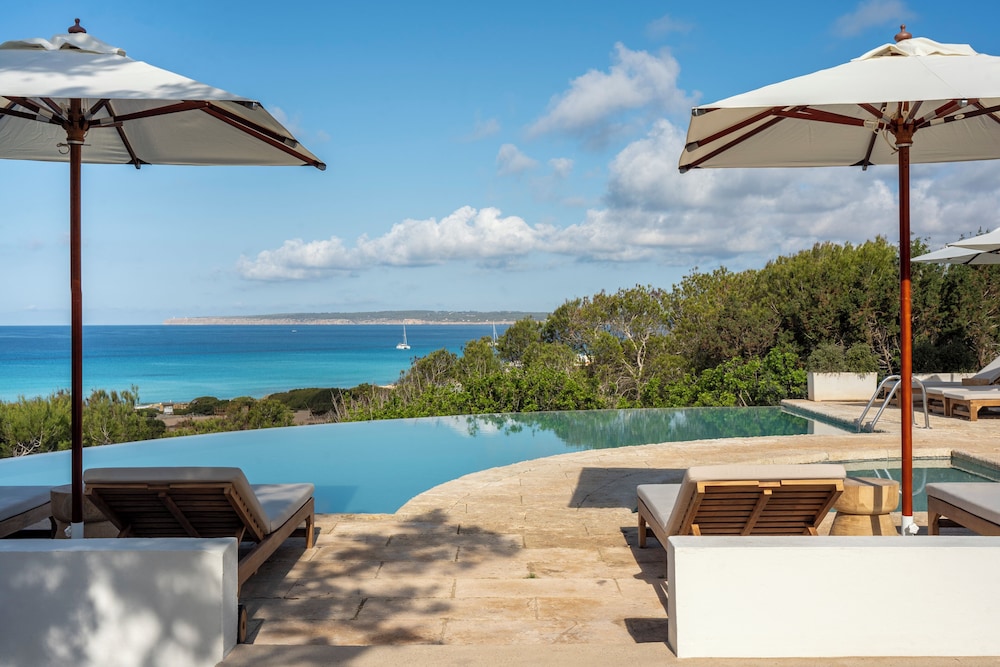
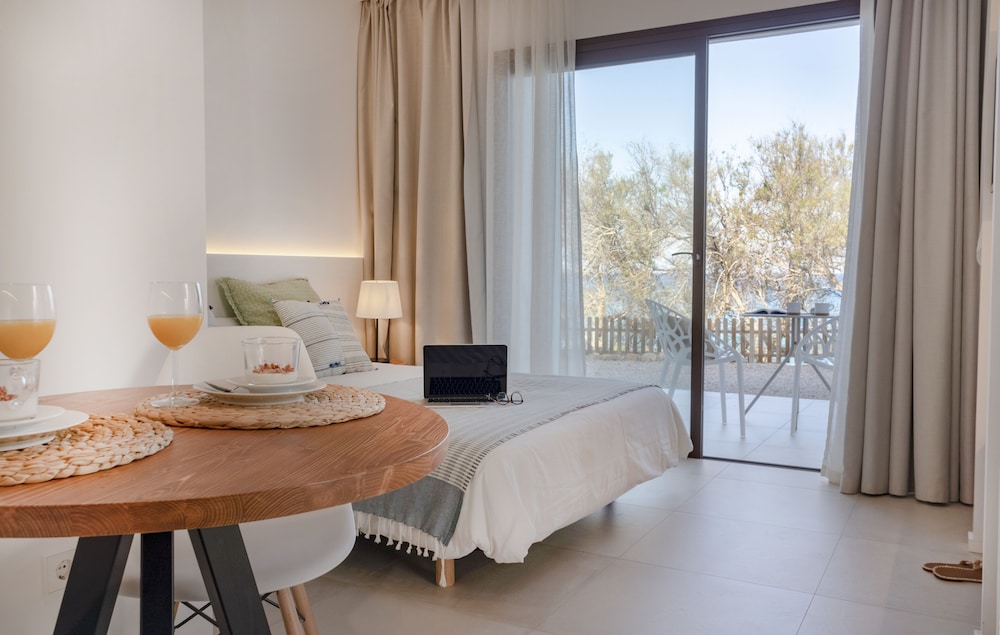
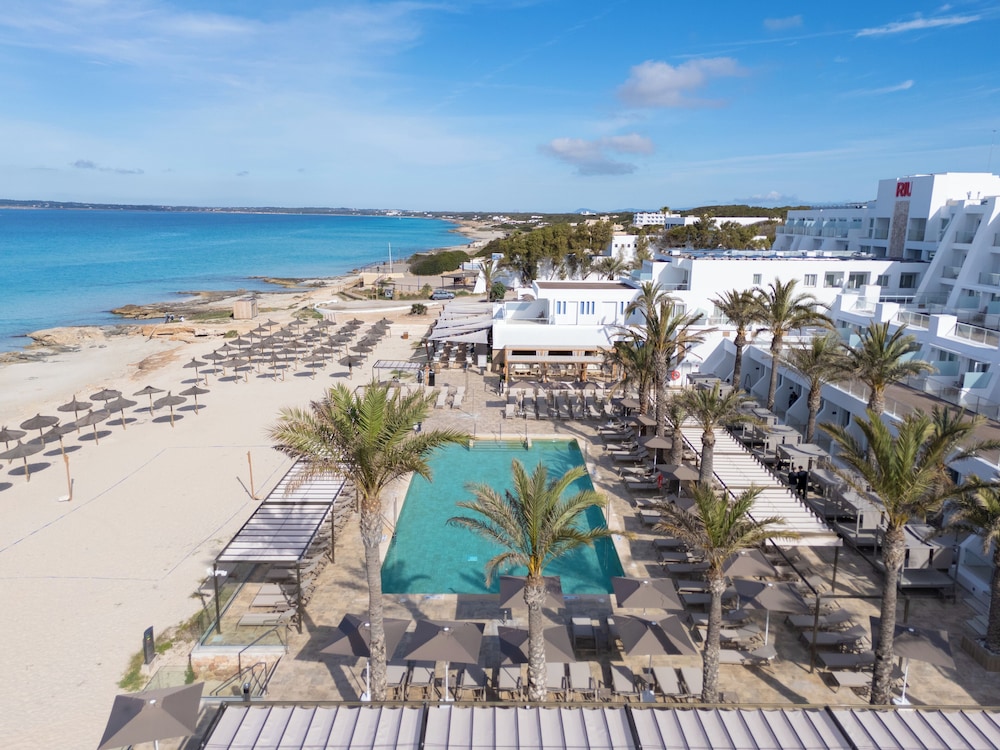
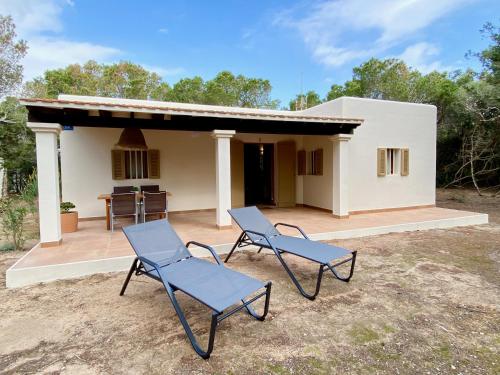
Stays near El Pilar de la Mola market: the first 6 of 26 stays in the IMPT hotel database in or close to Es Caló de Sant Agustí, the nearest area to El Pilar de la Mola market, five-star first, then four-star, then by guest score. Each button opens live prices for your dates in the IMPT app.
The market is held on Wednesdays and Sundays during the season, which runs through the warmer months of the year. Dates shift from year to year, so check the current days and the start and end of the season with the Consell de Formentera before building a day around it.
How do you reach the El Pilar de la Mola market from Es Caló?
From Es Caló de Sant Agustí the road climbs to the plateau in a short distance, and the marked green routes give a quieter way up on foot or by bike. Buses run in season from the port and the main villages, though timetables change with the month; check with the island bus operator.
Is the El Pilar de la Mola market open in winter?
No. The market closes outside the season and much of the visitor business around it closes with it, roughly from November to April. El Pilar de la Mola itself stays inhabited all year, and the church, lanes and lighthouse can be visited in winter, though you will find few stalls and fewer people.
Do you need a car for the El Pilar de la Mola market?
Not necessarily. Bikes, the seasonal buses and the green routes all reach the plateau. A car is convenient if you are staying far away or carrying shopping, but in high season the Consell de Formentera caps visitor vehicles on the island, so check the current rules before bringing one over on the ferry.
What is sold at the El Pilar de la Mola market?
Stalls sell crafts and island produce: ceramics, textiles, leather, jewellery, baskets, soaps and oils, alongside figs, almonds, honey, cheese, oil and dried fish in their seasons. Some stallholders are makers who work on the island through the winter; others sell what they grow or preserve. Ask about the origin of a piece or a jar and you will usually get a straight answer.
How busy is the El Pilar de la Mola market?
It is a modest village market rather than a large fair, but on market mornings the lanes and the parking area around El Pilar fill, especially in July and August. Arrive early for room to talk to the stallholders and to walk the village without queueing for shade. Spring and autumn days are noticeably calmer.
How much time does a visit to the El Pilar de la Mola market take?
A morning is enough for the market itself, with time to walk the lanes and the church square. Most visitors add the Far de la Mola at the end of the plateau, which makes it a half day, or combine it with Es Caló below or Cap de Barbaria to the south. Starting early keeps the whole thing unhurried.
Can you cycle to the El Pilar de la Mola market?
Yes. The climb from Sant Ferran or Es Caló is short but steady, and the marked green routes cross the plateau. Start before the heat, carry water, and bring a lock, since space around the village is limited on market days. The wind on the exposed plateau can make the ride harder than the distance suggests.
What should you bring to the El Pilar de la Mola market?
Water in a refillable bottle, a hat and sun cream, a light layer for the wind, and cash in small notes for stalls that do not take cards. A cloth bag saves collecting plastic and keeps purchases secure in the wind. Wear shoes suitable for rough, stony ground if you plan to walk on to the lighthouse.