The Favàritx lighthouse sits at the end of a road through dark rock, inside Menorca's natural park. It is a short visit, best made in the late afternoon.
Sunsetbest time
Arenal d'en Castellnearest area to stay
15.6 kmfrom MAH, straight line
Favàritx is a lighthouse on the north-east cape of Menorca, at the end of a road that runs through dark rock inside S'Albufera des Grau Natural Park. People come for the position rather than the building: the slate shelf, the marsh behind it and the low light of late afternoon. The visit is short, the light is the point, and the rules of the park are worth knowing before setting out.
01
A cape of dark rock
Favàritx is the north-east corner of Menorca, where the island's oldest rock meets the sea. The coast here is dark slate, layered and low, not the white limestone of the south. Soil is thin and the vegetation stays low: scrub, rosemary, wild olive in the cracks, and a wind that rarely drops. The road ends at the cape, so the whole landscape arrives at once, with nothing in front of it. It is a place to look at rather than settle into.
The lighthouse stands on the point itself, inside S'Albufera des Grau Natural Park, which is the core zone of the Menorca Biosphere Reserve. The tower is a working navigational light, not a monument you tour, and there is no visitor centre at the cape. What you come for is the position: the rock shelf, the shallow inlets behind it, the salt marsh to the south and the open sea to the north. Seabirds use the point, and the horizon is empty.
02
Getting to the cape
The lighthouse is reached by the road that leaves Maó towards the north-east and runs through the natural park to the coast. It ends at a parking area a short walk from the tower. In high season the number of vehicles allowed on this road can be limited, and the road may be closed at busy times, so check with the Consell Insular de Menorca or the natural park office before setting out. Parking is in marked bays only; the verges are protected.
On foot, the Camí de Cavalls passes through Favàritx on its way round the coast, and the stage from Es Grau is a gentle half-day walk over low rock. The village of Es Grau is served by bus from Maó, with more departures in summer. Bicycles are allowed on the tracks, though the surface is rough in places and the wind can make the return harder. Allow more time than the distance suggests. There is no shade on the way.
By carThe access road from Maó ends at a car park near the tower; check summer limits.
On footThe Camí de Cavalls links Es Grau and Favàritx over low, exposed rock.
By busBuses run from Maó to Es Grau; check the island operator for times and season.
With a bikeTracks are open to bikes, but the surface is rough and the wind strong.
The striped tower of Favàritx lighthouse, Menorca03
The best time to go
Late afternoon suits Favàritx better than any other hour. The rock is dark and absorbs light all day, so at midday it reads as flat grey; in the last hours the low sun lifts the layers and shows the grain of the slate. In summer the sun sets behind the cape rather than into the sea, so the point glows instead of silhouetting. Allow time to be there an hour before sunset. Bring a layer; the wind arrives with the shade.
Spring and autumn are the comfortable months: the light is good, the paths are quiet and the temperature suits walking. In summer, come early or come late, because the cape has no shade and the rock holds heat. Winter is a different visit, with a low sun, longer shadows and the tramuntana wind blowing straight across the point. The cape is accessible all year, though the weather can change plans. Clear days after rain give the longest views.
Wind is the local variable. The tramuntana blows from the north and can turn a mild afternoon cold within minutes, and it is felt most where the paths are exposed. Days after rain tend to be the clearest, with the rock dark and the horizon sharp. If strong wind is forecast, the marsh paths behind the cape are the calmer option, and they show the same landscape from a different angle. A jacket decides how long the visit lasts.
The rock is dark all day; late light is what lifts it.
04
What you do there
The visit is simple. Park, walk the last stretch to the tower, and follow the paths that run along the point and back into the marsh. There is no circuit to complete and no building to enter; the interest is in looking, at the layering of the rock, the shallow pools, the birds working the rocks and the way the coast continues north out of sight. Most people stay under an hour. Two hours covers the point and the marsh edge.
A short walk south from the cape leads towards the marsh and the lagoon of S'Albufera des Grau, where the waterbirds are. The paths are marked and the ground is uneven, so shoes with grip help. Keep to the marked line: the vegetation on the rock is thin and slow to recover, and the salt marsh edge is fragile. Photographers tend to walk past the tower to the far side, where the shelf is widest. It is also where the wind is strongest.
05
Rules in the natural park
Favàritx sits inside a natural park that forms the core of the Menorca Biosphere Reserve, and the rules are the ordinary ones of a protected coast. Stay on the marked paths, leave the rock and plants where they are, and take everything away with you. Fires and camping are not allowed. Dogs are best left at home or kept strictly on a lead, and drone use is regulated, so ask the natural park office before flying. Parking outside the bays damages the verge.
The wetland behind the cape is the reason the area is protected. It is a stopping place for birds on migration and a breeding site for species that need quiet water and undisturbed margins. Getting close for a photograph pushes birds off nests and away from feeding grounds, so use binoculars and keep to the paths at the lagoon edge. The best views of the marsh are from the marked viewpoints. Binoculars turn a short stop into an hour.
Stay on pathsTrampled scrub on thin soil does not come back quickly.
Take it awayThere are no bins at the cape; carry litter back to Es Grau or Maó.
No firesBarbecues, stoves and camping are not permitted anywhere in the park.
Keep distanceUse binoculars rather than approaching birds or the marsh edge.
Ask about dronesDrone flights are regulated; check with the natural park office first.
Favàritx lighthouse on the dark slate of its cape, Menorca
Protect itThe cape is protected because the rock, the marsh and the birds are interdependent. Staying on the path and carrying litter out keeps it that way.
06
What to bring
There are no facilities at the cape: no café, no kiosk, no water tap, no bins and no shade. Bring what you need and take it back. Water matters more than visitors expect, because the wind dries you out without the heat being obvious. A hat, sun protection, a windproof layer and shoes with grip cover most conditions. Binoculars are worth carrying if the marsh is part of the plan. A phone with a map helps on the tracks inland.
In summer, water and sun protection are the two things people forget. In winter and early spring, the wind is what catches people out, and a warm layer is more useful than a heavy coat. A torch helps if staying for sunset, since the walk back to the car park is unlit. Cash and cards are of no use at the cape itself; the nearest places to buy anything are in Es Grau and Maó. Fill bottles before leaving the village.
WaterCarry more than seems necessary; there is no tap at the cape.
WindproofThe tramuntana crosses the point even on bright days.
GripThe rock shelf is uneven and slippery where it is wet.
TorchSunset visits end in the dark, and the road back is unlit.
07
What is nearby
The obvious companion to Favàritx is Es Grau, the small village on the lagoon's edge, with a beach, a few places to eat in season and paths into the wetland. The S'Albufera des Grau natural park has marked routes and viewing points, and an information point where the rules and closures are posted. Together, the cape and the lagoon fill a morning or a long afternoon without much driving. Birds are best early, before the light hardens.
South of the park, Maó is the nearest town of any size, with the long harbour, the markets and ferries to Mallorca and Barcelona. Es Castell, at the mouth of the harbour, and Sant Lluís, inland, are both a short drive from the Favàritx road. The islet of Illa d'en Colom lies offshore from Es Grau and can be seen from the cape; access is by boat in season only. Allow time for the harbour before the light goes.
08
Practical notes
Favàritx has no facilities, no lifeguard and no swimming beach. The rock shelf is not a place to get into the water. The nearest sand is at Es Grau, and the coves on the same stretch of coast are reached on foot and have no services. Mobile coverage is patchy on the far side of the point. Sunset attracts a crowd in summer, and the car park fills; arriving early avoids the worst of it. Weekdays are quieter than weekends in July and August.
Access by car is the one thing most likely to change from year to year. At busy times in summer the Consell Insular de Menorca can limit vehicles on the Favàritx road, and the natural park office publishes current conditions. Bus times to Es Grau change with the season too. Check before a sunset visit in July or August, when the road may close early and the walk back is in the dark. Allow for a longer walk if a barrier is up.
Check before you goSummer vehicle limits and bus times change. Check the Consell Insular de Menorca and the natural park office for current access before a sunset visit.
Where to wake up
Stays near Favàritx lighthouse
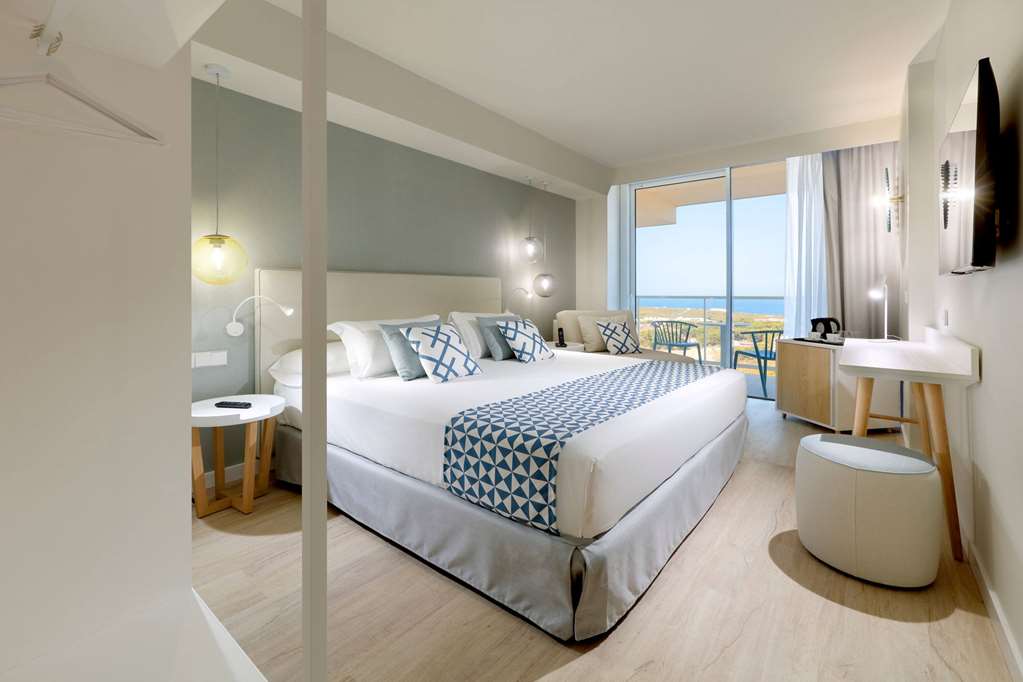
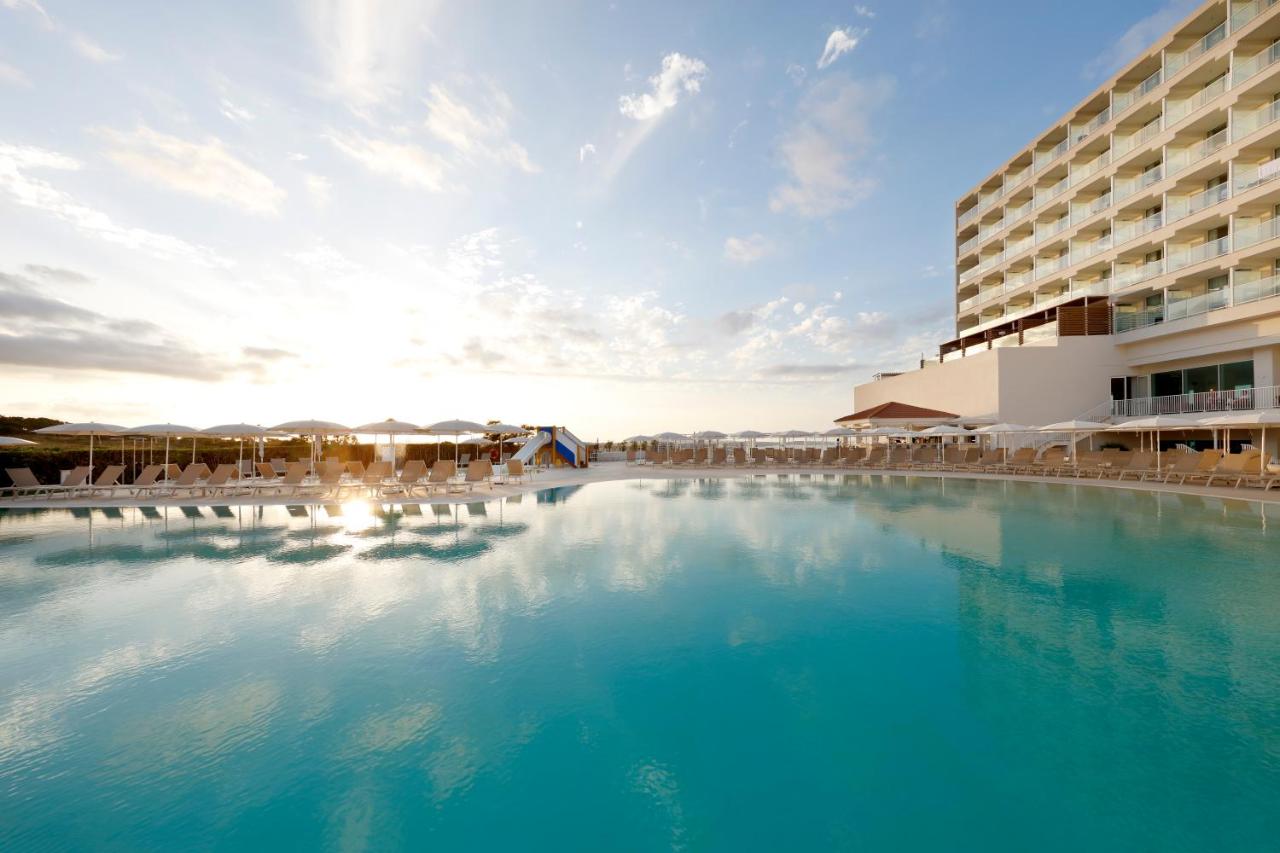
Stays near Favàritx lighthouse: the first 6 of 79 stays in the IMPT hotel database in or close to Arenal d'en Castell, the nearest area to Favàritx lighthouse, five-star first, then four-star, then by guest score. Each button opens live prices for your dates in the IMPT app.
It stands on the north-east cape of Menorca, at the end of the road from Maó, inside S'Albufera des Grau Natural Park. The cape is where the island's older, darker rock meets the sea. The road ends at a car park a short walk from the tower, and the Camí de Cavalls passes through the same point.
Can you go inside the Favàritx lighthouse?
No. The tower is a working navigational light and is not open as a visitor attraction, and there is no interpretation centre at the cape. The visit is outdoors: the point, the rock shelf, the marsh behind it and the paths of the natural park. Anyone hoping for a museum or a climb to the lantern will find none.
How long does a visit to the Favàritx lighthouse take?
Most visits last under an hour: a walk from the car park to the tower, a look at the point and a slow return. Add another hour if the marsh paths and the S'Albufera information point are included, and more again if arriving on foot along the Camí de Cavalls. Photographers should allow the hour before sunset.
What is the best time to see the Favàritx lighthouse?
Late afternoon, in the hour or so before sunset. The slate is dark and flat at midday, and the low sun brings out its layers. In summer, mornings are cooler and quieter for walking. The cape is exposed in any wind, so a calm day matters as much as the hour. Spring and autumn combine good light with comfortable temperatures.
How do you get to the Favàritx lighthouse without a car?
Take a bus from Maó to Es Grau, then walk the Camí de Cavalls to the cape. The stage crosses low, open rock with little shade, so allow more time than the distance suggests and carry water. Bus times change with the season and departures are fewer outside summer. Check the island bus operator before relying on a late return.
Can you park at the Favàritx lighthouse?
There is a parking area at the end of the access road, a short walk from the tower. At busy times in summer the Consell Insular de Menorca can limit vehicles on the road, and parking outside the marked bays damages the verges. Check current access before setting out, especially for a sunset visit in July or August.
Is there a beach at Favàritx?
No. The cape is rock, with a low shelf and shallow inlets, and it is not a place to swim. The nearest sand is at Es Grau, on the lagoon, which has a beach and a village. The small coves on the same stretch of coast are reached on foot and have no facilities or lifeguard.
Is the Favàritx lighthouse area open in winter?
The cape is accessible all year, and winter visits have their own character: a low sun, long shadows and the tramuntana wind. What changes is everything around it. Buses to Es Grau are fewer, places to eat in the village close roughly from November to April, and the weather can close the day down. Check conditions before travelling.
Why is the Favàritx lighthouse inside a natural park?
The cape sits within S'Albufera des Grau Natural Park, the core zone of the Menorca Biosphere Reserve, which was listed in 1993. The protection covers the dark rock of the north coast, the salt marsh and lagoon behind the cape, and the birds that use them. The lighthouse and its access road are part of that protected landscape.
Photo credits: Markus Trienke, CC BY-SA 2.0, via Wikimedia Commons; Toniespi, CC BY-SA 4.0, via Wikimedia Commons; MontanNito, CC BY-SA 3.0, via Wikimedia Commons.
Watch
Menorca
Menorca's coast in three scenes, ending with sunset at Fornells.
Captions are built in; the transcript is on the Menorca page.
Video: Raymond Petrik, Angelo Esposito, Agusti Perez on Pexels