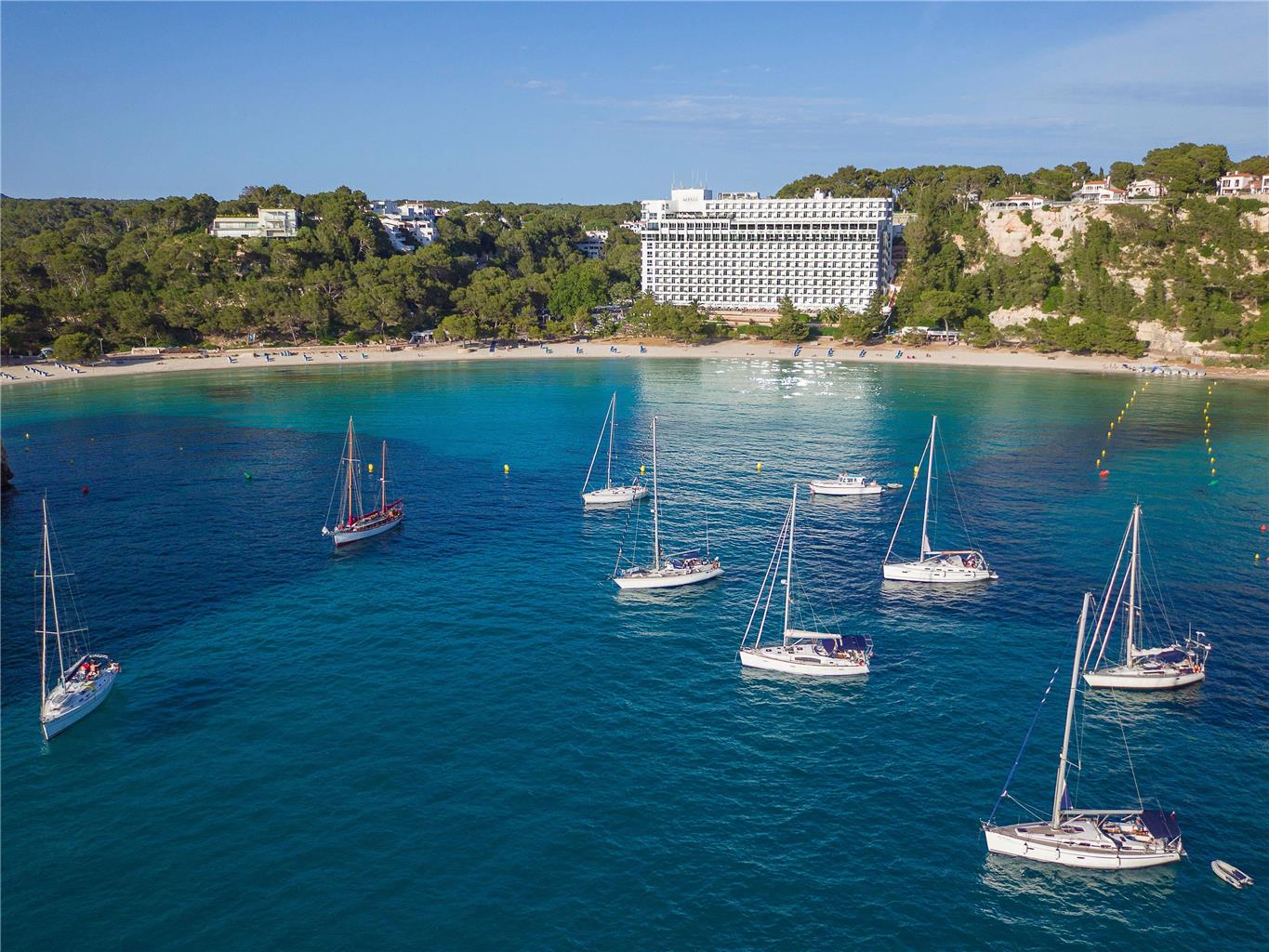
A south coast cove of white sand and pine, best reached on foot or by bus and best seen before the boats arrive. Swim early, then walk on to Macarelleta.
Early morningbest time
Cala Galdananearest area to stay
25.3 kmfrom MAH, straight line
Cala Macarella is the beach most people picture when they think of Menorca's south coast: white limestone sand, pines behind, water that shifts from pale green to blue as you wade out. It is a cove to swim in, not a resort beach. Arrive early, or come by bus, and the day is simple.
01
A white cove under pines
Cala Macarella is a south coast cove in the Migjorn, the limestone half of Menorca where the rock is pale and the sand follows it. The beach is a curve of white sand held between low, wooded headlands, with pines growing almost to the waterline and scrub and stone rising behind. The smaller cove of Macarelleta lies beyond the headland, reached on foot, and the two are usually spoken of together. It is one of the best known beaches on the island and, in August, one of the busiest.
The cove faces south, which decides most of what happens here. It sits out of the tramuntana, the northerly wind that roughens the north coast, so the water is often flat and clear while other parts of Menorca are choppy. The sand shelves gently, the colour comes from white limestone and shallow water, and the pines hold the shade at the back. It is a swimming cove rather than a long beach. There is little to do here but swim, sit and look, which is the point.
The cove faces south, and that single fact decides almost everything about the day.
02
Getting to the cove
Most people reach Cala Macarella on foot, and the last stretch is always a walk. The approach is by the minor road that serves this stretch of the south coast, where parking is limited and fills early in summer; from there a track leads down through the pines to the sand. The other route is the Camí de Cavalls, the coast path that runs past the cove, brings walkers in from Cala Galdana and carries on west past Macarelleta.
Public transport reaches this part of the coast in summer, and it is the simplest way to arrive without hunting for a space. Services are seasonal and timetables change, so check with the island bus operator before planning the day. Out of season the picture is different: buses thin out or stop altogether, the road is quiet, and the walk in becomes the only way to arrive. Whichever way you come, the sand stays car-free, which is part of why the cove feels as it does.
On footThe Camí de Cavalls passes the cove, and the walk in from Cala Galdana is the classic approach.
By busSummer services reach this stretch of coast; check current times with the island bus operator before setting out.
By carParking near the cove is limited and fills early; arrive at the start of the day and expect to walk down.
By seaSmall boats visit in summer; anchoring over posidonia is regulated and buoys are used in some bays.
Turquoise water and pine at Cala Macarella, Menorca03
When to swim here
Early morning is the best of it. The sun comes over the low ground behind the beach and lights the water before the boats and buses arrive, and for a while the cove belongs to whoever walked in first. The sand is still cool, the pines throw long shade, and the swim is quiet. By mid-morning in July and August the beach fills, and the difference between eight and eleven is the whole character of the day.
Water temperature decides how long you stay in. It is typically about 18–19 °C in May, 22–23 °C in June, 25–26 °C in August and 23–25 °C in September, and those are averages rather than a forecast. May and October suit people who like a bracing swim; June and September give warm water without the height of the crowd. Wind changes everything on this coast, so read the forecast the night before.
Check before you goBus timetables, parking rules and the summer buoy fields change from year to year. Check the Consell Insular de Menorca and the island bus operator before you set out.
04
How to swim the cove
Swim out from the middle of the beach, where the sand shelves, then turn and look back at the pines; the cove reads differently from the water, and the white sand shows how shallow it stays. The sides are rocky, with loose stones and small fish, and a mask is worth more here than on a long flat beach. Keep the swim modest unless you know the water: boats come and go, and the headlands hide what is approaching.
For a longer route, follow the shore towards the headland that separates Macarella from Macarelleta. The crossing is short but open to the channel, so go with someone, keep close to the rocks where the water is calmest, and come back the way you went rather than cutting across the middle. Look before you cross, because small boats use the channel in summer. Most people swim, dry off in the shade of the pines and walk back up before the day heats.
05
Seagrass and the rules
The clear water is not an accident. Posidonia oceanica, the seagrass that grows only in the Mediterranean, forms meadows offshore from the shallows to about 30–40 m deep; it filters the water, holds the sand in place and shelters fish. Anchoring over the meadows is regulated by a Balearic decree, and mooring buoys are installed in some bays in summer. If you arrive by boat, use a buoy where one exists and check the current rules before you anchor.
On the beach the rules are the ordinary ones, and they matter more as the island gets busier. Take everything back up with you, including fruit skin and cigarette ends. Do not move stones or take sand. Open fires are risky in dry months and are best left alone, with local notices worth reading in high summer. Menorca is a UNESCO Biosphere Reserve, and the south coast coves are the reason many people come; keeping them plain is the whole point.
The coastal path between Cala Macarella and Macarelleta, Menorca
Protect itLeave the posidonia alone. Do not anchor on the dark patches offshore, do not drag a chain across them, and use a buoy where the bay has one.
06
What to bring
Bring water, and more than seems necessary: the track down is exposed and the climb back up is warmer than the beach. Food is worth carrying, since what is sold at the cove is seasonal and limited. Footwear for the walk and for the stones at the water's edge makes the day easier, and a mask, a hat and something to sit on complete the list. Nothing on it is heavy, and every item is easier to carry down than to do without at the bottom.
Shade is the thing people forget. The pines give cover at the back of the beach, but the front is open all day and the sand gets hot. A light cloth, a sun hat and high-factor sunscreen cover it. Bring a bag for your rubbish, because there may be nowhere to leave it, and a dry bag if you plan to swim along the rocks rather than straight out from the middle.
WaterCarry more than you think you need; the walk back up is hotter than the beach.
FoodBring lunch; what is available at the cove is seasonal and limited outside high summer.
FootwearTrainers or sandals for the track down and the stones at the water's edge.
MaskA snorkel mask earns its place along the rocky sides of the cove.
Rubbish bagTake everything back up with you, including fruit skin and wrappers.
07
What is nearby
Macarelleta, the smaller cove beyond the headland, is the obvious second swim and is reached on foot over the rocks or along the path. It has the same white sand and pine in a smaller frame. Cala Galdana, the nearest place to stay, has the beds, the buses and the flat ground that the coves themselves do not, and the Camí de Cavalls carries on around the island from there. Both coves sit on the same path, so the walk between them costs little.
West along the coast path the next of the south coast coves is Cala Turqueta, and beyond it the beaches run towards Ciutadella. East the path goes to Cala Galdana and on. Ciutadella, the old capital, is the town for this side of the island, with the harbour, the lanes and the evening walk. Inland, the stone monuments of the Talayotic era stand in the fields, and Es Mercadal sits under Monte Toro.
MacarelletaThe smaller cove beyond the headland, reached on foot, with the same white sand and pines.
Cala GaldanaThe nearest place to stay, with buses, beds and easier walking than the coves allow.
Camí de CavallsThe coast path passes the cove and links it with Cala Galdana and the coves to the west.
Cala TurquetaAnother south coast cove along the path, with the same limestone and pine.
08
Practical notes
Much of the seasonal business on this coast, from beach bars to boat trips and summer buses, closes roughly from November to April. In winter the cove is quiet and the walk in is the way to arrive; in summer it is busy and the early start matters. The main towns stay open year-round. Check the season before you build a day around anything other than sand and water.
The emergency number is 112. Mobile coverage on the coast is patchy in places, so tell someone where you are going if you walk the path alone. Rules on parking, anchoring and vehicle numbers change; the Consell Insular de Menorca publishes the current position, and the natural park office can answer questions about the marine area. Reading the notices at the top of the track takes a minute and saves trouble.
Where to wake up
Stays near Cala Macarella
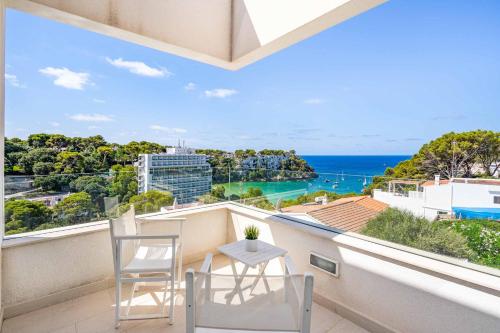
Stays near Cala Macarella: the first 6 of 21 stays in the IMPT hotel database in or close to Cala Galdana, the nearest area to Swim at Cala Macarella, five-star first, then four-star, then by guest score. Each button opens live prices for your dates in the IMPT app.
Cala Macarella is on the south coast of Menorca, in the Migjorn, the limestone half of the island where the coves are white and the pines come down to the water. It lies between Cala Galdana and the coves to the west, and the Camí de Cavalls passes above it. The nearest place to stay is Cala Galdana.
How do you get to Cala Macarella?
Most visitors walk in. A minor road serves this stretch of the south coast and a track leads down through the pines to the sand; summer buses also reach the area. The Camí de Cavalls brings walkers along the coast from Cala Galdana. Check current bus times and parking rules with the island bus operator and the Consell Insular de Menorca before setting out.
Can you park at Cala Macarella?
Parking near the cove is limited and fills early in summer, and the rules change, so check the current position with the Consell Insular de Menorca before you drive. Many people park further out and walk, or take the bus. Arriving at the start of the day gives the best chance of a space and a quiet beach.
When is the best time to arrive at Cala Macarella?
Early morning. The sun reaches the water before the boats and buses arrive, the sand is cool and the pines give shade at the back of the beach. In July and August the cove fills quickly from mid-morning, so the difference between an early and a late start is the character of the whole day.
What is the water temperature at Cala Macarella?
Typically about 18–19 °C in May, 22–23 °C in June, 25–26 °C in August and 23–25 °C in September. These are averages rather than a forecast, and wind can change the water quickly on this coast. Look at the forecast before you go and take a light layer for the walk back up.
Can you walk from Cala Galdana to Cala Macarella?
Yes. The Camí de Cavalls, the coast path that circles Menorca, links Cala Galdana with Macarella and Macarelleta and continues west along the south coast. Take water, wear shoes with grip and allow time for the return climb. The path is waymarked; ask at the tourist office in Cala Galdana or Ciutadella for current notices.
Can boats anchor at Cala Macarella?
Anchoring over posidonia meadows is regulated by a Balearic decree, and mooring buoys are installed in some bays in summer. If you arrive by sea, use a buoy where one is provided and check the current rules before you anchor. The Consell Insular de Menorca and the natural park office can confirm what applies this season.
Is Cala Macarella worth visiting in winter?
Yes, if you want the cove to yourself. The catch is that the seasonal businesses on this coast, from beach bars to boat trips and summer buses, close roughly from November to April, so the walk in becomes the way to arrive. The cove itself is quiet and colder, and the water is a bracing swim rather than a long one.
Can you swim from Cala Macarella to Macarelleta?
The crossing to the smaller cove is short but open to the channel between the two beaches, and small boats use it in summer. Go with someone, keep close to the rocks, and check conditions before setting off. For many swimmers the walk over the headland and a separate swim at Macarelleta is the easier choice.
Photo credits: Marcelsala007, CC BY-SA 3.0, via Wikimedia Commons; Markus Trienke, CC BY-SA 2.0, via Wikimedia Commons; Nicolas Vigier, CC0, via Wikimedia Commons.
Watch
Menorca
Menorca's coast in three scenes, ending with sunset at Fornells.
Captions are built in; the transcript is on the Menorca page.
Video: Raymond Petrik, Angelo Esposito, Agusti Perez on Pexels