A sheltered curve of pale sand on Menorca's south coast, with pine woods behind it, the Camí de Cavalls running through, and some of the island's wildest coves a walk away.
23.8 kmfrom MAH, straight line
21stays in the IMPT hotel database
Southcoast
Cala Galdana works as a base because it puts the beach and the coast path in the same place. The bay has sand, shallow water and shelter from most winds, and the buildings sit behind it rather than over it. Several of Menorca's best-known wild calas are within walking distance, which is the real argument for staying here.
01
The shape of the bay
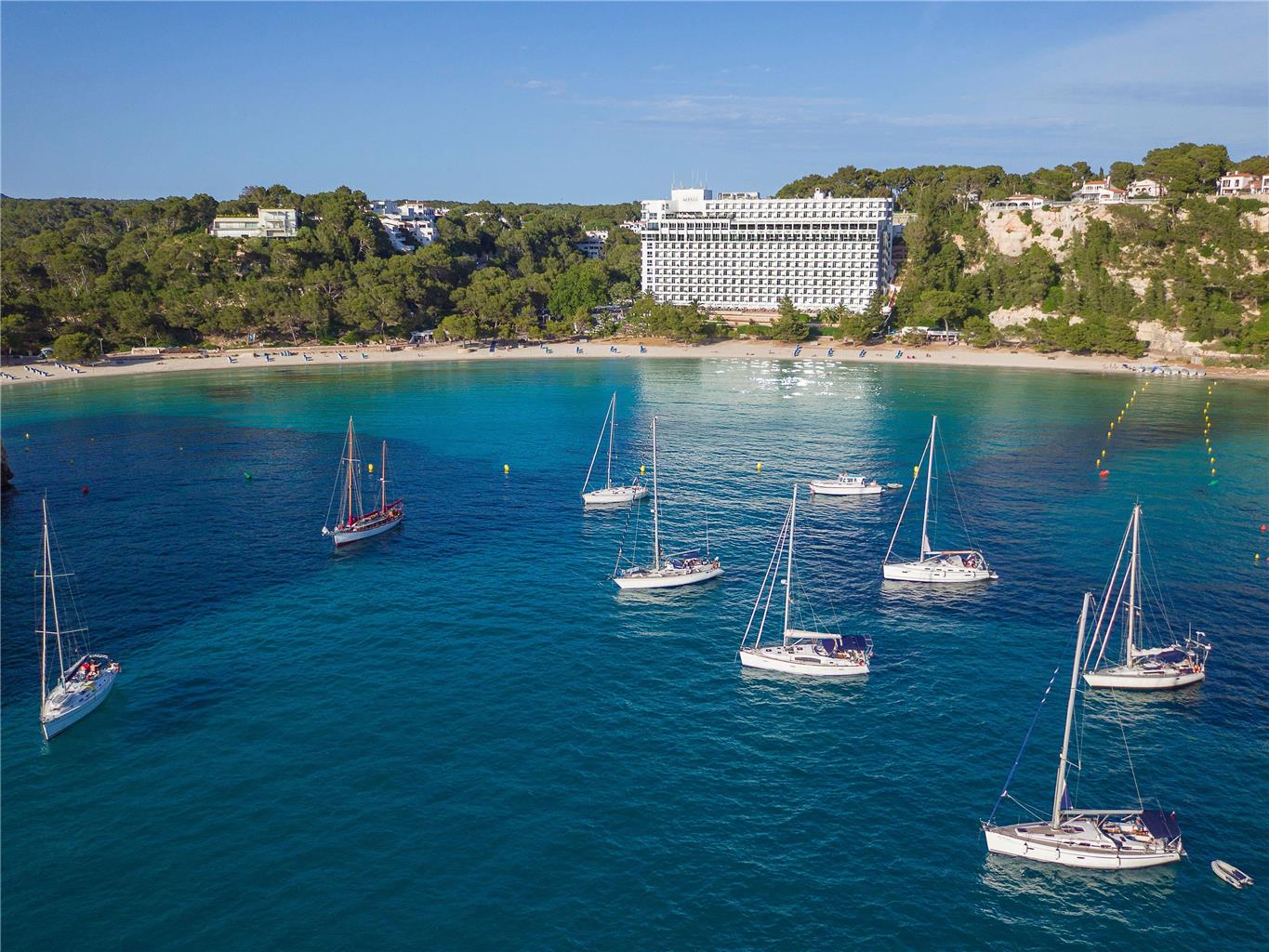
Cala Galdana is a deep, almost circular inlet on Menorca's south coast, in the municipality of Ferreries. Pine woods and cliffs close it in on both sides, and a ravine comes down to the back of the beach, which is why the bay feels enclosed rather than open to the horizon. The sand is pale and fine, the limestone kind the south coast is known for, and the water inside the mouth is usually calm.
The built side of the bay is contained behind the sand: low blocks, gardens, a few places to eat, and little else. Everything is within a few minutes of the beach, so a car can stay parked for days. The bay is busiest in late July and August, when the middle of the day belongs to towels and cool boxes, and quietest in May and October, when the same beach holds a fraction of the people.
02
Sand, water and posidonia
The beach is a broad curve of sand with a gentle shelf into the water, which is why it draws families with small children. The bay faces roughly south, so it holds the sun for most of the day and stays sheltered when the tramuntana blows from the north. In a southerly swell the waves come in and the water turns cloudy for a day or two, and the beach loses the calm that makes it easy.
The clear water is the work of Posidonia oceanica, the seagrass that grows in meadows across this part of the coast. It filters the water, holds the sand in place and shelters fish, and it is the reason the sea looks the way it does from the beach. Dark patches offshore are the meadows, not rocks. Anchoring over them is regulated, and mooring buoys are installed in some bays in summer.
Sailing boats at anchor in Cala Galdana bay, Menorca03
The wild calas nearby
The main reason to stay here is what lies either side of the bay. The coast path leaves it in both directions, and within an hour or so on foot the buildings disappear. Cala Mitjana is the nearest of the wild coves, a short walk through the pines. Beyond it, Cala Trebalúger, Cala Macarella and Macarelleta follow along the same path, each one more enclosed than the last, and Cala Turqueta is reached by road and then a walk down.
None of these coves has facilities to speak of, and shade is limited, so carry water and take everything back up the path. The walking is rocky in places and the return always climbs. In summer the popular ones are busy by mid-morning, and the car parks at the road-accessible coves fill early, so an early start or a late afternoon visit changes the day entirely.
Cala MitjanaThe closest wild cove to the bay, reached on foot along the coast path through pine woods.
Cala MacarellaA white sand cove at the mouth of a wooded valley, with the smaller Macarelleta a short walk beyond.
Cala TrebalúgerQuieter than its neighbours and reached only on foot, where a small stream meets the sand.
Cala TurquetaRoad access and then a walk down; the car park fills early in high season.
Within an hour on foot the buildings disappear and the coast becomes what it was.
04
Walking the Camí de Cavalls
The Camí de Cavalls, the GR 223, crosses the bay on its way around the island: about 185 km in 20 stages, following the coast for most of the way. Cala Galdana is a natural stop, with water, food and shade at the point where the path meets the sand. Walkers doing the full route often break here, and day walkers use the bay as a starting point for a stretch or two.
The section along this part of the south coast is gentle by Menorcan standards, dropping into each cove and climbing out again, with pine shade in between. Take it early in summer, when the limestone holds the heat of the day. The old bridleway also gives a way to walk up towards Ferreries and on to the villages, using lanes rather than the main road, which makes a half day of it.
05
Who it suits
Cala Galdana suits families first: shallow entry, shelter from the north wind, a beach that can be watched from a table, and everything within a few minutes' walk. It suits walkers who want the coast path at the door and a bed at the end of the day. It does not suit anyone hoping for an empty coast in August, or for a village with a life of its own in winter.
It also works well without a car. The bay has enough for a week of slow days, and summer buses make day trips possible. For a wider choice of places to eat and a town to walk around in the evening, Ciutadella is the nearer of the two main towns, with Maó further east. Both stay open all year, which the bay does not.
FamiliesShallow water, shelter from the north wind and everything within a short walk of the sand.
WalkersThe Camí de Cavalls passes through the bay, with wild coves in both directions.
Without a carThe bay itself is compact, and summer buses reach Ferreries and Maó.
Not for solitudeIn July and August the beach and the car parks are busy; look elsewhere for an empty coast.
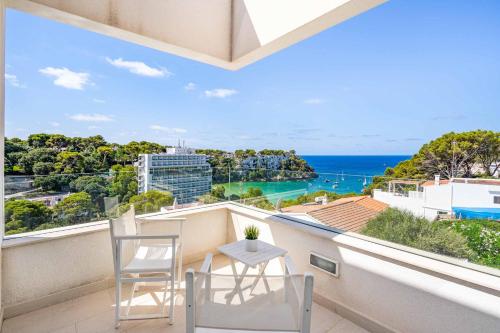
Turquoise water below the pine-topped rock at Cala Galdana, Menorca06
Evenings and food
Eating in the bay is easy rather than memorable: a handful of places behind the beach, a few more attached to the accommodation, and long lunches that turn into the afternoon. Order Menorcan dishes when they appear, from caldereta de llagosta to the island's cheese with olive oil and bread. Mahón-Menorca cheese has a protected designation of origin and turns up on most menus in some form.
For a proper evening, drive up to Ferreries, which stays open all year and has the everyday life the bay lacks: bakeries, shops and bars with people standing at the counter. Ciutadella is further, and worth the trip for its old town and harbour. Many kitchens on this coast shut from roughly November to April, so check before setting out in the shoulder months, when opening days are irregular.
07
Getting there and around
Cala Galdana is about 23.8 km from Menorca Airport in a straight line, and further by road. The drive runs east towards Maó and then west along the main island road, turning south at Ferreries and following the lane down to the bay. The last stretch can be slow in summer. A hire car gives the most freedom; taxis and pre-booked transfers are the alternative for a straightforward arrival.
Summer buses connect the bay with Ferreries and Maó, and the network is thinner outside the season. Check the island bus operator for current times rather than relying on a printed timetable picked up months earlier. Arriving by ferry at Maó, the same road applies. Once in the bay, a car is more hindrance than help, because parking is limited and fills quickly.
By airMenorca Airport (MAH) is about 23.8 km away in a straight line, south-west of Maó.
By roadThe route comes down through Ferreries; the final approach is slow when the bay is full.
By busSummer services link the bay with Ferreries and Maó; check the island operator for times.
By ferryFerries reach Maó and Ciutadella; check the operators for current timetables.
Check before you goSummer bus times, parking in the bay and the state of the coast path all change. Check the Consell Insular de Menorca and the bus operator before setting out.
08
When to go, and going lightly
The season here is short and sharp. From June to September the bay is full, the water is warm and everything is open. May, late September and October are better for walking and for having a cove to yourself, with the sea around 18-19 °C in May and 23-25 °C in September. Winter is quiet: many hotels, beach bars, boat trips and restaurants close roughly from November to April.
The main towns stay open all year, Maó, Ciutadella and the villages inland among them, but in the bay expect shutters down and few places to eat outside the season. The tourist tax, the Balearic sustainable tourism tax, is charged per person per night by the accommodation. The rate depends on the type and category of the place and on the season, so check the Govern de les Illes Balears site.
Visiting lightly here means respecting the seagrass that keeps the water clear. Anchor only where anchoring is allowed, use a mooring buoy where one is installed, and check the Balearic rules before setting out by boat. On land, take litter back up the path, keep to the marked routes above the cliffs, and leave the wild coves as they were found. Menorca has been a UNESCO Biosphere Reserve since 1993.
Protect itPosidonia meadows keep this water clear. Anchor only where permitted, use the buoys where they exist, and check the Balearic rules before dropping anchor.
Where to wake up
Stays in Cala Galdana
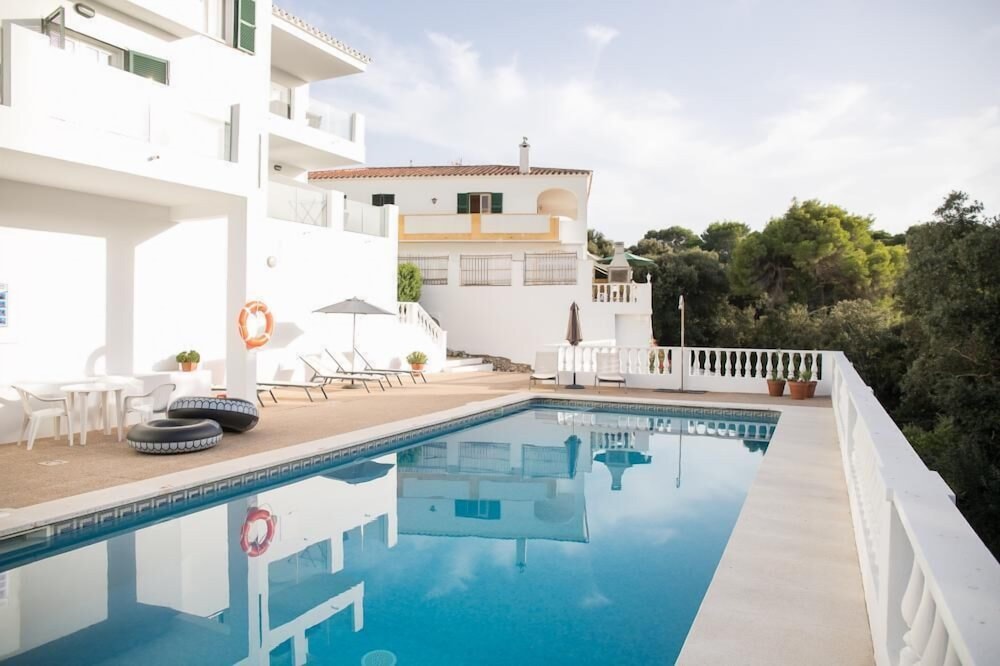
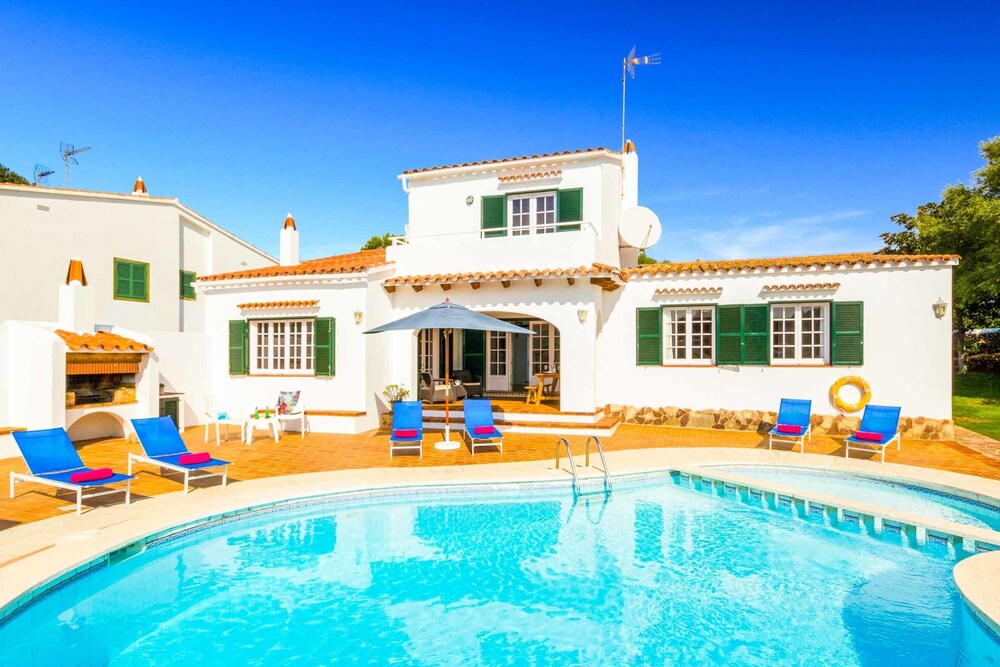
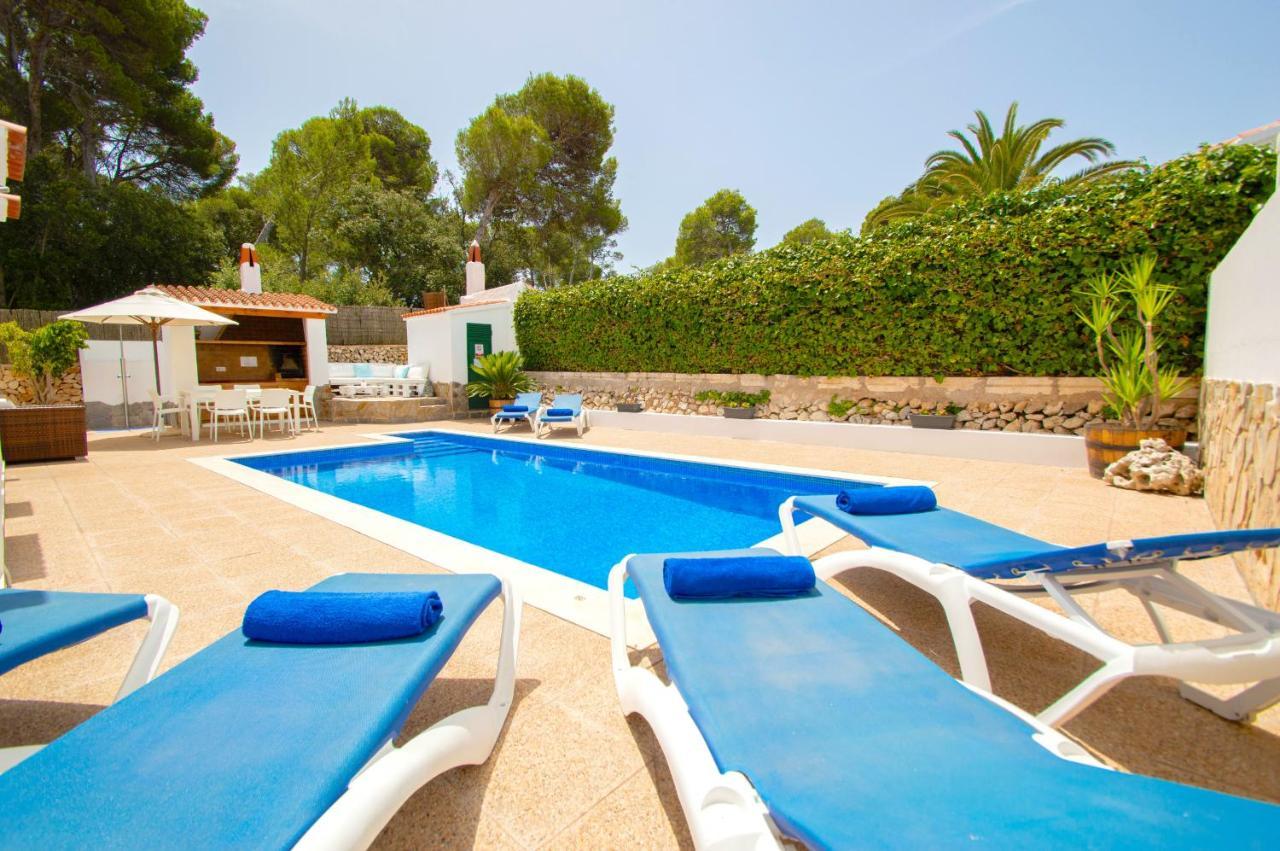
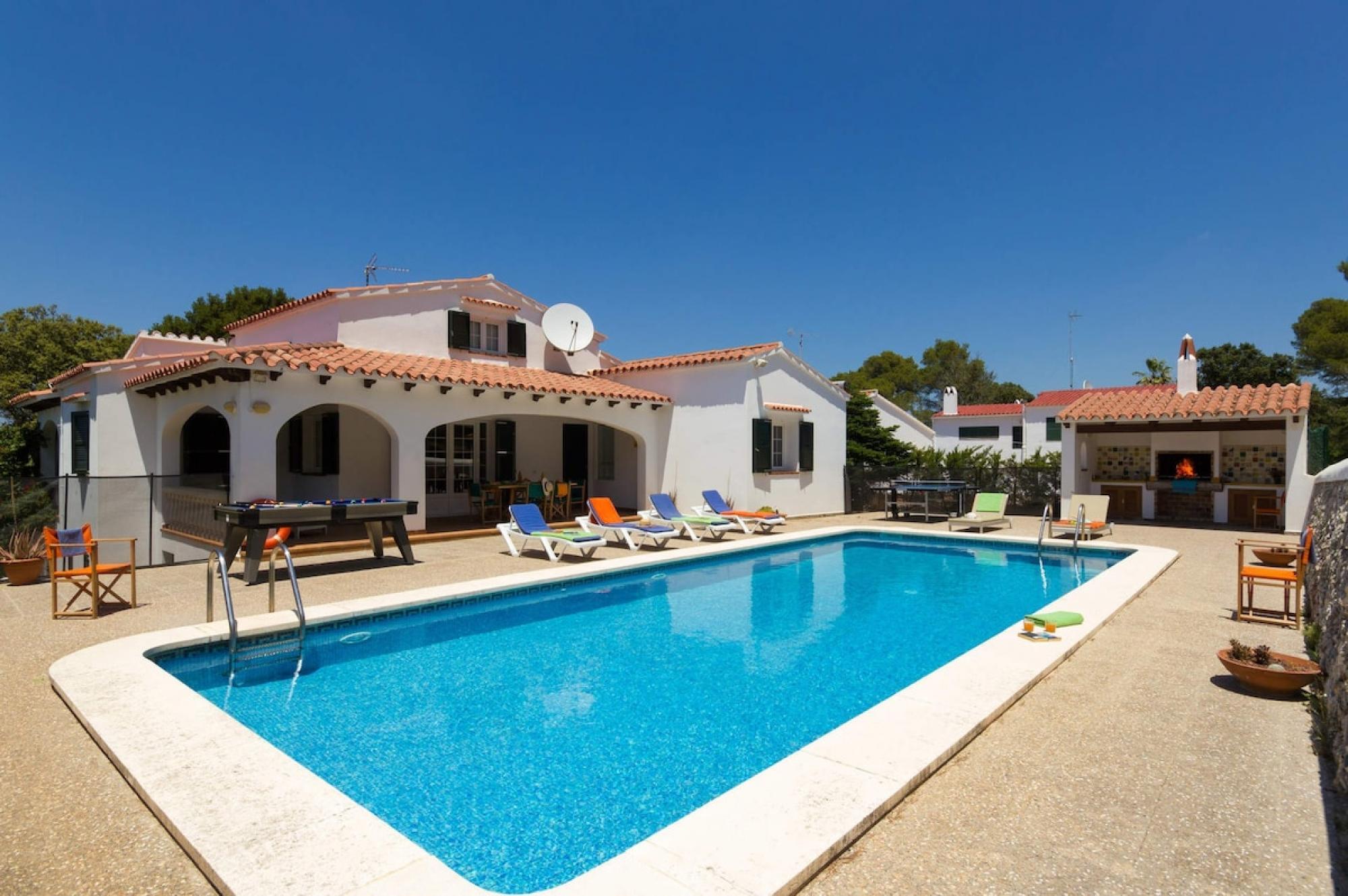
Stays in Cala Galdana: the first 12 of 21 stays in the IMPT hotel database in or close to Cala Galdana, five-star first, then four-star, then by guest score. Each button opens live prices for your dates in the IMPT app.
Is Cala Galdana a good base for a holiday in Menorca?
For most trips, yes. The bay has a sheltered beach, shallow water and everything within a short walk, and the Camí de Cavalls crosses it, so the wild coves of the south coast are within reach on foot. It is less good for anyone wanting nightlife or an empty beach in August. A car helps for days further afield.
How far is Cala Galdana from Menorca Airport?
The straight-line distance is about 23.8 km. By road it is longer, because the route runs east towards Maó and then west along the main island road before turning south at Ferreries. Allow extra time in summer for the final approach. Summer buses serve the bay, so check the island bus operator for current times.
Which wild calas can you walk to from Cala Galdana?
Cala Mitjana is the closest, a short walk through the pines. Beyond it along the coast path lie Cala Trebalúger, Cala Macarella and Macarelleta, each reached on foot only. Cala Turqueta has road access and then a walk down. Carry water, wear shoes that grip, and start early in summer, as the paths are exposed.
Do you need a car in Cala Galdana?
No. The bay is compact, everything is within a few minutes' walk, and summer buses connect it with Ferreries and Maó. A car helps for reaching coves further along the coast and for evenings in Ciutadella, but parking in the bay is limited and fills quickly in high season. Many visitors leave the car standing for days.
Is the beach at Cala Galdana good for children?
The beach shelves gently into calm water, the bay is enclosed on both sides, and the sand sits within a short walk of the accommodation and the places to eat. It is one of the more straightforward family beaches on the south coast. In a southerly swell the water turns and the shelter goes, so check the forecast.
Does the Camí de Cavalls pass through Cala Galdana?
It does. The GR 223 runs about 185 km around the island in 20 stages, and the bay is one of the places where the path meets the sand, with water, food and shade at hand. Walkers on the full route often break here. The stretch either side drops into coves and climbs out again, with pine shade in between.
What is Cala Galdana like out of season?
Quiet, and partly shut. Many hotels, beach bars, boat trips and restaurants on this coast close roughly from November to April, and the bay has few places to eat outside the season. Ferreries, Maó and Ciutadella stay open all year. For walking and for empty coves, May, late September and October are the better bets.
Can boats anchor in Cala Galdana?
Anchoring over Posidonia meadows is regulated by a Balearic decree, and mooring buoys are installed in some bays in summer. The dark patches in the bay are seagrass rather than rock, and anchoring on them damages the system that keeps the water clear. Check the current rules before setting out by boat.
Are there buses from Cala Galdana to Maó and Ciutadella?
Summer services link the bay with Ferreries and Maó, and the network is thinner the rest of the year. For Ciutadella, check the current connections with the island bus operator rather than relying on an old timetable, and allow for a change on the way. Services are fewer in winter and some stop altogether.
Photo credits: Paul Stephenson, CC BY 2.0, via Wikimedia Commons; Ben Salter from Wales, CC BY 2.0, via Wikimedia Commons; Markus Trienke, CC BY-SA 2.0, via Wikimedia Commons.
Watch
Menorca
Menorca's coast in three scenes, ending with sunset at Fornells.
Captions are built in; the transcript is on the Menorca page.
Video: Raymond Petrik, Angelo Esposito, Agusti Perez on Pexels