The longest beach on Ibiza, with the island's biggest clubs behind it and the airport minutes away. A practical look at what the area is like and who it suits.
3.8 kmfrom IBZ, straight line
36stays in the IMPT hotel database
Southcoast
Playa d'en Bossa is the long strip of sand and summer venues on Ibiza's south coast, about 3.8 km from the airport in a straight line. It is the longest beach on the island, backed by large clubs and a dense line of places to stay. As a base it works if you want the sea at the door, the night within walking distance and the south of Ibiza close by.
01
What Playa d'en Bossa is
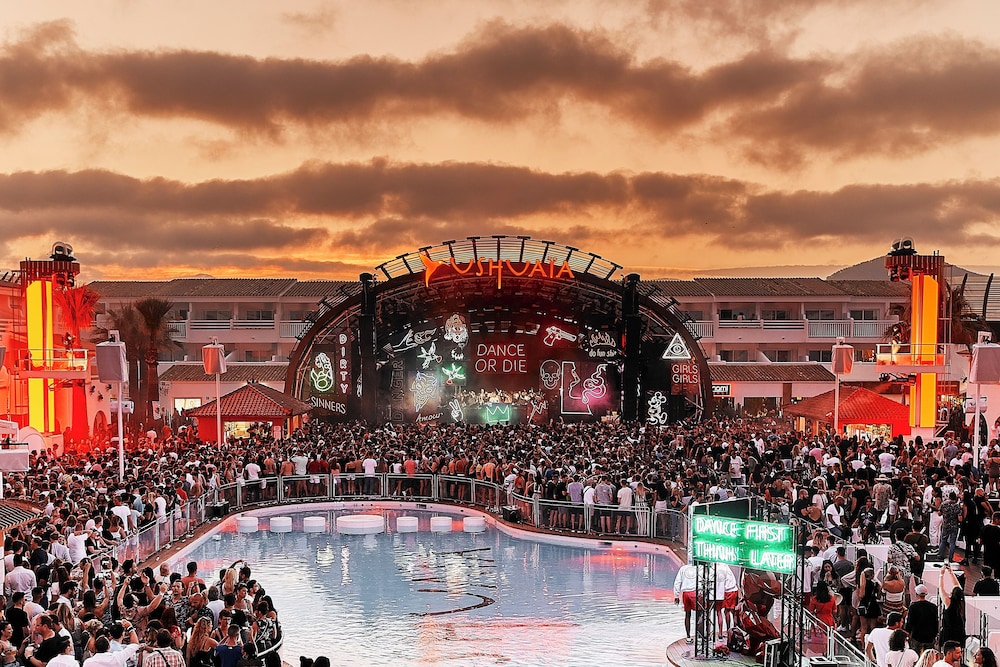
Playa d'en Bossa runs along the south coast of Ibiza, a short hop from Ibiza Town and closer still to the airport. It is the longest beach on the island, a broad sweep of sand that curves from the edge of the town towards the salt flats. Behind the sand stands the densest concentration of large clubs and summer venues on Ibiza, which gives the place its character: a resort in the fullest sense, busy and loud in the right months, and quieter than most visitors expect by November.
The area sits inside the municipality of Sant Josep de sa Talaia, on the road that leads to Ses Salines and the salt pans. Two things share the same strip: a long beach by day and a nightlife district that draws visitors from across Europe after dark. Both are true at once, and most people hold both in mind. The decision that shapes a stay here is not whether to come, but how close to which side you sleep.
02
The beach and the water
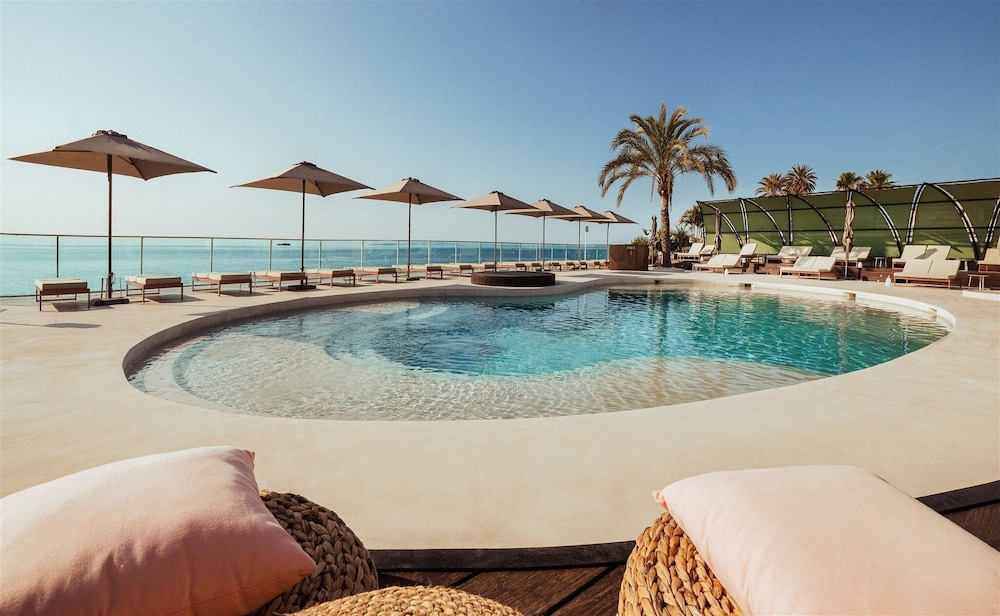
The sand is fine and pale, and the water stays shallow for a good distance out, which suits swimmers who like to wade rather than dive. Because the beach faces roughly south-east, it takes the morning sun early and holds light late into the afternoon. Winds are usually gentler here than on the north coast, though a strong southerly can push weed and cloudier water ashore for a day or two at a time. It usually clears on its own.
Offshore lie the posidonia meadows that make the water between Ibiza and Formentera so clear, part of the UNESCO World Heritage listing of 1999. Posidonia is a flowering seagrass, not seaweed: it oxygenates the water, holds the sand in place and shelters a great deal of marine life. Anchoring over the meadows is regulated by a Balearic decree, and mooring buoys are installed in some bays in summer. Swimming and snorkelling above them does no harm. Dropping an anchor does.
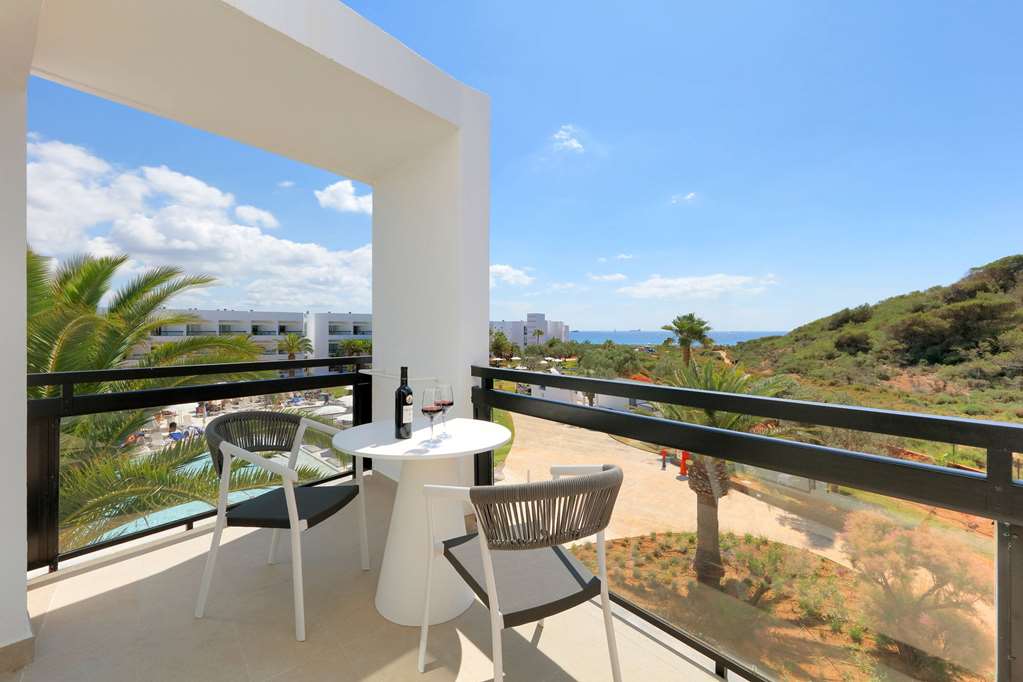
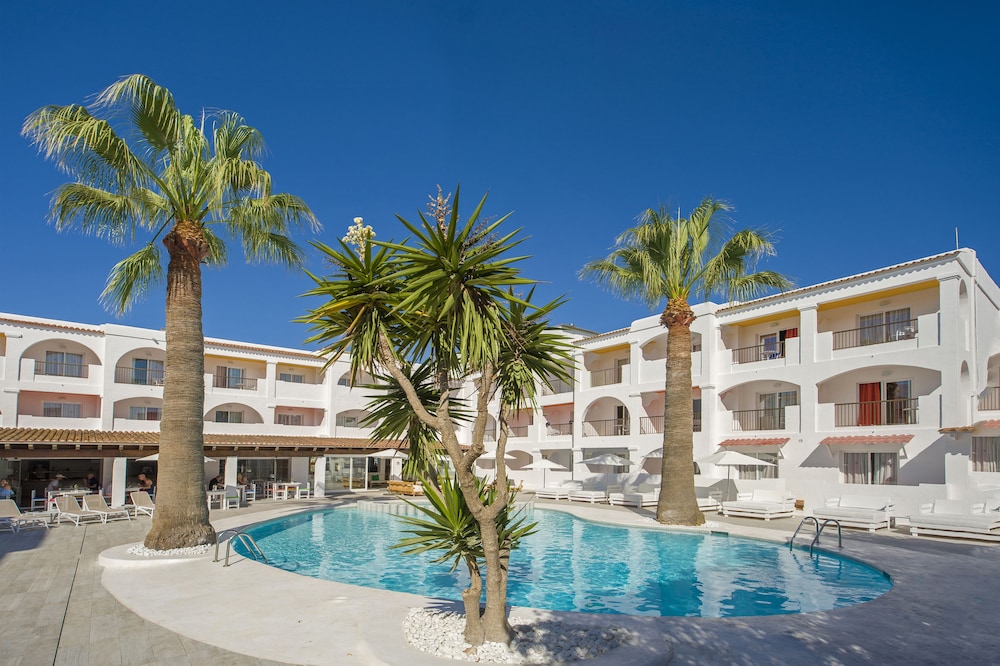
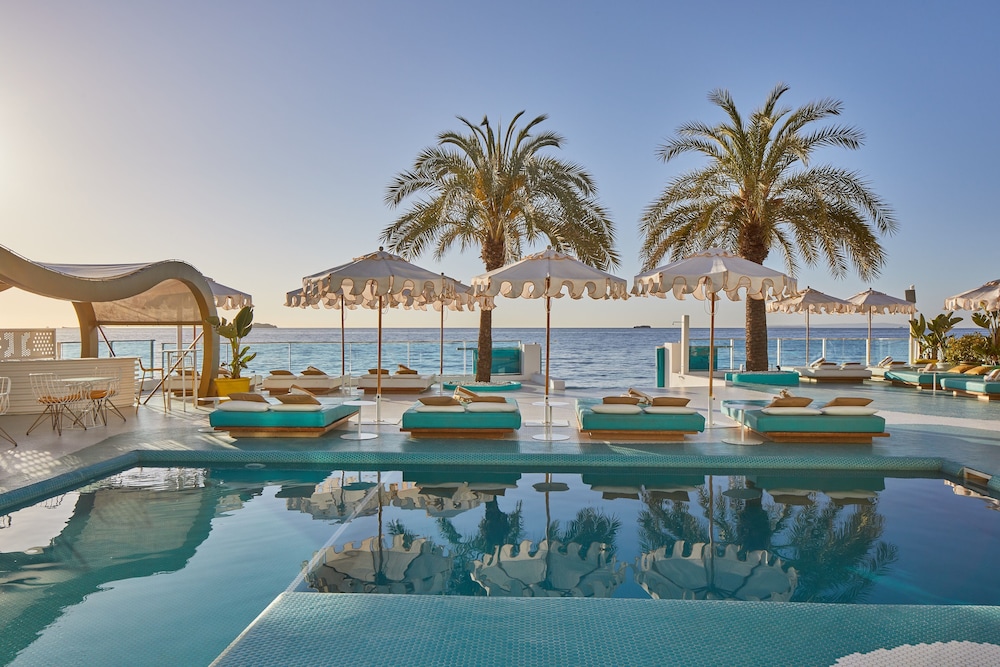
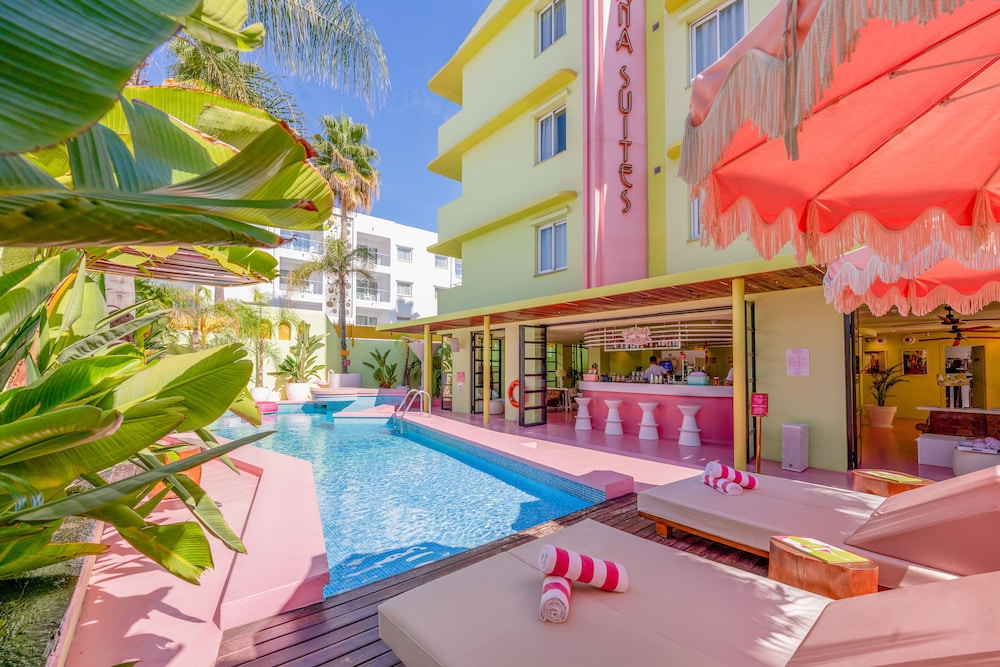
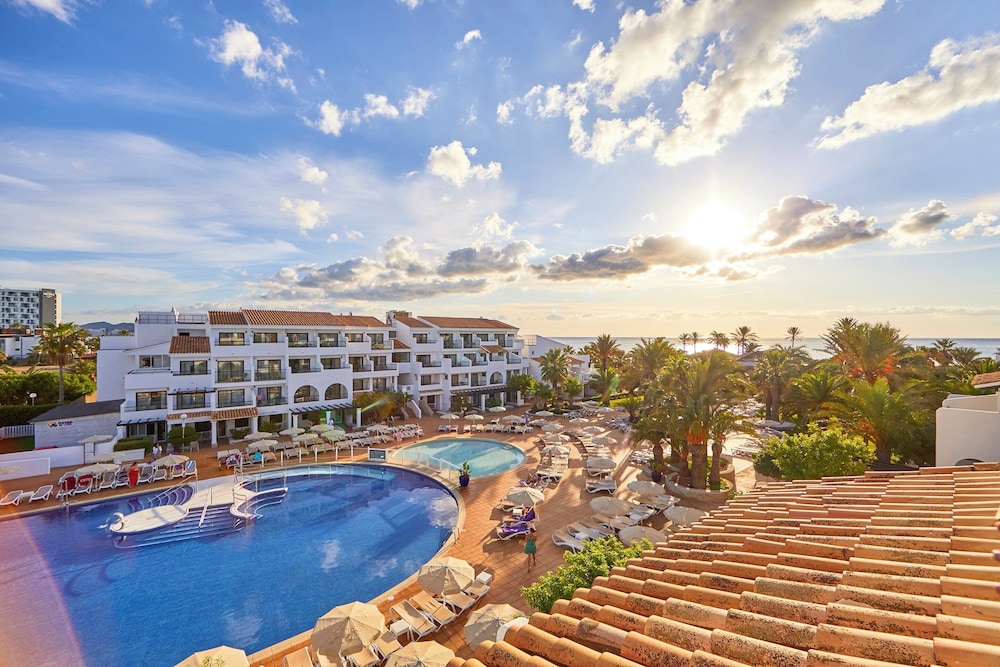
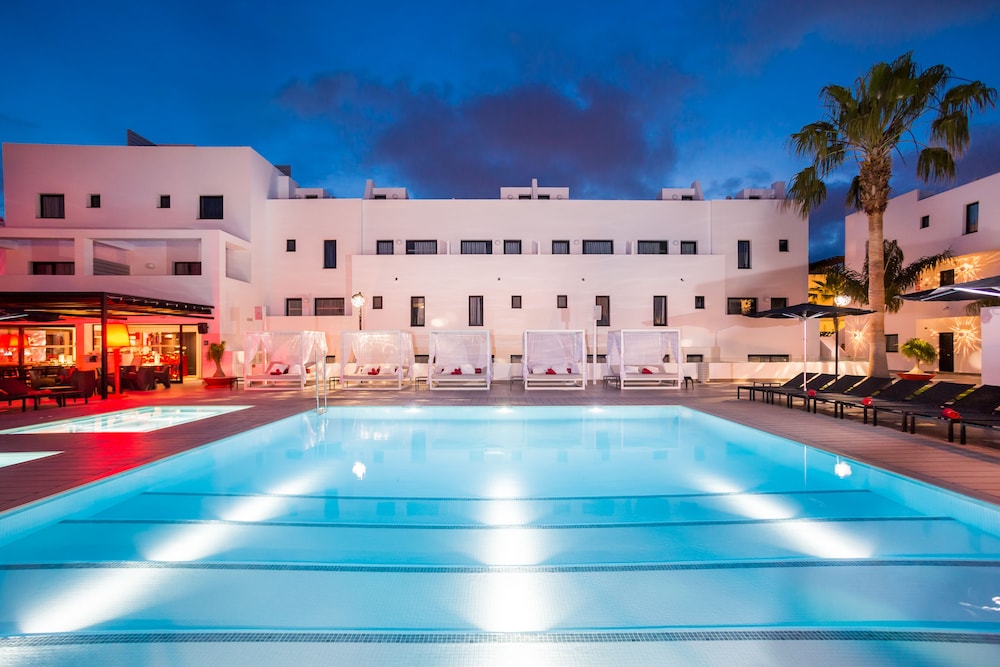
Hotels along the sand at Playa d'en Bossa, Ibiza
Protect itThe posidonia meadows are protected. Use the marked buoys where they exist, and never drop an anchor on the dark patches of seagrass.
03
Sights in and near
The area is well placed for the whole south of the island. Ibiza Town and Dalt Vila, the walled upper town with its 16th-century Renaissance walls and cathedral, are a short run west along the coast. The Ses Salines Natural Park begins just beyond the southern end of the beach, with salt pans, dunes and salt still harvested. Sa Caleta and Puig des Molins, the Phoenician sites in the same UNESCO listing, are within easy reach.
Further west the coast turns rocky and the sunsets open up. Cala d'Hort looks across to Es Vedrà, the limestone islet about 380 m high and a nature reserve since 2002, with no landing allowed. Inland, Sa Talaia, the highest point on Ibiza at about 475 m, gives the widest view on the island. None of this needs a long drive: the southern half of Ibiza compresses a great deal into a small area, which is one reason people base themselves here.
Dalt VilaThe walled old town above the port, with 16th-century walls and a cathedral at the top.
Ses SalinesNatural park of salt pans, dunes and shallow water, declared in 2001 and still harvested.
Es VedràLimestone islet off the south-west coast, a nature reserve since 2002 with no landing.
Puig des MolinsPhoenician-Punic necropolis in Ibiza Town, part of the UNESCO listing of 1999.
04
Who it suits
Playa d'en Bossa suits people who want the sea at the door and the night within walking distance. Groups, couples who go out, and anyone who would rather not drive after dark find it practical: everything sits on one strip, and the airport is minutes away. It also works as a base for a first visit, because the main sights of the south are close and the buses into Ibiza Town run through the day.
It suits families less well in July and August, when the beach is crowded and the music carries across the sand. Those who want quiet should look at the north or the east coast, or come in May, June or September instead. Light sleepers should think carefully about which side of the strip they choose: the further from the large venues, the calmer the night. That single decision shapes a stay here more than any other.
05
Evenings and food
Food along the strip runs from beach bars and pizza to long lunches that turn into the afternoon. The rhythm is set by the season: daytime tables on the sand, an early evening lull, then a late dinner before the clubs open. Many kitchens stay open late in summer and close earlier in the shoulder months. Ibiza Town, a few minutes away, has a wider and more year-round choice.
For anyone not going to a club, the evenings are still long and pleasant. The promenade towards Figueretes takes a slow walk, the beach empties after sunset, and the lights of the town sit close by. Sunset from the sand here is not the ritual it is at Cala Comte or in Sant Antoni, but it costs nothing and asks nothing of you.
Platja d'en Bossa at dawn, Ibiza
The beach empties after sunset, the lights of the town come on, and the night begins without a plan.
06
Getting there from the airport
Ibiza Airport is about 3.8 km from Playa d'en Bossa in a straight line, which makes this the shortest transfer on the island. By road the run takes a few minutes outside peak hours. Buses link the airport with Ibiza Town, Sant Antoni, Santa Eulària and the south beaches, with more lines in summer; check the island bus operator for current routes. Taxis wait outside arrivals and queues build when several flights land together.
Luggage and timing matter more than distance. On a Friday evening in August the last kilometre can take as long as the rest of the trip, and the same is true on the way back. Allow generous time for a departure, particularly if you are returning a hire car. Parking near the beach fills early in high summer, and some streets behind the strip are residential, with restrictions that are enforced.
Check before you goBus lines, parking rules and opening months change with the season. Check the island bus operator and local signage before you set out.
07
Getting around, and out of season
The strip is walkable, and most people leave the car where it is once they arrive. Buses run into Ibiza Town and along the coast; in summer they are frequent, in winter they are not, so check times before relying on them. Bicycles and scooters are common, and the flat road towards the salt flats is easy going. For the west coast and the north, a car saves a great deal of time.
Out of season the area changes character. Many hotels, beach bars, boat trips and seasonal restaurants close roughly from November to April, and the strip can look half-shut for months at a time. Ibiza Town stays open year-round, with markets, cafés and the ferry port, so a winter stay here means walking or driving a little further for dinner. Flights and ferries are fewer too. Check what is open before booking outside summer.
On footThe beach strip is flat and continuous; most places to stay sit within a short walk of the sand.
By busServices link the area with Ibiza Town and the south beaches; more in summer, fewer in winter.
By carUseful for the west coast and the north; parking near the beach fills early in high summer.
By bikeThe coastal road towards Ses Salines is flat and manageable in the cooler hours.
08
Visiting lightly
The south of Ibiza carries a great many visitors in a small space, and the things that make it worth visiting are the things most easily damaged: the dunes, the salt pans, the seagrass and the shallow water. A few habits make a difference. Stay on marked paths through the dunes, take everything back with you, and resist the temptation to park on sand or on the scrub beside it.
Water is short on the island, and the tourist tax, the Balearic sustainable tourism tax, is charged per person per night by the accommodation to fund environmental work. Rates change with the category of accommodation and the season, children under 16 are exempt, and the Govern de les Illes Balears site has the current rules. Beyond that, the advice is simple: travel outside July and August if you can, and use the bus for short trips.
Shade and waterCarry water and use the shade in the middle of the day; the sun is strong from May onwards.
DunesKeep to marked paths through the dunes and never park on sand or scrub.
AnchoringUse the buoys where they exist and never anchor over posidonia meadows.
WasteTake everything back with you; bins on the beach are limited in high season.
Where to wake up
Stays in Playa d'en Bossa
Stays in Playa d'en Bossa: the first 12 of 36 stays in the IMPT hotel database in or close to Playa d'en Bossa, five-star first, then four-star, then by guest score. Each button opens live prices for your dates in the IMPT app.
Is Playa d'en Bossa a good base for a first trip to Ibiza?
It can be. The area sits on the south coast with Ibiza Town and Dalt Vila minutes away, the Ses Salines Natural Park at the end of the beach, and the airport about 3.8 km off. You get the sea and the night within walking distance, and the main sights of the south close by. The trade-off is noise in July and August.
How far is Playa d'en Bossa from Ibiza Airport?
About 3.8 km in a straight line, which makes it the shortest transfer on the island. By road the drive is a few minutes outside peak hours, though traffic on a summer evening can stretch it. Buses link the airport with Ibiza Town, Sant Antoni, Santa Eulària and the south beaches, with more lines in summer. Check the island bus operator.
Can you swim at Playa d'en Bossa?
Yes. The water stays shallow for a good distance out, which suits wading and casual swimming, and the beach takes the morning sun early. Offshore lie posidonia meadows, part of the UNESCO listing, so the water is usually clear. A strong southerly can bring weed ashore for a day or two; it normally clears on its own.
Is Playa d'en Bossa noisy at night?
In July and August, yes, particularly on the side closest to the large venues. The music carries across the sand and the strip stays awake late. Outside those months it is much calmer, and even in high season the further you are from the clubs, the quieter the night. That choice of position matters more than anything else.
What closes at Playa d'en Bossa out of season?
Much of it. Many hotels, beach bars, boat trips and seasonal restaurants shut roughly from November to April, and the strip can look half-shut for months. Ibiza Town stays open year-round, with markets, cafés and the ferry port, so a winter base here means walking or driving a little for dinner. Flights and ferries are fewer too.
Do you need a car at Playa d'en Bossa?
Not for the area itself. The strip is flat and walkable, and buses run into Ibiza Town and along the coast, frequently in summer and rarely in winter. A car helps for the west coast and the north, where the beaches are spread out, but parking near the beach fills early in high summer. Check times before relying on winter buses.
Which beaches and sights are near Playa d'en Bossa?
The beach itself is the longest on the island. Beyond it, the Ses Salines Natural Park begins at the southern end, with salt pans and dunes. Ibiza Town and the walls of Dalt Vila are a short run west, with the Puig des Molins necropolis. Cala d'Hort, opposite Es Vedrà, and Sa Talaia are within a modest drive.
Is Playa d'en Bossa suitable for families?
In May, June and September it works well: shallow water, a long beach, and everything within walking distance. In July and August the crowds and the night noise make it harder, and families often prefer the calmer north or east coast. If you do come in high summer, choose somewhere to stay away from the large venues and expect late music.
How do you visit Playa d'en Bossa lightly?
Keep to marked paths through the dunes, take everything back with you, and never anchor over the posidonia meadows; use the buoys where they exist. Carry water and use shade in the middle of the day. Travel outside July and August if you can, use the bus for short trips, and check the current tourist tax rules.