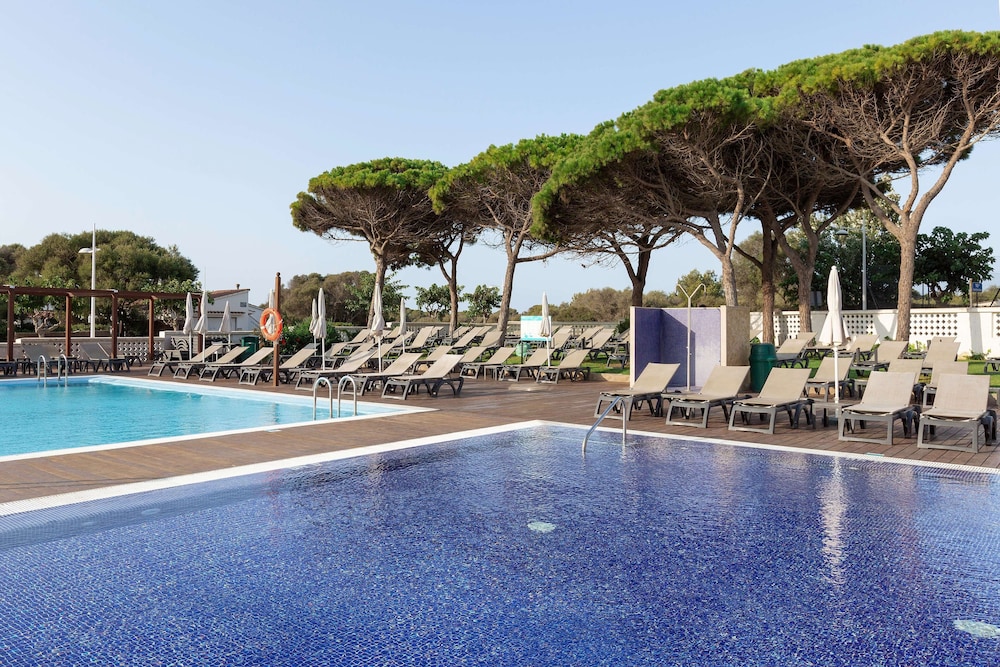
Menorca's south-eastern municipality is a whitewashed village, a handful of small coves and a long stretch of coast path. It suits slow days more than full ones.
149stays in the IMPT hotel database
2area guides
Menorcaisland
Sant Lluís is the municipality at Menorca's south-east corner, the land that begins just beyond Maó and ends at the sea. It is the island's quietest administrative area in feel: a village of white houses around a church, small coastal settlements, rocky coves and farmland in between. Most visitors come for a calm base near the airport and the capital.
01
Where Sant Lluís begins
Sant Lluís occupies the south-east corner of Menorca, the land that begins at the edge of Maó and runs down to Punta Prima and the sea. It is small in scale: one main village, a scatter of hamlets, low white houses, dry-stone walls and fields that reach almost to the water. Nothing here is built up in the way the island's larger resorts are, and the lanes stay quiet outside July and August.
The difference from the rest of Menorca is one of tone rather than landscape. The south coast's limestone gives white sand and shallow water, as it does further west, but Sant Lluís keeps its coves small and its building low. It is a place of second homes, working farms and a village that still closes for the afternoon. People looking for a base near Maó and the airport find it here.
02
The village and Binibeca Vell
Sant Lluís village sits on a low rise a few kilometres inland, planned around a square with the church at its centre, the straight streets of its 18th-century founding still legible. It is the administrative heart of the municipality and its year-round centre: the pharmacy, the school, the weekly market and the everyday business of a small island town. The village is small enough to cross in ten minutes, and its own guide covers the streets, the church and the surrounding lanes.
Binibeca Vell, on the coast, is the opposite: a purpose-built village of whitewashed lanes and stepped houses, laid out in the late 20th century and now a residential area with a small beach close by. It is visited on foot and asks for the quiet its residents need, especially in the evening. The separate guide covers its lanes, its access and the coves around it.
The rocky shore at Punta Prima, Sant Lluís, Menorca03
Coves and beaches
The municipality's beaches are small and mostly sheltered, which is what makes them work for families and for swimming. They sit along a short stretch of coast east and south of the village: sandy inlets with a car park and a bar in season, rocky platforms where people swim off the rocks, and a longer sand at Punta Prima. In August they fill early; in May and October they can be almost empty.
The water is clear because of the posidonia meadows offshore, which hold the sand in place and keep the bays clean. These are not the wild beaches of the north coast: access is easy, parking is close, and most have a bar or a lifeguard in summer. That makes them less adventurous and more practical, which suits the character of the municipality.
BinibecaA small sandy cove below the white village, with shallow water and a beach bar in season.
Punta PrimaThe longest and most open of the local beaches, with a seafront and parking close by.
AlcaufarA narrow inlet with a small beach and calm water, good for children and early swims.
BiniancollaA rocky inlet with a slipway and deeper water, used more by swimmers than by sunbathers.
04
Along the Camí de Cavalls
The Camí de Cavalls, the historic bridleway that circles Menorca in about 185 km and 20 stages, crosses the municipality along the cliffs and behind the coves. The south-east stretch is one of the gentler parts of the route: low limestone, flat going, gates to close and walls to follow rather than long climbs. It links the beaches here with Maó to the north, is waymarked, and can be walked in either direction.
Walking a few kilometres of it is the simplest way to understand how this coast is put together: the meadows offshore, the flat rock platform, the small coves and the fields behind them. Sections can be joined where lanes meet the coast, so a short walk needs no planning beyond water and shade. In summer, start early. The route's own guide covers the full distance, the stages and the waymarking.
The south-east stretch is the gentlest part of the route: flat going, low walls, and the sea always on one side.
05
Farmland, walls and the sea
Inland, the municipality is farmland: fields divided by dry-stone walls built without mortar, fig and olive trees, and small holdings that are still worked. The walls are the defining feature of the Menorcan landscape and a habitat in themselves, holding shade and shelter for lizards, insects and birds. Walking the lanes in spring, most of the noise comes from the walls rather than the road.
Offshore, the meadows of Posidonia oceanica that grow between the islands clear the water and shelter fish. Anchoring over them is regulated by a Balearic decree, and mooring buoys are installed in some bays in summer. The whole of Menorca has been a UNESCO Biosphere Reserve since 1993, and the sea is part of that designation rather than something separate from it.
Protect itThe posidonia meadows and the dry-stone walls are what keep this coast clear and green. Anchor over sand, use the buoys where they exist, and leave the walls as you find them.
06
A French founding, older layers
Sant Lluís village was founded in the 18th century during the French occupation of Menorca and named for Louis IX of France. The grid of streets and the church at its centre date from that planned origin, which is why the village reads as a single idea rather than an accumulation of centuries. The French held the island only briefly, and this village is their most lasting mark on it.
Older layers sit around it. Menorca was inhabited long before the French arrived: talayots, taules and navetes are the remains of Bronze Age and Iron Age communities, and the Talayotic Menorca monuments were added to the UNESCO World Heritage list in 2023. The British, who held the island for most of the 18th century, left their mark on Maó rather than here, a short drive away.
Caló d'en Fus between Binibeca Vell and Binissafúller, Menorca07
Food and markets
This is farming country, and the food follows: cheese with a protected designation of origin, vegetables from the fields, fish from the coves and from the harbour at Maó. Mahón-Menorca cheese is the island's best-known product, made with milk from the cattle that graze here, and it appears on almost every menu in the municipality. The village market is where to see the rest of it.
The weekly market in Sant Lluís brings produce, cheese and crafts into the square, and it is small enough to walk round in ten minutes. Places to eat range from beach bars that open with the season to village restaurants that run all year. Fish stew, caldereta de llagosta and plainly grilled fish are the dishes to look for, cooked simply and served early. Book ahead in August.
CheeseMahón-Menorca carries protected designation of origin status; buy it from the market or a farm shop.
Market daySant Lluís holds a weekly market in the village; check the day locally before you go.
FishLook for the day's catch from Maó and the local coves, grilled or cooked in a caldereta.
VegetablesMarket gardens in the fields behind the coast supply village kitchens through the summer.
08
Getting there and around
Sant Lluís lies south-east of Maó, and Menorca Airport (MAH) sits south-west of the capital, so the transfer runs across the island's south-east corner. The straight-line distance from the airport to the main town is shown on this page. The road route is longer than that line suggests, since it passes through or around Maó; taxis, buses and hire cars all cover it.
Buses link Maó with Sant Lluís village and with the coastal settlements. The network is reduced outside summer, and some seasonal services stop entirely between November and April. The island bus operator publishes current timetables. For the coves and for the Camí de Cavalls, a car, a bike or a taxi works better than the bus, and beach parking fills early in high season.
Check before you goBus timetables, beach parking and seasonal services change with the season. Check the island bus operator and the Consell Insular de Menorca before you rely on a particular route.
09
Who should stay, and when
Sant Lluís suits people who want a calm base with easy access to Maó, the airport and the south coast's small beaches. Families do well here: shallow water, short drives, quiet roads. So do walkers following the Camí de Cavalls and anyone who prefers a village in the evening to a resort front. It is less suited to those wanting nightlife or long, wild beaches within walking distance.
The IMPT hotel database lists around 150 stays in the municipality, spread between the village, Punta Prima, Binibeca and the coast. Most are small hotels, guesthouses and apartments rather than large resorts, and the stock reflects the low-rise character of the area. Book early for July and August, when the coves are busiest and the best places fill first.
Season matters more here than the map suggests. Many hotels, beach bars, boat trips and seasonal restaurants close roughly from November to April, and buses thin out. The village itself stays open all year, with the school, the market and everyday shops. Spring and autumn are the best compromise: warm sea, open businesses and empty paths.
FamiliesShallow coves, short drives and quiet roads make the municipality easy with children.
WalkersThe Camí de Cavalls crosses the coast here, with short sections reachable from road ends.
Village lifeSant Lluís stays open all year, unlike the coastal places that close in winter.
NightlifeLook elsewhere: evenings here are quiet, and the bars close early out of season.
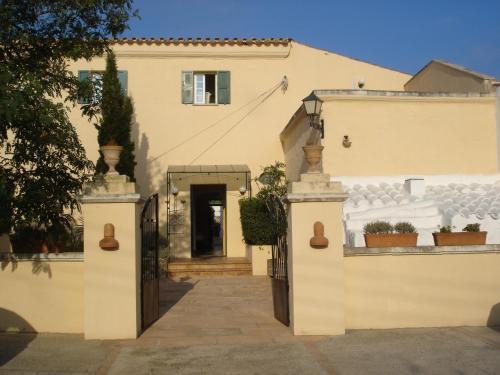
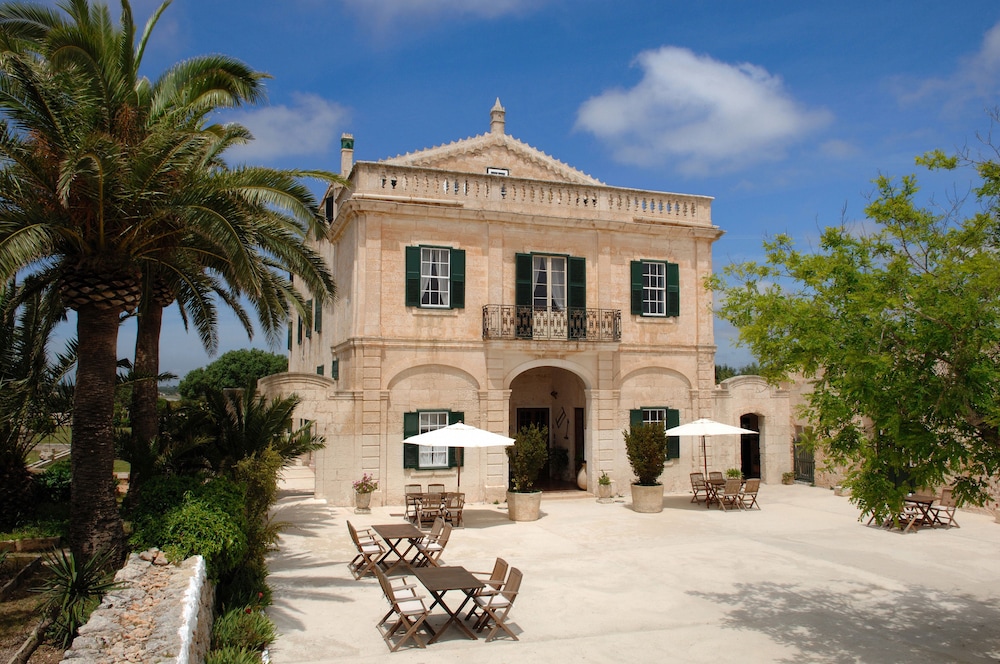
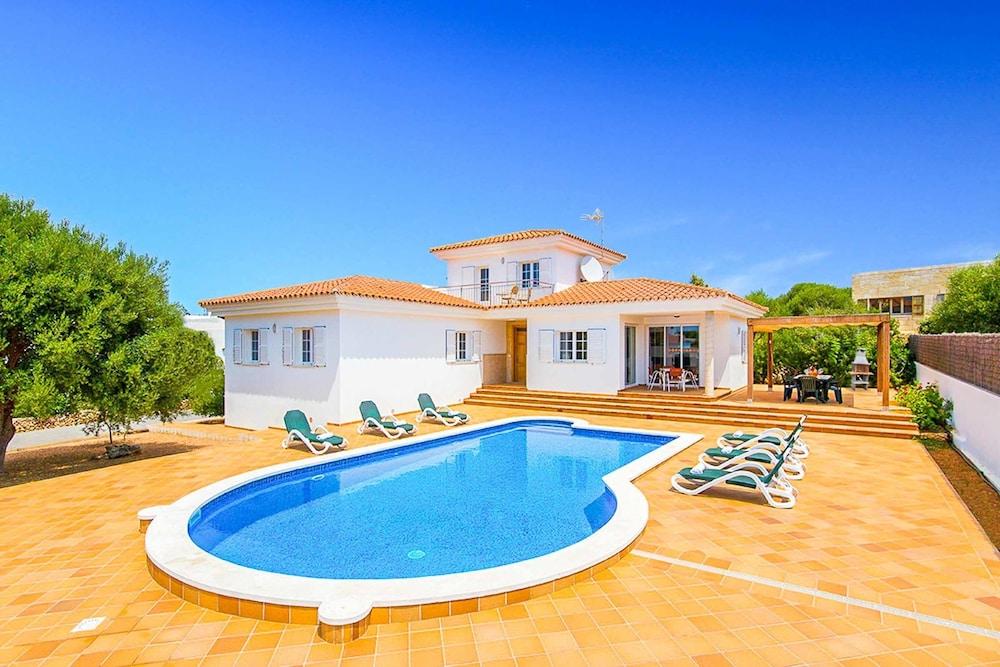
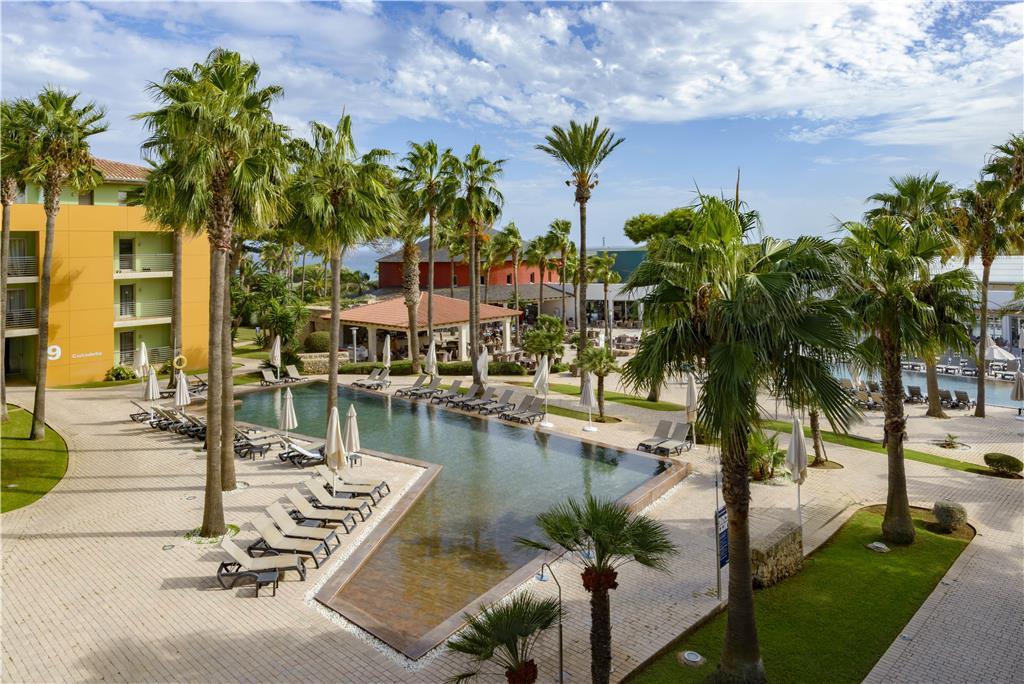
Stays in Sant Lluís: the first 9 of 149 stays in the IMPT hotel database in or close to Sant Lluís, five-star first, then four-star, then by guest score. Each button opens live prices for your dates in the IMPT app.
Does Sant Lluís have beaches you can walk to from the village?
The village sits a few kilometres inland, so the coves are a short drive or cycle rather than a stroll. Binibeca, Punta Prima, Alcaufar and Biniancolla are the nearest, and the Camí de Cavalls links several of them on foot. Allow more time than the map suggests in summer, when parking fills.
How far is Sant Lluís from Menorca Airport on this trip?
The straight-line distance from Menorca Airport (MAH) to Sant Lluís village is shown on this page. The road is longer, because the route passes Maó or its edge rather than running direct. Taxis and buses cover the trip, and hiring a car at the airport is simplest if you plan to reach the coves.
Is Sant Lluís a good base for families in Menorca?
Yes, for families who want shallow water, short drives and quiet evenings. The coves at Binibeca, Alcaufar and Punta Prima are sheltered and easy to reach, the roads are calm, and Maó is minutes away for shopping or a wet afternoon. Nightlife is limited, which most families count as a benefit.
Can you visit Binibeca Vell?
Binibeca Vell is a residential village of white lanes, not a museum, and it is visited on foot. Residents ask visitors to keep quiet and respect private doorways, particularly in the evening. The small beach below is separate and open to all. Check local notices for any restrictions before setting out.
Does the Camí de Cavalls pass through Sant Lluís?
Yes. The long-distance bridleway, about 185 km in 20 stages, follows the coast through the municipality, linking Punta Prima, Alcaufar and the coves towards Maó. The south-east section is among the flattest and easiest on the route. Short sections can be joined where lanes meet the coast.
When do businesses in Sant Lluís close for the season?
Many hotels, beach bars, seasonal restaurants and boat trips close roughly from November to April, and bus services thin out. Sant Lluís village stays open all year, with the school, the market and everyday shops, and Maó is fully open in winter. Spring and autumn offer warm sea and open businesses with fewer people.
Where can you buy Mahón-Menorca cheese near Sant Lluís?
The village market is the easiest place, alongside farm shops and the smaller groceries in the villages. Mahón-Menorca cheese carries a protected designation of origin, so the label tells you it was made on the island with local milk. Look for both the cured and the soft versions; the cured travels better.
Do you need a car in Sant Lluís?
A car makes the municipality much easier, since the coves and the coast path are spread out and buses are limited outside summer. A bike works for the village and the nearer beaches. If you stay in Sant Lluís village or Punta Prima, buses to Maó mean a car is not essential for everything.
How many places to stay are there in Sant Lluís?
The IMPT hotel database lists around 150 stays in the municipality, from small hotels and guesthouses in the village to apartments near Punta Prima and Binibeca. Most are low-rise and modest in size, in keeping with the area. Availability tightens in July and August, when booking ahead matters most.