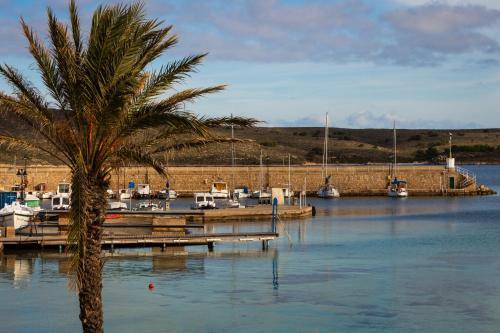
A fishing village on a sheltered north-coast bay, with a tower at the harbour mouth and lobster stew on every menu. Fornells is a quiet base for the north of Menorca.
22.8 kmfrom MAH, straight line
19stays in the IMPT hotel database
Northcoast
Fornells is a small fishing village on the north coast of Menorca, built around a deep, sheltered bay in the municipality of Es Mercadal. It is known for caldereta de llagosta, for calm water and for the Camí de Cavalls, which passes through it. This guide covers what the village is like, what is within reach, and how to base yourself there.
01
A village around a bay
Fornells sits at the mouth of a deep, sheltered bay on the north coast of Menorca, in the municipality of Es Mercadal. It is a fishing village first: white houses around the water, a small harbour wall, wooden boats tied alongside or pulled up on the slip, and a shallow basin that stays calm when the coast outside is rough. The bay is the reason the village is where it is, and the water still sets the shape of the day.
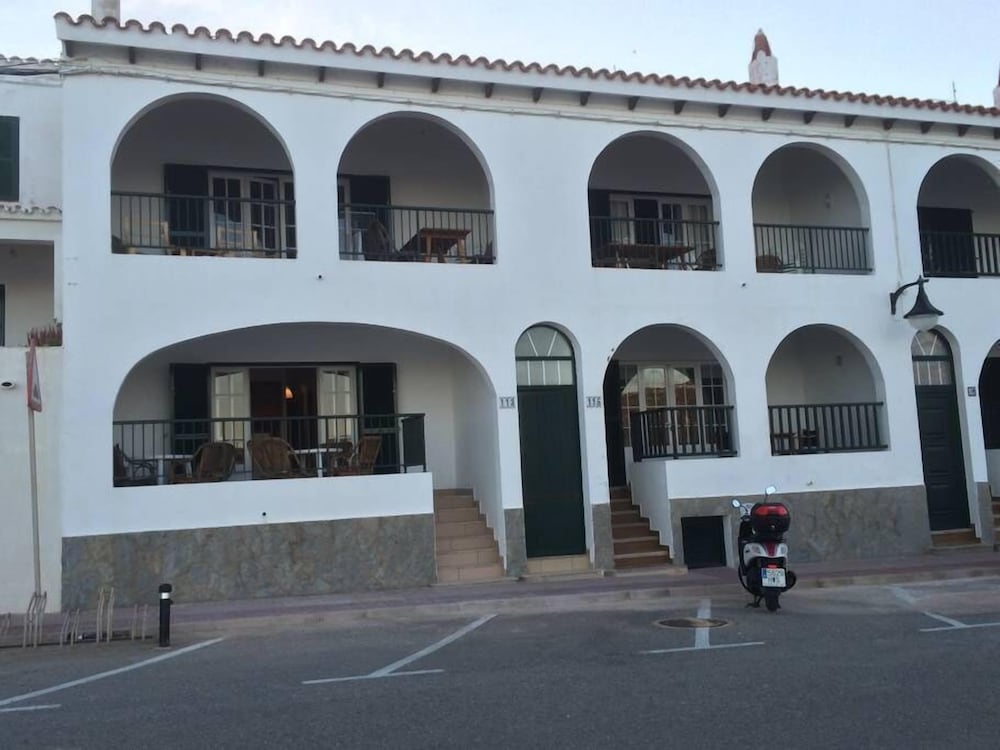
The village itself is small enough to cross in a few minutes on foot. Streets of low white buildings run back from the harbour to a church and a small square, and the scale stays modest: this is a working village that took in summer visitors, not a purpose-built resort with a strip of large hotels along the shore. In July and August the harbour fills in the evening; by November the same streets are close to empty.
Fornells has grown around the water, and the harbour is still the centre of the village.
02
Coves along the north coast
Swimming is in the bay itself, where the water is shallow and sheltered, with a small beach at the head of the harbour and room to swim out from the rocks. West of the village the north coast changes character: darker, older rock, reddish sand and plenty of wind, with a series of coves reached by track or on foot. This is the Tramuntana coast, and it feels quite different from the white sand of the south.
None of these coves has much in the way of facilities, which is part of the point. A track reaches some, a walk reaches others, and the car parks are small and fill early in August. Take water, shade and whatever you need for the day, and be ready to walk the last stretch. Wind on this coast is normal, and it usually arrives in the afternoon. The swimming is excellent when the sea is calm and less so when it is not.
CavalleriaA broad sandy beach below the lighthouse at the island's northern tip, reached by a track.
Cala TirantA wide beach west of the bay, shallow for a long way out, with low ground behind.
Cala PregondaReddish sand, rocky islets and clear water, reached on foot from the nearest road.
Platges de FornellsThe low-built seafront across the bay, with shallow water and a small beach.
The defence tower of Fornells on the headland, Menorca03
Walks, tower and lighthouse
A short walk along the northern side of the bay brings you to a stone watchtower on the headland, built to guard the entrance to the harbour and still the best place to understand how the bay works: a narrow mouth, a wide shallow basin behind it. The path out to the tower is easy, and the view back over the village and the water is the one to have. From the headland the whole north coast opens up, with the Cavalleria lighthouse on the far point.
The Camí de Cavalls, the historic bridleway that circles the whole island, about 185 km in 20 stages and waymarked as the GR 223, passes through Fornells. From the village a stage can be picked up in either direction: west along the cliffs towards Cavalleria and the wildest stretch of the north, or east around the inland end of the bay and on towards the lanes that lead to Es Mercadal and Monte Toro.
04
Who Fornells suits
Fornells suits people who want a village rather than a resort: a place where the evening is a walk along the harbour and something to eat, and the day is the water or the path. It works for families with young children, because the bay is shallow and calm, and for walkers, because a stage of the Camí de Cavalls starts at the door. Small boats use the bay as a base through the summer.
It is less good for anyone who wants a long beach at the end of the road, nightlife, or a base that works without a car. The village has a small beach in the bay and a run of coves within reach, but reaching them is easier with wheels. As a base for the island as a whole, Fornells puts the north and the centre within easy distance of an evening.
FamiliesThe bay is shallow and sheltered, with a small beach close to the village.
WalkersThe Camí de Cavalls passes through the village, so a stage can start at the door.
DriversA car puts the north coast coves and the centre of the island within easy reach.
SailorsThe bay is sheltered and used by small boats; anchoring over posidonia is regulated.
05
Evenings and lobster stew
Fornells is known across Menorca for caldereta de llagosta, the lobster stew that appears on almost every menu in the village. It is a slow dish: lobster simmered with tomato, onion and pepper, brought to the table in the pot it was cooked in, with bread and rice alongside. It is eaten all over the island, but the village on the bay is where many visitors meet it first.
Beyond the stew, the food is what you would expect from a fishing village on this coast: fish, shellfish, rice dishes and simple grilled things, served in rooms along the harbour and in the streets behind it. Many of these places are seasonal and shut from roughly November to April. In summer it is worth booking dinner ahead rather than turning up at nine and hoping. Lunch is the quieter meal, and the harbour is at its best before the afternoon wind.
A whitewashed street in Fornells, Menorca06
Getting there and around
Menorca Airport (MAH) is about 4-5 km south-west of Maó. Fornells is about 22.8 km from the airport in a straight line, and the road route is longer than that: you drive either through Maó and up the coast road, or inland by Es Mercadal and then north. The last stretch of either route narrows as it comes down to the bay. Car hire desks are at the airport.
Public transport is possible. Buses run between Maó and Fornells, and the bus station in Maó is where to change for the airport service and for other parts of the island. Services are more frequent in summer and thinner in winter, so check the island bus operator's current timetable rather than relying on a remembered one. It is not difficult; it just takes a little planning before you set out.
Once here, the village is small enough to walk, and the seafront is shorter than it looks on a map. A car or a bicycle widens the choice of coves considerably, and the Camí de Cavalls takes you along the coast on foot. Parking in the village is limited in high summer and the harbour fills quickly, so arriving early or leaving the car at the edge are the easier habits.
Check before you goBuses to Fornells are fewer outside summer, and not every harbour restaurant opens in winter. Check the island bus operator's timetable and the Consell Insular de Menorca before planning around a particular day.
07
When to go, what closes
The best months are usually late spring and early autumn. In May the sea is about 18-19 °C, in June about 22-23 °C and in September about 23-25 °C, which is warm enough for long swims without the crowds of August. Wind on the north coast is part of the deal in any month, and the bay shelters you from most of it. August is the busiest and the hardest for parking.
Much of the tourist business on Menorca closes roughly from November to April: many hotels, beach bars, boat trips, seasonal buses and plenty of restaurants. Fornells does not empty completely, but do not assume a particular place will be open in winter. Maó and Ciutadella stay open year-round and are the safer base outside the season. Around 23-24 June, the Sant Joan festival in Ciutadella brings horses and riders through the streets.
08
Visit lightly
The clear water in the bay is not an accident. Posidonia oceanica, a seagrass that grows only in the Mediterranean, forms meadows offshore from the shallows down to about 30-40 m, and those meadows are what keep the water clear and the sand pale. Menorca has been a UNESCO Biosphere Reserve since 1993, with the marine area extended later, and the north coast is a large part of the reason.
Visiting lightly here mostly means paying attention to three things: where you anchor, where you walk, and what you carry. Anchoring over the meadows is regulated by a Balearic decree, and mooring buoys are installed in some bays in summer. The Camí de Cavalls is a working bridleway, and cutting a corner or climbing a dry stone wall damages something that took generations to build and maintain.
Anchor with careAnchoring over posidonia is regulated; use a mooring buoy where one is installed.
Keep to the pathThe bridleway is waymarked; short cuts wear through the thin soil and the walls.
Carry waterThe north coast is exposed and shade is scarce, so take more than you need.
Leave the stoneDry stone walls and the tower are part of the island; take photographs, not stones.
Protect itThe clarity of the bay comes from the posidonia meadows offshore. Anchor over sand, use a mooring buoy where one is provided, and leave the seabed as you find it.
Where to wake up
Stays in Fornells
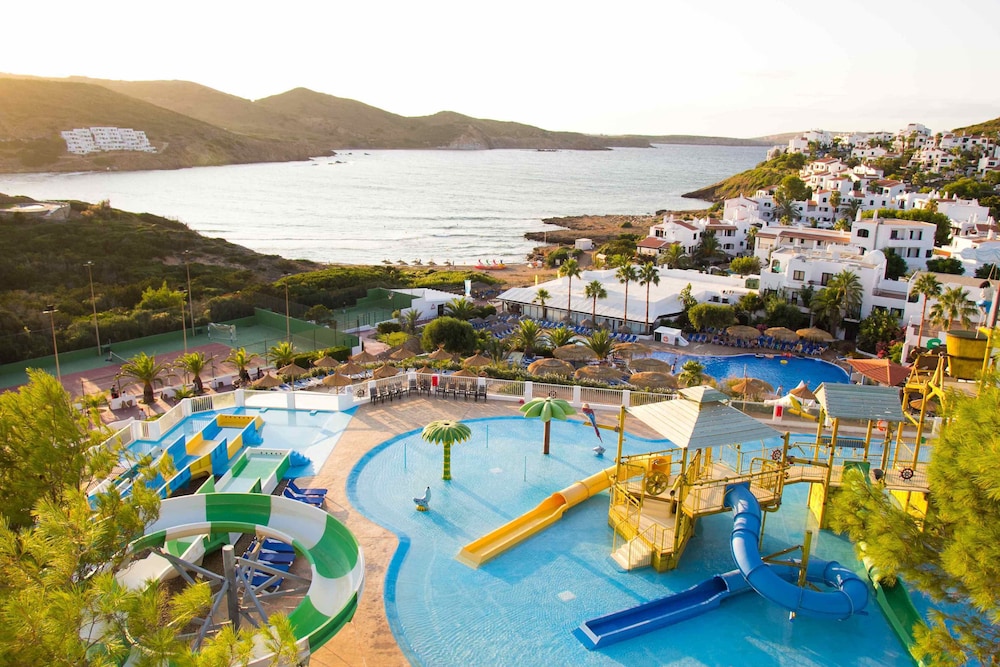
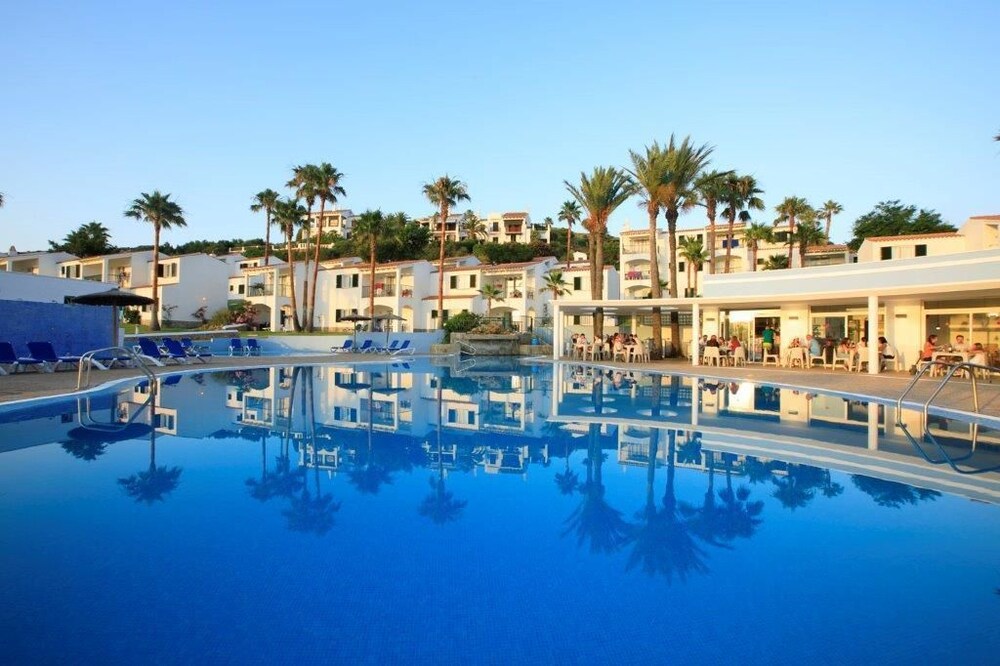
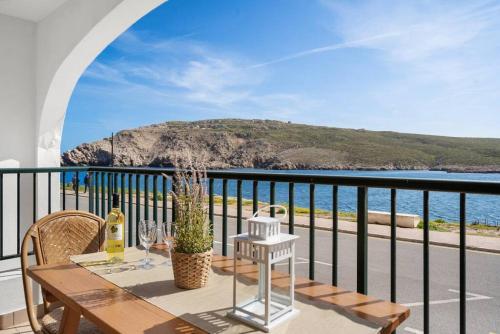
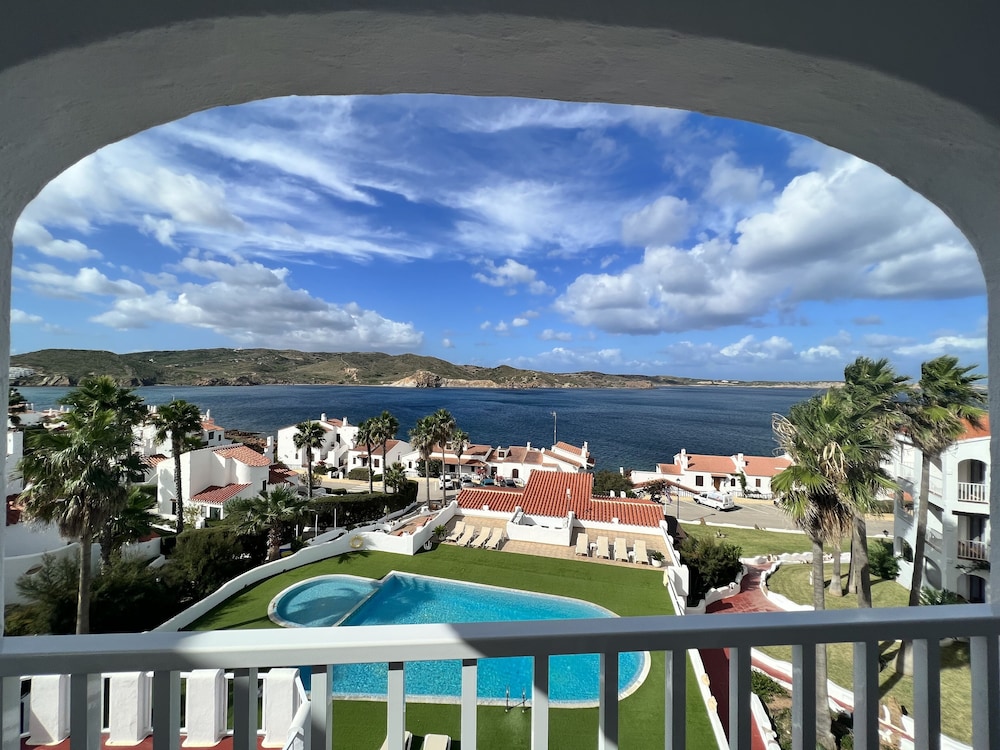
Stays in Fornells: the first 12 of 19 stays in the IMPT hotel database in or close to Fornells, five-star first, then four-star, then by guest score. Each button opens live prices for your dates in the IMPT app.
Fornells is on the north coast of Menorca, in the municipality of Es Mercadal, built around a deep bay with a narrow entrance. It lies about 22.8 km from Menorca Airport in a straight line, and further by road, since the route runs through Maó or inland past Es Mercadal before turning north to the water.
How do you get to Fornells from Menorca Airport?
Menorca Airport sits about 4-5 km south-west of Maó. From there, drive through Maó and along the coast road, or inland by Es Mercadal and north to the bay. Buses run from Maó, with the bus station the place to change, and services are more frequent in summer. Check the island bus operator's timetable before you travel.
What is Fornells known for?
It is known for two things joined at the water: the bay, a deep, sheltered inlet that holds small boats and calm swimming, and caldereta de llagosta, the Menorcan lobster stew served in the village's restaurants. The stone watchtower on the headland and the Camí de Cavalls, which passes through, are the other reasons people stop.
Where can you eat caldereta de llagosta in Fornells?
Most of the village's restaurants serve it, along the harbour and in the streets behind, usually from a menu that also carries fish, shellfish and rice dishes. Many places are seasonal and close roughly from November to April, and in July and August it is worth booking a table for dinner rather than arriving without one.
Can you swim in the bay at Fornells?
Yes. The bay is shallow and sheltered, with a small beach near the village and room to swim out from the rocks on either side. It is easy water for children, and it stays calm when the coast outside is rough. The coves to the west are wilder, with clearer water on a calm day and more wind.
Do you need a car in Fornells?
Not for the village, which is small and walkable. A car or a bicycle makes the north coast coves much easier to reach, and parking in the village is limited in high summer. Buses link Fornells with Maó, more often in summer than in winter, so a car-free visit is possible with planning and a timetable.
Does the Camí de Cavalls pass through Fornells?
Yes. The historic bridleway, waymarked as the GR 223, runs about 185 km around the Menorcan coast in 20 stages, and Fornells sits on it. A stage can be started from the village in either direction, west towards Cavalleria and the wilder north, or east around the bay and on towards Es Mercadal and Monte Toro.
What closes in Fornells out of season?
Many restaurants and boat trips shut roughly from November to April, and seasonal buses thin out. The village does not empty, but it is quiet, and a particular place may be closed on the day you arrive. Maó and Ciutadella stay open year-round, so they work better as a winter base if you need company and choice.
When is the best time to visit Fornells?
Late spring and early autumn suit the village best. The sea is about 18-19 °C in May, 22-23 °C in June and 23-25 °C in September, warm enough for long swims with fewer people on the paths. August is the busiest month, the hardest for parking and the noisiest in the harbour. Wind on the north coast is normal in every month.