Every June, Ciutadella fills with horses, riders and the crowds that follow them. The festival is old, the streets are narrow, and a good day depends on knowing how the town works.
7 minread
Culturetopic
Menorcaisland
Sant Joan is the festival of Ciutadella, held around 23 and 24 June, when horses and riders move through the old town and the streets fill with people. It is Menorca's best-known celebration, religious in origin and civic in practice, and it takes place in public streets rather than behind a fence. The date is fixed by the church calendar; the programme changes, so check before travelling.
01
What Sant Joan is
Sant Joan is the festival of Ciutadella, held around 23 and 24 June, on the feast of John the Baptist. It is the best known of the Menorcan summer festivals and the one that draws the largest crowds. Horses and riders are at the centre of it, moving through the streets of the old town with people on foot around them. Some of it is religious, some of it is civic, and most of it happens outdoors, in public, in the heat of midsummer.
The festival has no single venue. It happens in the streets, in the squares and along the port, and anyone standing in a public place is part of the crowd. That openness is also the difficulty: the old town is compact, the streets are narrow, and on the main days movement slows to a shuffle. Plan for heat, noise and long waits, and carry water. Exact timings and routes are set by the organisers; check the programme with the Consell Insular de Menorca before you travel.
One thing to settle early: this is a local festival with a religious frame, not a tourist show. The streets are public, the events are largely open to anyone standing in them, and the town expects visitors to behave as they would in any crowded place. There is no fence between the audience and the festival, because there is no separate audience. What you wear and how you move through a crowd matter more than where you stand.
02
The old town as a stage
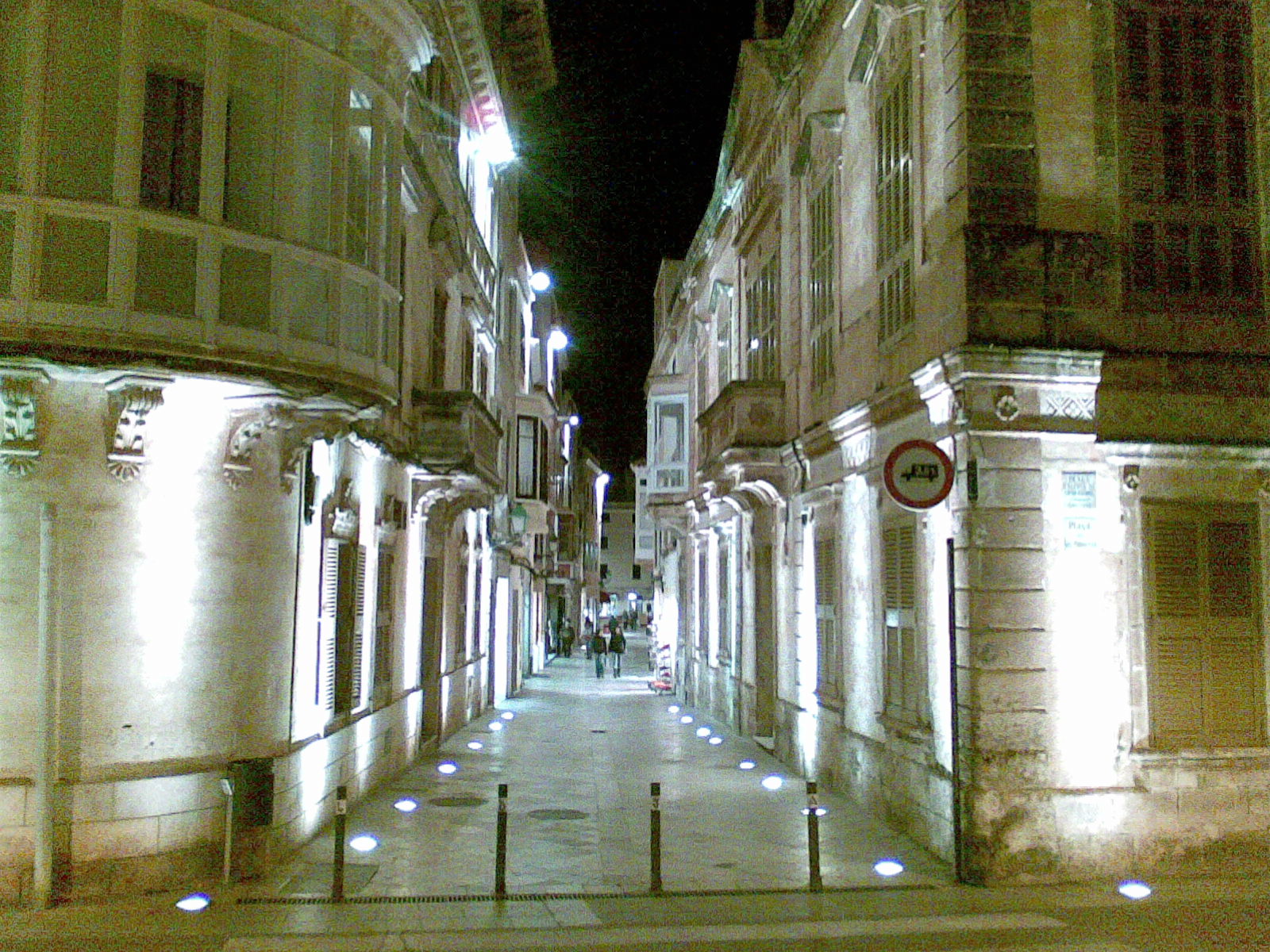
Ciutadella is the old capital of Menorca, in the west of the island, and its centre is built for this festival: a maze of narrow limestone lanes that open suddenly into squares. The crowd and the horses share those lanes, which is why the whole thing feels close and loud rather than staged. The cathedral and the surrounding streets form the core of it, though the route also reaches the port, where the crowd thins.
Watch the fabric of the town rather than a single moment. The paving stones, the shuttered windows and the low doors were built for a different century, and they read better on a quiet morning than in a crush. The cathedral sits at the centre of it, and the harbour lies below the walls. Arrive the day before to learn the layout, find the squares and see where the shade falls; the feast day itself will then make far more sense.
Old town lanesNarrow streets where the route turns and the crowd has to slow down.
The portThe quay below the walls gives space to breathe and a long view back up.
ShadeLanes on the shaded side fill early, so claim a place before midday.
Water and shoesCobbles hold the heat; carry water and wear closed shoes.
Crowds and a horse at the Sant Joan festival in Ciutadella, Menorca03
Horses and riders
The horses are the emblem of the festival and the reason many people travel for it. They are dark and strongly built, bred on the island, and they work in noise, heat and dense crowds with people pressing in on every side. Riders wear formal dress and sit high above the heads of the crowd. It is a striking thing to watch, and it depends entirely on the animals staying calm. That is the craft of the festival.
That calm is not accidental. Handling horses in a crowd takes skill, routine and animals that know the work, and the festival's reputation rests on all three. For visitors the useful rule is simple: keep the space a horse needs, never step out in front of one, and let the riders do their job. Photography is fine; standing in the middle of a narrow lane to take it is not. Give way, and give room.
Protect itGive horses room, never approach from behind, and follow the marshals. The festival works because animals and crowds share the same narrow streets without incident.
04
Getting there and back
Ciutadella sits at the western end of Menorca, and every road into it is busy on the feast days. Buses run from Maó and from other towns on the island, with extra services around the festival that change from year to year; check the island bus operator for times. Driving brings the usual problem of parking in a small city centre, and the nearest spaces fill early. Arrive before mid-morning or expect to walk in.
The practical answer is to arrive early, park where you are allowed to park and walk in, or to stay in or near Ciutadella for the night and let the crowd drain away before you move. Taxis exist but are limited on an island of this size and are in heavy demand after the last event. Decide the return before the day starts; leaving with a crowd is easier when you know where you are going.
Check before you goThe programme, road closures, bus times and viewing arrangements change every year. Confirm them with the Consell Insular de Menorca and the island bus operator before the day.
05
The days around the feast
The feast of John the Baptist falls on 24 June, and the days around it carry the festival. The night before is the vigil, and much of the celebration is outdoors and late. Exact dates are fixed by the church calendar, so the weekday changes from year to year, which matters for travel: a midweek festival is a different experience from one that runs into a weekend. Book accommodation well ahead for the main days.
Beyond the main days, Ciutadella keeps a calendar of its own: religious services, music in the squares, and a town that fills and empties with the crowd. Not everything is advertised in English, and not everything is meant for visitors. Read the programme, stay out of areas roped off for residents, and treat the parts you do not understand as someone else's tradition rather than as a show put on for you.
The hermitage of Sant Joan de Missa, where the festival begins, near Ciutadella06
A festival with older roots
Midsummer is marked across the Mediterranean, and the feast of John the Baptist on 24 June gave the Balearic Islands a date to hang it on. The horses and the formal riding are harder to date: local historians do not agree on every detail, and the festival has changed with the town, as ports and summer seasons always do. What is clear is that it belongs to Ciutadella first and to visitors second, which is the best way to approach it.
That order of priority is worth holding on to. Residents ride, residents line the route, and residents have been doing it since long before the island had an airport or a summer season. Visitors are welcome and the town is used to them, but the day is not arranged around them. Behave as a guest in someone's street party and the whole experience improves, for you and for the people whose festival it is.
It belongs to Ciutadella first and to visitors second, which is the best way to approach it.
07
Watching well
The best place to watch depends on what matters most. Close to the horses means noise, dust and no room to move; a step back means a view of the whole lane and a way out when you need one. Standing near a wall or in a doorway gives you something at your back. Heat is the other factor: the middle of the day is punishing, shade is limited, and the crowd makes both worse.
Go early, find your spot and accept that you will keep it for a long time. Movement through the old town during the main events is slow, and crossing a route is not always possible. Watch children and your own footing: the cobbles are uneven, and a crowd that shifts suddenly is the usual cause of small injuries. Leave before the end if you have a ferry or a flight to catch.
Arrive earlyMid-morning gives you a choice of places to stand; by midday there is none.
Stay putOnce the route is busy, moving between squares costs more than it gives.
Watch your feetCobbles, kerbs and sudden stops cause most of the small accidents.
Plan the exitKnow your way out and allow more time than the map suggests.
08
The rest of the year
Outside June, Ciutadella is a quieter city with a harbour, a cathedral and a grid of lanes worth a morning. The old town rewards walking: the cathedral, the churches, the market and the little squares that were packed in June are empty enough to cross in a straight line. Many businesses close roughly November to April, but the city stays open year-round, and winter shows it as a working town. Ferries and flights are fewer in winter, so check times before you commit.
The festival is one of several reasons to come. Menorca is a UNESCO Biosphere Reserve, the Camí de Cavalls runs around the whole coast, and the prehistoric sites of the Talayotic era are on the World Heritage list. A visit timed around Sant Joan can stretch into a week of walking, swimming and stone towers. Book accommodation early for the festival days, expect high-season rates, and check the Balearic tourist tax, which changes.
Old town walkThe cathedral, the lanes and the port make a half day on foot.
Camí de CavallsThe long-distance path circles the island and can be joined near Ciutadella.
Out of seasonMany businesses shut from November to April, and the town is at its quietest.
FAQ
Questions people ask.
When is Sant Joan in Ciutadella held?
Sant Joan in Ciutadella is held around 23 and 24 June, with 24 June the feast of John the Baptist and the centre of the celebration. The date is fixed by the church calendar, so the weekday changes from year to year. Events spread over the days around it; confirm the programme with the Consell Insular de Menorca.
Do you need tickets for Sant Joan in Ciutadella?
No tickets are needed for the street events: Sant Joan in Ciutadella happens in public streets and squares, and anyone standing there is part of the crowd. Some acts are religious services with their own customs, and some areas are kept for residents. Read the programme before you travel and follow the marshals on the day.
Where should you stand to watch Sant Joan in Ciutadella?
Stand a step back from the route, with a wall or a doorway behind you, so you can see the lane and leave when you need to. The front of the crowd is close to the horses but hot and hard to exit. Side lanes in the old town often give a better view than the main squares.
Can you get to Sant Joan in Ciutadella by bus?
Buses link Ciutadella with Maó and other Menorcan towns, and extra services usually run around the festival, though the timetable changes each year. Check the island bus operator before the day and plan the return as well as the outward trip. Staying overnight in or near Ciutadella avoids the busiest queues.
How close can you get to the horses at Sant Joan in Ciutadella?
Closer than you might expect, which is exactly why care matters. Riders work in dense crowds and the horses need space to stand and turn. Never approach an animal from behind, do not step into the route, and follow the instructions of the marshals. Ask before touching a horse.
Is Sant Joan in Ciutadella suitable for young children?
It can be, with planning. Sant Joan in Ciutadella is loud, hot and very crowded, and the main events last a long time. Choose a spot with something solid at your back, keep children within reach, carry water and leave before the crush at the end. Ear protection helps with the noise.
What is Ciutadella like outside the festival?
Outside June, Ciutadella is a calm city with a cathedral, a harbour and lanes worth a morning's walk. It stays open year-round, unlike many seasonal businesses on the island, which close roughly from November to April. Winter is quiet and ferries and flights are fewer, so check times before planning a visit around the town alone.
Does accommodation in Ciutadella fill up for Sant Joan?
Yes. The festival is the busiest time of the Menorcan year in Ciutadella, and beds in and near the city go early. Book well ahead, expect high-season rates, and confirm the Balearic tourist tax rules with the Govern de les Illes Balears, since rates depend on the accommodation and the season.
Can you combine Sant Joan in Ciutadella with the Camí de Cavalls?
Yes. The Camí de Cavalls runs around the whole Menorcan coast and can be joined near Ciutadella, so the festival makes a natural start or end to a walking week. June heat is real, water is essential, and stages should be planned with the official route information rather than improvised on the day.