The meadows that run between Ibiza and Formentera are the reason the water looks the way it does. Snorkel above them, look, and leave the seabed untouched.
Summerbest time
Cala Comtenearest area to stay
16.3 kmfrom IBZ, straight line
The seagrass meadows of posidonia are what keep the water off southern Ibiza clear and brightly coloured. You do not need a boat or a course to see them: swim out from a sandy beach, float, and look down. This page covers where the meadows are, when the water is clearest, and the rules that keep them intact.
01
What posidonia actually is
Posidonia oceanica is a flowering seagrass, not seaweed, and it grows only in the Mediterranean. On Ibiza it forms meadows that begin in the shallows and run out to about 30 or 40 metres of depth, where light still reaches. The leaves are long, flat and green. They slow the swell, hold the sand in place and release oxygen into the water, which is a large part of why the south coast looks as it does.
The Ibiza meadows belong to the UNESCO World Heritage Site 'Ibiza, Biodiversity and Culture', listed in 1999, which also takes in Dalt Vila, the Phoenician settlement of Sa Caleta and the necropolis of Puig des Molins. The listing treats the seagrass as one of the island's monuments, which is the right way to see it. Posidonia grows slowly, and a patch cut open by an anchor can take decades to close over again.
A meadow that took centuries to grow can be cut open by one anchor in an afternoon.
02
Where the meadows lie
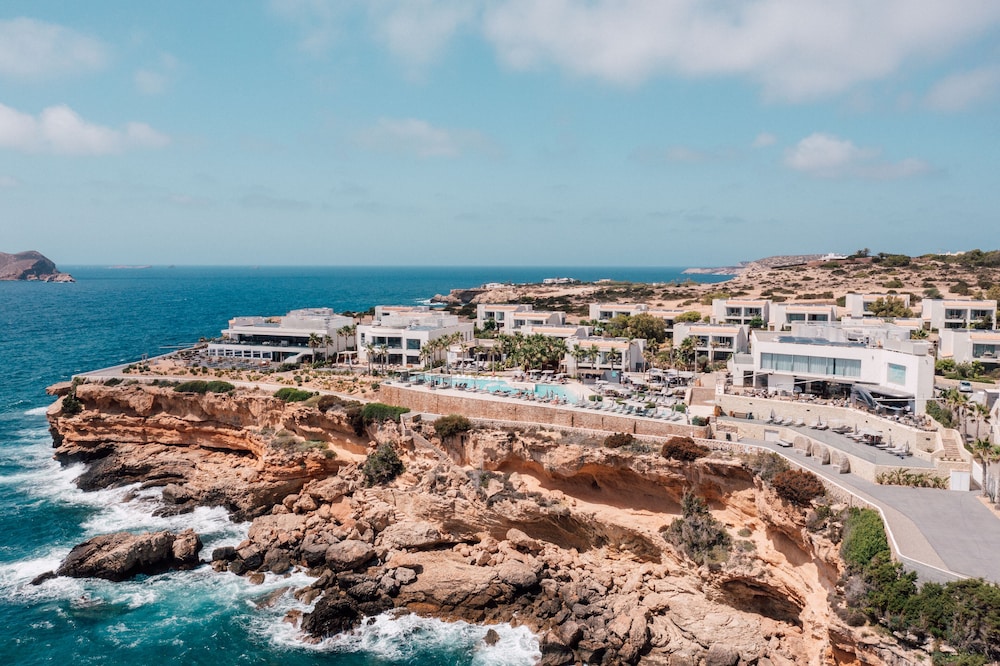
The densest and best known meadows sit in the strait between Ibiza and Formentera, inside the Ses Salines Natural Park, which covers the south of Ibiza, the north of Formentera and the sea between them. The beaches around Cala Comte look over them, and the salt pans and dunes behind the coast are part of the same protected area. Further west, the water below Es Vedrà and the Cala d'Hort cliffs also holds posidonia.
For snorkelling from the shore, the south and west are easier: the shelves are shallow, the entry is often sand between rock, and the water is calmest in the morning. The park status matters. Inside Ses Salines there are rules on anchoring and on where boats may stop, and the natural park office can say what applies in the season you visit. Outside the park, the same Balearic decree still covers the meadows.
Cala ComteShallow shelves and clear water on the south-west coast, with meadows just beyond the swimming zone.
Ses SalinesThe strait between the two islands, protected as a natural park since 2001.
Cala d'HortWest-facing coves below Es Vedrà, calmest early in the day.
North coastCooler, rockier water and smaller patches of meadow, best in settled weather.
Snorkelling by a rocky shore in clear water, Ibiza03
Getting to the water
Cala Comte is the natural base for the southern meadows. Ibiza Airport is about 7 km south-west of Ibiza Town, in Sant Josep, and from there the south beaches are reached by road or, in summer, by bus. Lines link the airport with Ibiza Town, Sant Antoni, Santa Eulària and the south beaches, with more services in summer. Check the island bus operator for current lines and times, because seasonal routes change.
By car, the south coast roads are slow in July and August and parking near the popular coves fills early, so arrive before mid-morning or come in the late afternoon. Many beach bars, boat trips and seasonal restaurants close roughly from November to April, which leaves the coast quiet and short of facilities out of season. Walking in from a nearby village works on some routes; check the distance and the shade before setting out.
04
When the water is clearest
Summer is the season, for the water and for access. Typical sea temperatures run at about 18-19 °C in May, 22-23 °C in June, 25-26 °C in August and 23-25 °C in September. June and September give the best combination: warm water, fewer people on the shelves and a softer sun than August. Mornings are almost always calmer, and the light is better for seeing into the meadow before the wind picks up around midday.
The clearest water usually follows a run of calm days. Wind from the south pushes weed and sand into the south-facing coves, while a few days of northerly weather leaves the strait glassy. Winter water drops to about 14-15 °C in February and March, cold for a long snorkel without a wetsuit, though the meadows are still there and the coast is empty. Storms can strip leaves and cloud the shallows for a while afterwards.
Boat traffic matters too. In high summer the bays fill with craft, and the swimming zones are marked off the busier beaches. Snorkelling inside those zones is safer and usually just as rewarding, since the shallow edge of a meadow often starts within easy swimming distance of the sand. Ask locally about conditions on the day rather than relying on a forecast for the whole island.
05
How to snorkel over it
Snorkelling over posidonia needs no course. Swim out until the sand gives way to darker patches, put your face in the water and float. A mask that fits and a snorkel are enough in the shallows; fins help you cover ground without standing up. Keep the body horizontal and the hands still. The point is to look down at a living meadow, not to cross it, and floating leaves it exactly as it was.
Take your time at the edge before moving over the dark water. The leaf blades move with the swell, and fish use the gaps between them, so the best sightings come from staying still for a minute or two rather than covering distance. If the swell pushes you towards the meadow, turn and swim back over sand. Getting out is easiest at the same sandy entry you used on the way in, especially with fins on.
Mask and snorkelA well-fitting mask is the difference between a good hour and a frustrating one.
FinsThey let you cover the meadow without standing on it or kicking up sand.
Water and shadeThere is little natural shade on the south shelves in the middle of the day.
A visible floatSmall boats cross the bays, and a float makes you easier to see.
An old posidonia rhizome washed up on Platja des Cavallet, Ibiza06
The rules that protect it
Anchoring over the meadows is regulated by a Balearic decree, and inside the Ses Salines Natural Park the rules go further. Mooring buoys are installed in some bays in summer, and picking one up is the simplest way for a boat to avoid tearing the seabed. The detail, which bays, which months, how many boats, changes. Check with the natural park office, the Consell d'Eivissa or the Govern de les Illes Balears before anchoring or booking a boat.
From the shore the rules are simpler but no less real. Do not stand on the meadow, do not pull at the leaves, do not drag a mask through it and do not collect anything, alive or dead. The protection of marine life covers shells and plants as well as fish. Fishing and spearfishing are regulated separately and are not part of a snorkelling day out; if a boat is anchored over dark water, keep clear of it.
Check before you goAnchoring and buoy rules in the Ses Salines Natural Park change with the season. Confirm current rules with the natural park office before anchoring or hiring a boat.
07
Doing it lightly
The meadows do most of the work of keeping the water clear, and they do it slowly. One snorkeller who floats and looks is no problem; a hundred who stand up to adjust a mask on the same shelf are. Enter over sand, leave over sand, and keep fins off the leaves. If a patch cannot be crossed without touching it, go around it. The meadow will still be there next year, which is the whole point.
On land the same logic applies. Use the bins, carry refillable water, and take the bus or a bike where the road allows, since the south coast carries a great deal of traffic in August. Fresh water is a real constraint on a dry island, and the guides to travelling lightly and to water cover it in more detail. Small habits, repeated by many visitors, are what keep the strait worth snorkelling.
Protect itFloat, look, and keep fins and hands off the leaves. Enter and leave over sand, and never anchor or stand on the meadow.
08
What is nearby
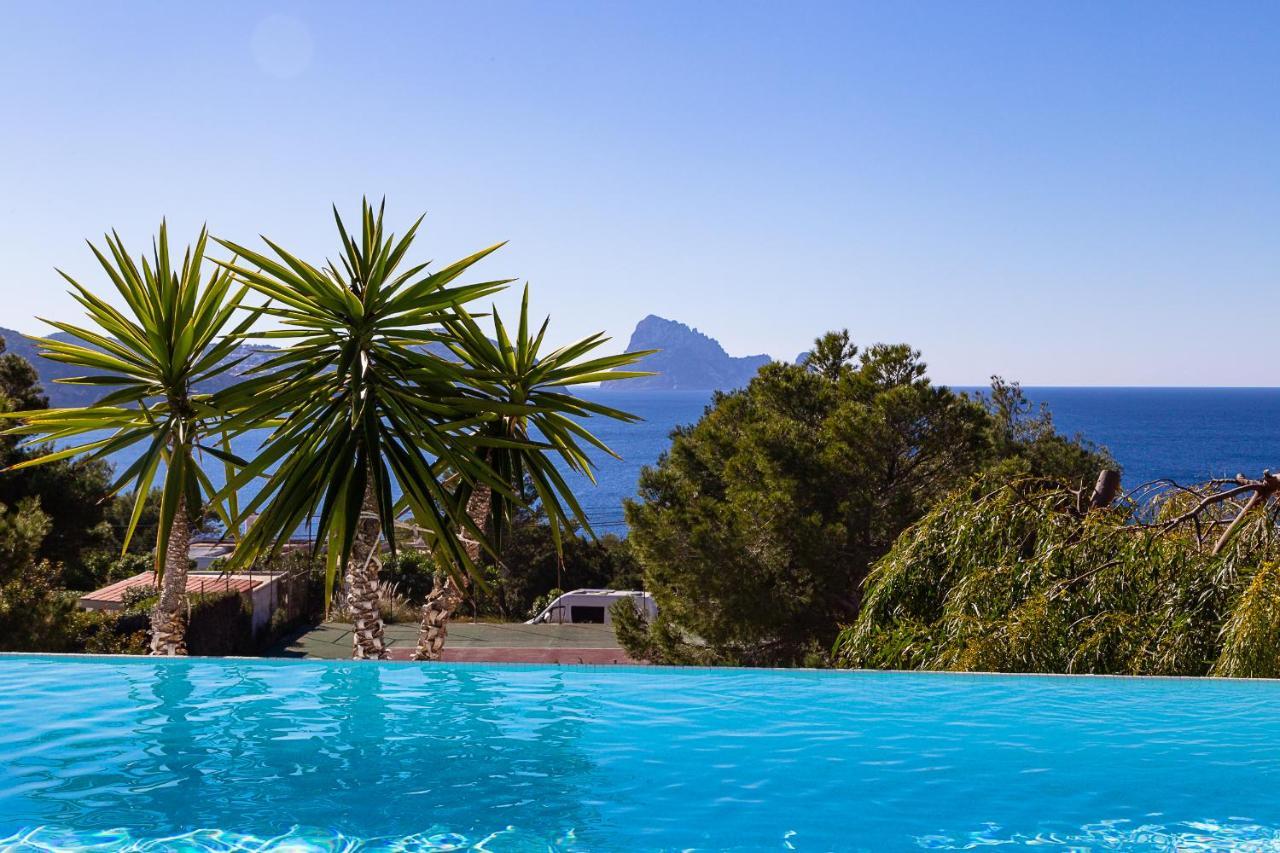
The southern meadows sit inside a stretch of coast with plenty to fill a day. Cala Comte and Cala d'Hort are close, the cliffs above Cala d'Hort look across to Es Vedrà, and the salt pans and dunes of Ses Salines are a short drive east. Dalt Vila, the walled old town above the port of Eivissa, is the other half of the World Heritage listing and worth an evening. Es Vedrà is a nature reserve, with no landing.
Further afield, the north coast around Portinatx and Cala Sant Vicent offers a rockier, cooler snorkel, while Santa Eulària and Es Canar have the Punta Arabí market on Wednesdays in season. Las Dalias at Sant Carles holds its market on Saturdays, though days can change, so check before planning around it. All of it lies within a day's drive of the south, and out of season it is worth confirming what is open.
Cala d'HortWest-facing coves below Es Vedrà, with the islet in view from the water.
Ses SalinesSalt pans, dunes and shallow water, all inside the natural park.
Dalt VilaThe walled town above the port, part of the same World Heritage listing.
Where to wake up
Stays near posidonia
Stays near posidonia: the first 6 of 11 stays in the IMPT hotel database in or close to Cala Comte, the nearest area to Snorkel over posidonia, five-star first, then four-star, then by guest score. Each button opens live prices for your dates in the IMPT app.
The main meadows lie in the strait between Ibiza and Formentera, inside the Ses Salines Natural Park. The coves around Cala Comte and Cala d'Hort give shore access over sand, with the dark patches starting a short swim out. Smaller patches appear along the north coast, where the water is cooler and the rock older.
Do you need a boat to snorkel over posidonia on Ibiza?
No. The southern meadows begin close enough to the beach that a mask and fins are enough, and entering over sand is easier than stepping off a boat. Boat trips do run from the ports in season, but check the operator's anchoring practice and the current park rules before booking, since the rules change.
When is the best time of year to snorkel over posidonia on Ibiza?
June and September are the best months: warm water, fewer people and clearer light. Typical sea temperatures are about 22-23 °C in June and 23-25 °C in September. Mornings are calmer than afternoons, whatever the month, and a run of settled weather leaves the water clearest.
Can you anchor over the posidonia meadows on Ibiza?
Anchoring over the meadows is regulated by a Balearic decree, and inside the Ses Salines Natural Park the rules are stricter. Mooring buoys are installed in some bays in summer. Which bays, which months and how many boats all change, so check with the natural park office or the Consell d'Eivissa before anchoring.
What should you bring to snorkel over posidonia on Ibiza?
A mask that fits, a snorkel, fins if you have them, and water shoes for rocky entries. Add drinking water, shade, a rash vest or thin wetsuit for May and October, and a small visible float in bays with boat traffic. Take everything back with you, including anything that blows away.
Is posidonia seaweed or a plant?
Posidonia oceanica is a flowering seagrass that grows only in the Mediterranean, so it is closer to a land plant than to seaweed. On Ibiza its meadows run from the shallows to about 30 or 40 metres deep. The leaves slow the swell, hold the sand and release oxygen, which helps keep the water clear.
Is it safe to snorkel over the posidonia meadows on Ibiza?
The southern shelves are generally calm, which makes them good for ordinary swimmers. Watch for boat traffic, stay inside marked swimming zones where they exist, and avoid headlands and channels where currents run. Snorkel within your own ability, keep a partner in sight and do not stand on the meadow to rest.
How deep do the posidonia meadows go on Ibiza?
The meadows begin in the shallows, often within a few metres of the beach, and reach down to about 30 or 40 metres where light still gets through. A snorkeller sees the shallow upper edge, which is where the leaves are densest. The deeper meadow is beyond snorkelling range and is left to divers.
How does snorkelling over posidonia connect to the World Heritage Site on Ibiza?
The UNESCO listing 'Ibiza, Biodiversity and Culture', added in 1999, joins the posidonia meadows and coastal ecosystems between Ibiza and Formentera with Dalt Vila, the Phoenician settlement of Sa Caleta and the necropolis of Puig des Molins. Snorkelling over the seagrass puts you above one part of a listed landscape.