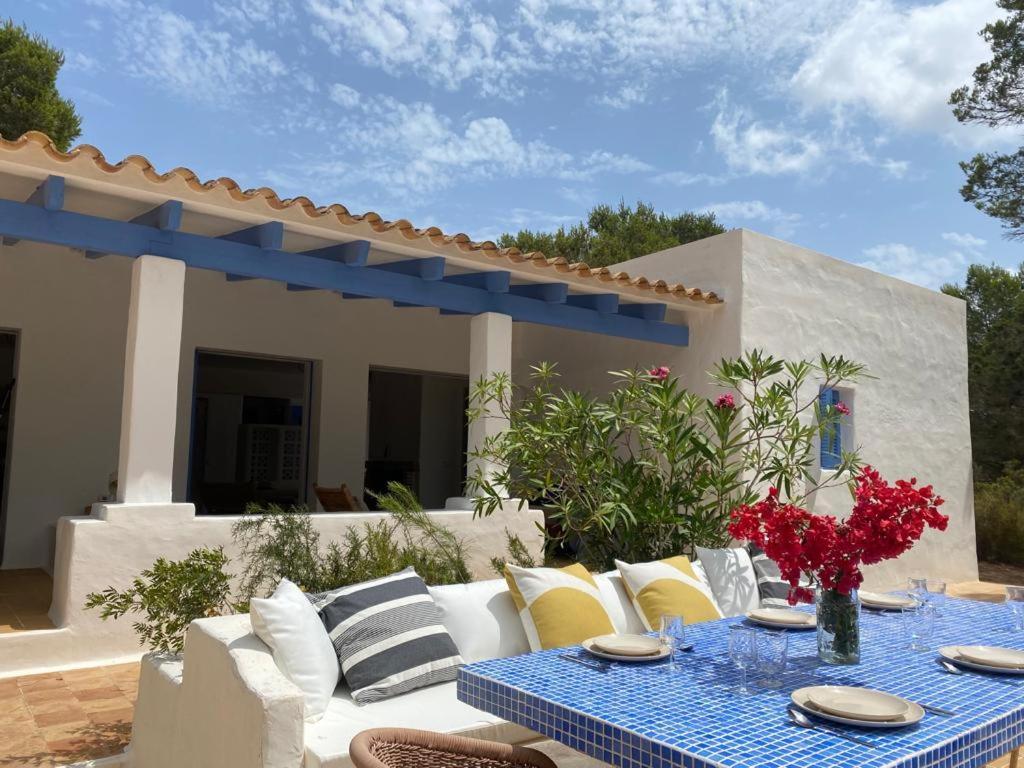
A small sandy cove beneath red cliffs on Formentera's west coast. The sun drops into open water, and the beach empties quickly once it has gone.
Eveningsbest time
Cala Saonanearest area to stay
5.3 kmfrom La Savina port, straight line
Cala Saona is a sandy cove on the west coast of Formentera, held between low red cliffs. Because the coast faces open water, sunset is the natural thing to do here: the beach looks west, the light goes orange on the rock, and the sun meets the sea rather than a skyline. Arrive an hour before.
01
A cove under red cliffs
Cala Saona is a small sandy cove on the west coast of Formentera, cut into low red cliffs that run down to the water. The beach is short and shelving, the sand pale, and the water clear over the shallows. Rock ledges at either end give shade in the late afternoon and hold small pools when the sea is calm. Behind the sand the ground rises quickly, so the cove feels enclosed without ever closing off the horizon. It faces west, which is the whole point.
The red colour comes from iron in the rock, and the cliffs are soft: they crumble, they undercut, and they are best looked at rather than climbed. Offshore the seabed drops away over Posidonia oceanica meadows, which is why the water turns from pale turquoise to deep blue a short way out. The cove is sheltered from most swell, though the wind changes everything. On a windy evening the sand lifts and the sunset is short. The rock gives some shelter if you pick the right end.
02
Getting there
Cala Saona sits at the end of a signposted side road off the road that runs from Sant Francesc Xavier towards Cap de Barbaria. The turning is easy to miss in the dark, so note it on the way out. Coming from the port at La Savina or from Es Pujols, the natural route is through Sant Francesc Xavier, where the signs take over. The last stretch is narrow in places and passes low dry-stone walls and fig trees.
Parking near the cove is limited and fills early in high season, and the last approach is often walked rather than driven. In summer the Consell de Formentera caps the number of visitor vehicles on the island, so a hire car brought over on the ferry needs checking before travelling. Bikes and buses avoid the problem, though the bus timetable is a seasonal thing. Check the island bus operator for seasonal services.
By roadA signed turning leaves the Sant Francesc Xavier to Cap de Barbaria road, and the cove is at the end of it.
By bikeThe ride is short and the road quiet outside the evening, but lights matter after dark.
ParkingSpace near the sand is limited, so in high season expect to walk the last part.
Vehicle limitsThe Consell de Formentera restricts visitor vehicles in high season, so check before hiring.
Fishermen's boat sheds at Cala Saona, Formentera03
The best time to go
Sunset moves through the year, early in winter and late in summer, so check a reliable almanac for the day rather than relying on memory. Arriving an hour before gives time to swim, walk the far end of the cove and choose a spot. The light before the sun goes is often better than the moment itself. In August the beach is busy at that hour; in May, June and September it is calmer. Spring and autumn also bring cloud, which can close the view entirely.
Out of season the cove is quiet, and much of what serves visitors in summer, from beach bars to boat trips, closes roughly from November to April. The beach stays open, the light is often clearer, and the water is colder than most people expect. Carry a torch and check the forecast, because wind matters more than temperature here. Sunset comes early, so plan the drive back in daylight or with good lights. Few people share the sand with you then.
04
How the evening runs
Most people arrive in the late afternoon, swim while the sand is still warm, and stay put once the sun lowers. The cove faces west, so the shadow line climbs the cliffs opposite and the water keeps its colour until the last minutes. The sun goes down quickly at this latitude, and there is no long dusk. When it has gone, the light turns briefly pink on the red rock, then flat. Cameras come out, then people start to gather bags.
Leaving is part of the evening. The car park empties at once, the road back is unlit and shared with cyclists, and the first kilometre is the slowest. Many people drive on to Sant Francesc Xavier or Es Pujols for a late meal, where places stay open later in season. A torch, a jacket and a little patience make the difference. If the sky is clear, stop once the lights of the cove are behind and let your eyes adjust.
The sun goes down quickly here, and there is no long dusk.
05
Rules on sand and water
The meadows offshore are Posidonia oceanica, a seagrass that grows only in the Mediterranean and is protected. Anchoring over the meadows is regulated by a Balearic decree, and mooring buoys are installed in some bays in summer. Boats arriving for the sunset should use the buoys where they exist or anchor over sand. Ask the Consell de Formentera or the natural park office for the rules in force. The clear water is a product of those meadows. They filter the sea and hold the sand in place.
On land the usual rules apply: no fires, no camping, no amplified music, no collecting of rock, sand, plants or animals. The cliffs are soft and undercut, and climbing them damages the rock and ends in rescue calls every summer. Vehicles stay on the road, because the tracks behind the beach are not a car park. Take everything back with you, including fruit peel, which takes longer to disappear than people think. If a sign closes a path, it is protecting thin ground underfoot.
Dunes behind the beach at Cala Saona, Formentera
Check before you goCheck anchoring rules and buoy positions for Cala Saona with the Consell de Formentera or the natural park office before bringing a boat.
06
Doing it lightly
The cove is small and takes a lot of people in August. The sand is the whole of it, and it does not recover quickly. Take litter away, including cigarette ends, keep the noise low when the light goes, and let the people who live and work here get on with their evening. Cars arriving for a single hour leave a mark on a place this size. The road in and out is the same one.
Posidonia leaves wash up on the sand in spring and autumn and are not rubbish; they hold the beach together and feed the food chain offshore. Leave them where they land. Stick to the paths across the low ground behind the beach, where the soil is thin and plants take years to return. The red rock is soft, so keep hands and feet off it. None of this needs a rulebook, only a little attention.
Protect itTake litter off the sand, leave the washed-up seagrass where it lands and keep voices low after sunset. The cove stays worth the drive because of this.
07
What to bring
The cove has services in season, but nothing is guaranteed after the sun goes. Bring water, because the walk back is warmer and longer than it looks, and a layer, because a west wind off the sea cools quickly once the light fades. Shoes with a grip help on the rock at either end of the beach. A torch or a charged phone is not a luxury on an unlit road shared with cyclists.
For swimming, the water is warmest in late summer and coolest in spring; the shallows are safe for children but the drop-off comes sooner than on the long southern beaches. Snorkelling over the edge of the meadows is worthwhile in calm weather. Keep bags close and leave valuables out of the car. Sand gets into everything, so a dry bag for phones and keys saves an evening. A folded mat also makes the wait more comfortable.
WaterCarry more than seems necessary; taps are not guaranteed out of season.
A layerThe wind off the sea arrives with the dark and drops the temperature.
A torchThe road back is unlit and shared with cyclists after sunset.
GripThe rock at both ends of the cove is smooth when wet.
Dry bagSand and salt reach phones and keys quickly on a small beach.
08
Nearby after sunset
Cala Saona sits in the south-west of Formentera, within reach of the island's other quiet ends. Cap de Barbaria and its lighthouse lie further south along the same road, and the cape is another place for the last light. Sant Francesc Xavier, the capital, has the nearest year-round life: a square, a fortified church and streets that stay open when the season ends. The church was built as a refuge, and it still anchors the grid of lanes around it.
West and south of the cove the land is low, dry and walled with stone, good for a short walk in the last hour of light. Platja de Migjorn, on the south coast, is a longer beach for a late swim earlier in the day. Es Pujols and La Savina are the other directions, both busier, and both useful for ferries and food. None of these is far: the island is about 19 km long, and the roads between them are quiet after dark.
Cap de BarbariaThe southern cape and its lighthouse, further along the same road, for another sunset.
Sant FrancescThe capital, with its fortified church and lanes that stay open out of season.
MigjornA long south-facing beach, better for a swim earlier in the day.
La SavinaThe port, where ferries to Ibiza come and go through the day.
Where to wake up
Stays near Sunset at Cala Saona
Stays near Sunset at Cala Saona: 6 stays in the IMPT hotel database in or close to Cala Saona, the nearest area to Sunset at Cala Saona, five-star first, then four-star, then by guest score. Each button opens live prices for your dates in the IMPT app.
What time should you arrive at Cala Saona for sunset?
Arrive about an hour before the sun goes down. Sunset time shifts through the year, earlier in winter and later in summer, so check an almanac for the day. That hour gives time to swim, walk the cove and settle. In August the beach is busy at that point; in spring and autumn it is calm.
Can you reach Cala Saona for sunset without a car?
Yes. The cove is at the end of a short signed road, and a bike covers it easily from Sant Francesc Xavier. Buses run in season; check the island bus operator for times. The road back is unlit, so lights or a torch are needed if you stay until the light has gone.
Is it safe to swim at Cala Saona at sunset?
The shallows are gentle and children manage them well. The drop-off comes sooner than on the long southern beaches, so weaker swimmers should stay close in. The water is warmest in late summer and noticeably cold in spring. Swimming after the sun has gone is possible, but the light fails quickly.
How busy is Cala Saona at sunset in summer?
Busy in August, when the parking fills early and the sand carries a crowd. May, June and September are easier, and out of season the cove can be almost empty. Whatever the month, the crowd thins within minutes of the sun going down.
Where does the sun set at Cala Saona?
Over the sea, because the cove faces west. The exact point moves north in midsummer and south in winter, so the light falls differently on the cliffs at either end of the beach. The cliffs opposite take the last colour, and the water keeps its tone until the final minutes.
Can boats anchor at Cala Saona for the sunset?
Only within the rules. Anchoring over Posidonia oceanica meadows is regulated by a Balearic decree, and buoys are installed in some bays in summer. Use a buoy where one exists, or anchor over sand. Check the current position with the Consell de Formentera or the natural park office before setting out.
What should you take to Cala Saona for the evening?
Water, a layer against the wind that arrives with the dark, and a torch or charged phone for the road back. Shoes with grip help on the rock at either end of the beach. A mat or towel makes the wait comfortable, and a dry bag keeps sand out of phones and keys.
Is Cala Saona worth visiting out of season?
Yes, if you accept that much of what serves visitors in summer closes roughly from November to April. The beach stays open, the light is often clearer, and you may have the cove to yourself. Bring everything you need, check the forecast, and plan the return before dark.
What is there to do near Cala Saona after sunset?
Drive on to Sant Francesc Xavier for the square and streets that stay open year-round, or stop at Cap de Barbaria earlier in the evening for another view of the last light. Es Pujols and La Savina have food and ferries. The island is about 19 km long, so nothing is far.