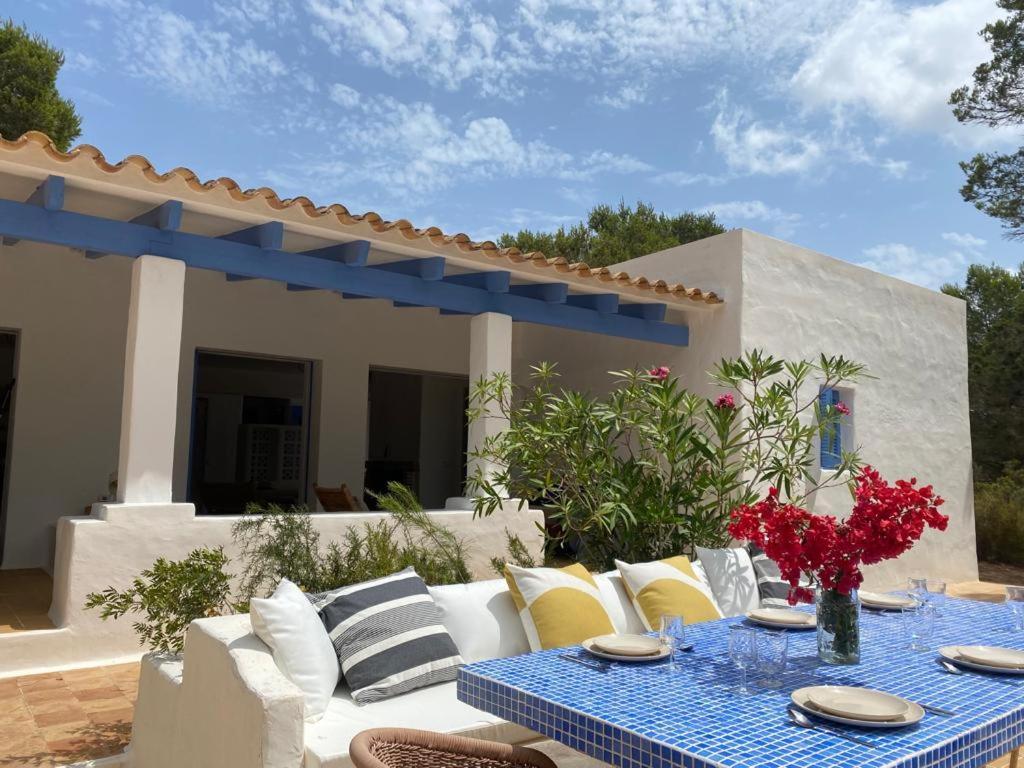
Cala Saona is the one bay on Formentera that closes around you, with red cliffs, shallow water and the sun going down straight ahead. It makes a quiet base for the west of the island.
5.3 kmfrom La Savina port, straight line
6stays in the IMPT hotel database
Westcoast
Cala Saona works as a base if you want the sea at the end of the day rather than a town at the end of the road. The island's one true cove sits on the west coast, about 5.3 km from La Savina in a straight line, with shallow water, red cliffs and a clear line to the sunset. Here is what the area is like and how to plan a stay.
01
What the cove is like
Cala Saona is the only bay on Formentera that folds around its beach on three sides, with low red and ochre cliffs in place of the long dune-backed sands found elsewhere on the island. The water stays shallow for a good distance out and the seabed is sand, so it clears quickly after a windy day. The scale is small: one beach, a handful of buildings behind it, and the lane ending where the cliffs begin.
Behind the sand the land rises in low terraces of reddish rock held by juniper and pine, the same dry cover as the rest of the west coast. The lane in from the Sant Francesc side stops at the cove, so there is no passing traffic and no reason for anyone to be here except to swim, eat or watch the light. Walking shoes help: the rock is loose in places and the tracks above the bay are rough.
The dry stone walls that run up the slopes behind the cove are part of what makes the west of Formentera look the way it does: thin soil, figs and vines held back from the wind, and walls built without mortar. The dark lizards on the rocks are the Pitiusan wall lizard, found only on Ibiza, Formentera and their islets, and they move fast into the cracks. Look, but do not catch.
Protect itPosidonia meadows grow off this coast and anchoring over them is regulated by a Balearic decree. Check the current rules, and the summer mooring buoys, before dropping anchor.
02
The west-facing sunset
The cove faces west, which is the whole point of the place in the evening. From late afternoon the cliffs on the northern side throw shade across part of the beach, so the sand nearest the southern rocks holds the sun longest. Bring something to sit on, because the rock shelves at either end are harder than they look and the strip of sand narrows as the tide comes in.
Sunset here is a quiet business rather than a performance. People drift down from the buildings behind the beach, swim once more and stay until the light goes. There is no promenade to walk and no bar strip to move along afterwards, so most evenings end with a meal close by or a drive back to Sant Francesc. A small torch is useful if you are walking back to your room after dark.
Boat sheds on the shore at Cala Saona, Formentera
The cove faces west, so the sun drops into open water rather than behind a hill.
03
Beaches and sights nearby
The cove sits in the south-west corner of Formentera, with the Cap de Barbaria road running south from Sant Francesc a short drive away. The cape itself is flat, walled with dry stone and planted with fig and vine, and it ends at a lighthouse above low cliffs. On foot, tracks and quiet lanes connect the Cala Saona area with the land around the cape; ask locally about waymarking before setting out.
North of the cove, Sant Francesc Xavier is the island's capital and its year-round centre, with the fortified church built as a refuge in the eighteenth century. Beyond it lie the salt pans, the shallow lagoon of Estany des Peix, the port at La Savina and, past those, the long sandbar at Ses Illetes. All of it is within a short drive or a solid bike ride of Cala Saona.
Cap de BarbariaThe southern cape ends at a lighthouse, with flat dry-stone country and low cliffs on the approach.
Sant Francesc XavierThe whitewashed capital and its fortified church stay open through the year, unlike much of the coast.
Estany des PeixA shallow lagoon beside La Savina, good for birds and for watching the water change colour through the day.
La SavinaThe port where the ferries from Ibiza arrive, with the first shops, buses and bike hire of the island.
Ses IlletesThe sandbar and shallow water at the northern tip, reached by a separate road or from the water.
04
Who Cala Saona suits
Cala Saona suits people who want the water at the end of the day rather than a town at the end of the road. It is small and self-contained, which makes it restful, and the shallow bay is easy for swimming and for children who are happy to stay near the shore. Walkers and cyclists use it as a western anchor between the cape and the salt pans.
It suits less well anyone who wants a choice of restaurants within walking distance every night, or who would rather not depend on a car, a bike or the bus. There is no village here in the usual sense, just the beach and the buildings behind it. Book ahead for July and August, when the beds nearest the cove go first and the lane fills with day visitors.
CouplesA quiet bay, a west-facing sunset and dinner close by make an easy base for two.
WalkersTracks and lanes run from the cove toward the cape and the inland paths of the west.
FamiliesShallow water and a small beach keep young children within easy reach of the sand.
Sunset watchersThe bay faces open water, so the light lasts until the sun is actually down.
05
Evenings and food
Eating near Cala Saona is a small-scale affair. A few places sit behind the beach and above the water, most of them open from spring to autumn and shut in winter, serving fish, rice dishes and the usual island staples. In July and August they fill early, so it is worth deciding before sunset rather than after. Check opening days when you arrive, because they change with the season.
For anything more than a beach meal, Sant Francesc Xavier is the nearest reliable alternative and the only place on the island with a year-round choice. The bakeries, grocers and cafés around the church square keep going through the winter, and a small market sells produce and local goods on set days; check the current day with the Consell de Formentera. La Savina has more in summer.
Cliffs on the west coast near Cala Saona, Formentera06
Getting there from Ibiza
Fly to Ibiza Airport (IBZ), which sits about 7 km south-west of Ibiza Town in the municipality of Sant Josep. From the airport, buses run into Ibiza Town and taxis cover the short road to the port. Ferries from Ibiza Town to La Savina take about 30 to 35 minutes on the fast boats and about an hour on the conventional ones. Sailings are frequent in season and fewer in winter.
From La Savina, Cala Saona is about 5.3 km away in a straight line, though the road curves inland through Sant Francesc and takes longer than the map suggests. Taxis wait at the port, bikes and scooters can be hired in the port towns, and the island bus network covers the main routes; timetables change with the season, so check with the island bus operator. Driving yourself is the simplest option.
Anyone coming just for the day should allow for the ferry back and should not leave the last swim too late. Staying near the cove is the better arrangement: the beach empties in the late afternoon, the sunset happens in front of you rather than from a queue for the boat, and the next morning begins where the water is. Two nights is enough to see the west without rushing.
Check before you goFormentera caps visitor vehicles in high season, so check the current rules with the Consell de Formentera before bringing a car. Ferry timetables change with the season; confirm the last sailing with the operator.
07
Getting around the island
Distances on Formentera are short, and Cala Saona is within reach of most of the island by bike. Signposted green routes, the circuits verds, link the coast and the interior for walking and cycling, and the lanes inland toward Sant Francesc are quiet outside the high season. A bike turns the cove into a workable base: the salt pans, the lagoons and the cape are all a ride away.
Buses serve the main routes, with more in summer and fewer, or none, in winter on some lines; check the island bus operator for what is running while you are there. Taxis are limited in number, so booking a return is safer than hoping to find one at the beach late at night. If you drive, park where the lane ends and walk the last stretch, because space near the cove is tight in summer.
Green routesThe signposted circuits verds cross the island for walking and cycling, away from the main road.
BikesHiring a bike or scooter in La Savina or Sant Francesc makes the cove reachable without a car.
BusesIsland buses cover the main routes with more services in summer; check the operator for current times.
On footThe last stretch of lane and the tracks above the bay are easiest on foot in the busy months.
08
When to go and what closes
Late spring and early autumn are the best of it. In May the sea is around 18 to 19 °C and the island is still green in patches; June brings about 22 to 23 °C; September holds 23 to 25 °C with fewer people on the sand. August is the hottest and busiest month, with water around 25 to 26 °C and the cove busy by mid-morning. February and March are for walking, not swimming.
From roughly November to April much of the tourist business closes: the beach restaurants, the boat trips, many seasonal buses and plenty of accommodation. Sant Francesc Xavier and La Savina stay open, and the cove remains walkable and quiet, though there may be nowhere to eat beside it. Flights and ferries are fewer, so plan around the timetable. The sustainable tourism tax is charged by the accommodation, at rates that change with season and category; check the Govern de les Illes Balears.
Where to wake up
Stays in Cala Saona
Stays in Cala Saona: 6 stays in the IMPT hotel database in or close to Cala Saona, five-star first, then four-star, then by guest score. Each button opens live prices for your dates in the IMPT app.
Is Cala Saona a good base for a Formentera holiday?
Yes for a quiet stay in the west of the island. The cove has shallow water, a west-facing sunset and a few places to eat, and Sant Francesc Xavier, La Savina and the Cap de Barbaria road are a short drive or bike ride away. It is less useful if you want a village on the doorstep or a different restaurant every night.
How far is Cala Saona from La Savina port?
The straight-line distance is about 5.3 km. By road it is longer, because the lane runs inland by way of Sant Francesc Xavier before turning down to the cove. Taxis wait at the port and bikes can be hired there; check the island bus operator for buses, since the seasonal services change through the year.
How do you get to Cala Saona from Ibiza Airport?
Fly into Ibiza Airport (IBZ), about 7 km south-west of Ibiza Town, then reach the port in Ibiza Town by bus or taxi. Ferries cross to La Savina in about 30 to 35 minutes on fast boats and about an hour on conventional ones, with fewer sailings in winter. From La Savina, Cala Saona is about 5.3 km by road. Check the operators for timetables.
Can you visit Cala Saona without a car?
Yes. Bikes and scooters can be hired in the port towns, the island bus network covers the main routes and taxis work from La Savina, though numbers are limited. The lanes are quiet outside high season and the green routes make good cycling. In summer, check bus times with the island bus operator, because seasonal services come and go.
When is the best time to visit Cala Saona?
May, June, September and early October are the most comfortable, with the sea from about 18 to 19 °C in May up to 23 to 25 °C in September. August is the hottest and busiest month, with water around 25 to 26 °C and the beach filling by mid-morning. From November to April much of the beach business closes.
Is Cala Saona good for sunset?
It faces west and the sun drops into open water, so the cove is one of the island's natural sunset places. The cliffs on the northern side shade part of the beach from late afternoon, and the sand near the southern rocks holds the light longest. Stay until the light goes, then eat nearby or drive back to Sant Francesc.
What is there to eat near Cala Saona?
A few small places sit behind the beach, most of them open from spring to autumn and closed in winter, serving fish, rice and island staples. They fill early in July and August. For a wider choice, or for anything in the quieter months, Sant Francesc Xavier is the nearest year-round option, with La Savina busier in summer.
Is Cala Saona suitable for swimming and for children?
The bay is shallow for a good distance out and the seabed is sand, which suits children who stay near the shore and anyone who prefers calm water to surf. The rock shelves at either end are uneven, and walking shoes help on the tracks above the bay. There is no promenade, so the beach is the whole day's entertainment.
Can boats anchor at Cala Saona?
Anchoring over posidonia meadows is regulated by a Balearic decree and the rules change, so check the current position with the Consell de Formentera before anchoring. Mooring buoys are installed in some bays in summer. Swimming and snorkelling from the beach need no arrangement, and the seagrass offshore is part of why the water is clear.