Sant Ferran de ses Roques sits between the salt lagoon and the south coast, roughly 5 km from La Savina in a straight line. It is a low-key village base for beaches, bicycles and quiet evenings.
4.9 kmfrom La Savina port, straight line
19stays in the IMPT hotel database
Centreof the island
Sant Ferran de ses Roques works as a base because it puts you in the middle of Formentera. The port at La Savina is about 4.9 km away in a straight line, Es Pujols and the Migjorn coast are close, and the green routes pass nearby. It is a village rather than a resort, with life through the year and a short ride to several beaches.
01
A crossroads in the middle
Formentera is about 19 km long, and Sant Ferran de ses Roques sits near the middle of it, on the road that links Sant Francesc Xavier with Es Pujols and La Mola. The port at La Savina is about 4.9 km away in a straight line. The village grew where tracks met: one heading north to the lagoon, one south towards the Migjorn coast. It is small enough to cross on foot in a few minutes.
Because of that position, nothing on the island is far. The lagoon of Estany Pudent lies to the north, the long sand of Migjorn to the south, Es Pujols and its beach to the north-east, Cala Saona to the west. Cars, bicycles and the island buses all pass through or close by, which makes the village a practical point to leave from each morning. Distances are short, but the heat of July and August makes a bicycle feel longer than the map suggests.
02
A village, not a resort
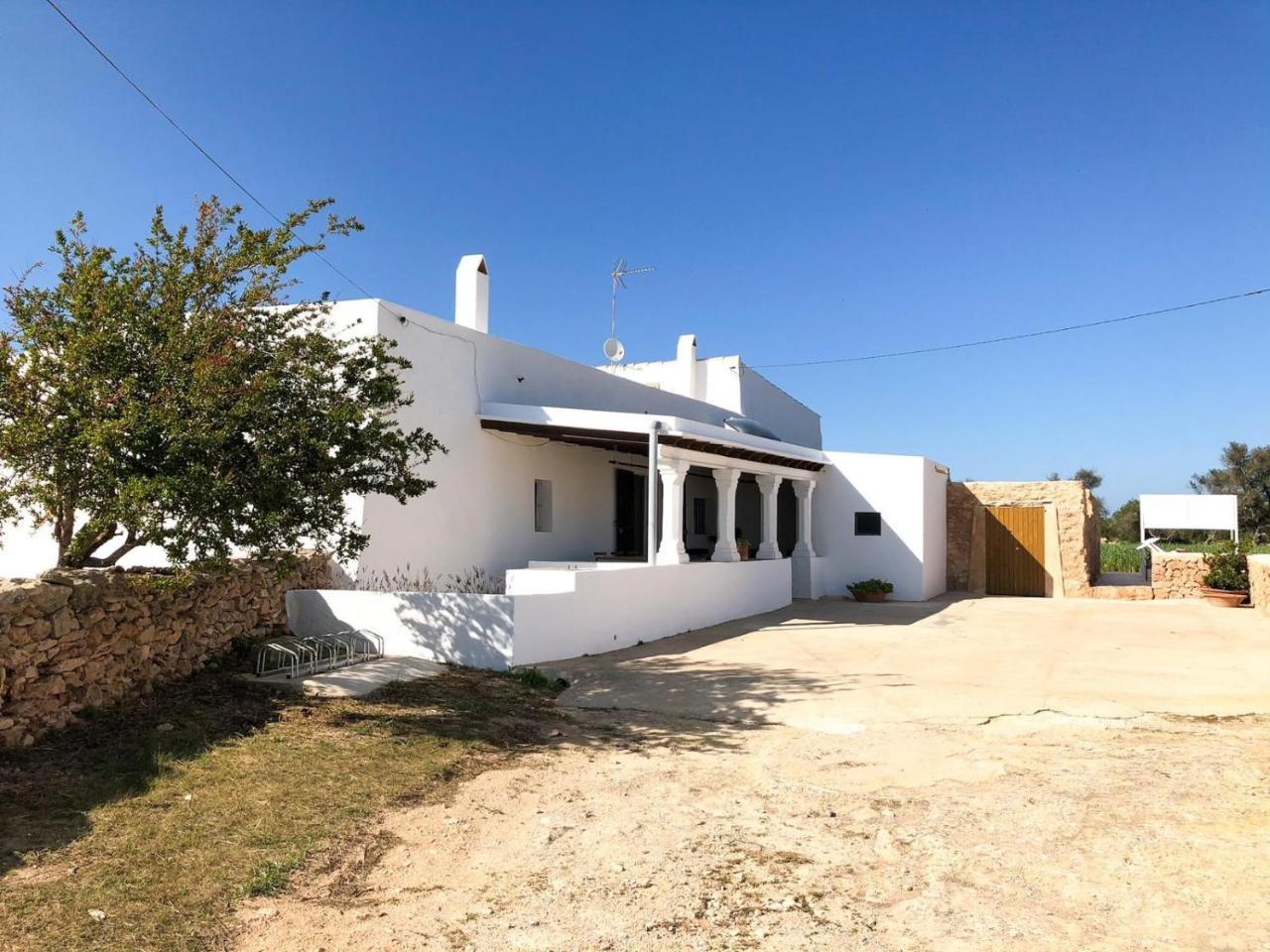
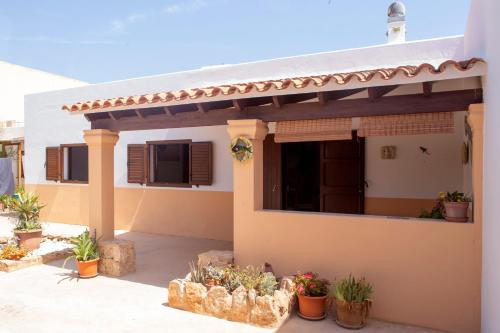
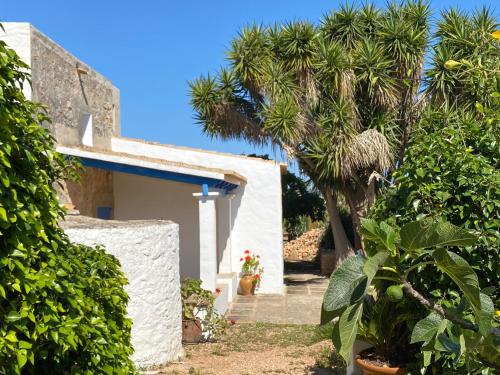
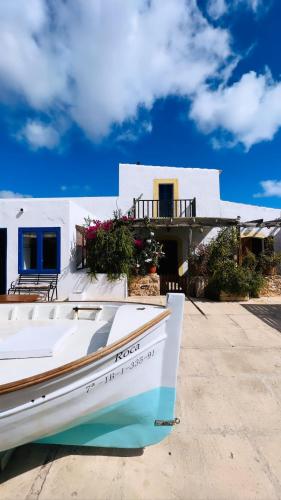
Sant Ferran is low-rise and lived in all year. Whitewashed houses stand along narrow lanes, there is a small church and a square where people stop, a grocery, a bakery and a handful of places to eat. There are no large hotels and no beach front; the sea is a short ride away in more than one direction. Shutters are green or blue, the pace is slow, and the village keeps a working feel outside summer.
Do not expect a seafront promenade or a long list of monuments. What Sant Ferran offers is a centre: somewhere to sleep, eat, hire a bicycle and set off from, with the beach bag already packed. In the evening the lanes fill slowly, families walk, cyclists come back, and the noise is conversation rather than traffic. That ordinariness is the reason many visitors return to this village rather than to the coast.
The village also does the ordinary work of an island settlement. There is a school, a small health post and a church that keeps its own hours, and outside summer the lanes belong to the people who live here. Visitors who stay a week tend to fall into the same pattern: bread in the morning, the beach in the middle of the day, a slow return in the evening.
The old school of Sant Ferran, now a cultural space, Formentera
What Sant Ferran offers is a centre: somewhere to sleep, eat, hire a bicycle and set off from.
03
Beaches within reach
Es Pujols is the nearest beach, a short ride north-east, with a curved sandy bay and a shallow entry. South of the village the coast opens into Platja de Migjorn, a long stretch of sand and low rock that runs for kilometres and is rarely crowded. Both are reached by bicycle in minutes. Cala Saona, on the western side, is a smaller cove with a wide sweep of sand and a west-facing sunset.
On the northern side of the island, beyond the lagoon, Ses Illetes and the sandbank towards Espalmador hold the clearest shallow water, and they are busiest in July and August. They sit inside Ses Salines Natural Park, where the rules on anchoring, landing and vehicle access apply. Wherever the swimming happens, the seabed is likely to be posidonia meadow or the pale sand it protects, and the water is clear because of it.
Water temperature shapes the swimming more than the air does. In May the sea is typically about 18 to 19 °C, which is bracing for long swims; by late June it reaches 22 to 23 °C and stays warm into September. Shade is scarce on Migjorn, so most swimming happens early or late, with a hat and plenty of water in between.
Es PujolsThe nearest sand to the village, shallow at the edge and easy with children.
Platja de MigjornA long, open south coast with room to spread out and low rock pools.
Cala SaonaA west-facing cove, best late in the day when the sun drops.
Ses IlletesClear shallow water inside the natural park; arrive early in high summer.
Estany PudentThe lagoon north of the village, with birds and salt history; not a swimming spot.
04
Sights near the village
Ca na Costa, a megalithic tomb about 4,000 years old, lies near Es Pujols and is the oldest known monument on the Pitiusas. Sant Francesc Xavier, a short ride west, has the fortified church of the 18th century, built as a refuge, and the island's main everyday services. The lagoons of Estany Pudent and Estany des Peix sit inside Ses Salines Natural Park, with birds, salt pans and flat paths along the water.
Further out, the Far de la Mola stands on the eastern plateau and the Cap de Barbaria lighthouse marks the southern cape, both reached by road and by the green routes. The island's watchtowers, built in the centuries of raids from the sea, appear along the coast. None of these needs a whole day. Together they fill the mornings around a beach afternoon, and each is a short ride from the village.
Ca na CostaA prehistoric tomb near Es Pujols, visible from the path beside it.
Sant FrancescThe island capital, with the fortified church and everyday shops.
The lagoonsEstany Pudent and Estany des Peix, salt water, birds and flat paths.
La MolaThe eastern plateau and its lighthouse, best in the morning light.
Cap de BarbariaThe southern cape and its lighthouse, open ground and a long horizon.
05
Who it suits
The village suits travellers who want a base rather than a view. Cyclists use it because the green routes and the lanes to Migjorn and the lagoons start here or pass close. Families like the flat riding, the shops and the short distances. People without a car manage well, with bicycles for hire in the village and buses along the main road, and walkers reach the coast paths within minutes.
It suits quieter evenings. There is no club strip and no promenade, so nights are short and early. Anyone wanting nightlife should look towards Es Pujols in season, which has more going on, or accept a bicycle ride home in the dark. Birdwatchers use it as well, with both lagoons a short cycle away. It also suits visitors outside July and August, when the village returns to its ordinary rhythm.
An old holm oak on a farm near Sant Ferran, Formentera06
Evenings and food
Eating in Sant Ferran means small places rather than a restaurant row. There are cafés and bakeries for breakfast, a grocery for picnic supplies, and kitchens serving fish, rice and grilled vegetables in the evening. Menus follow the island: dried fish in the colder months, tomatoes and melons in summer, and local wines. In high season, from July onwards, the tables fill early and many places take no bookings.
In summer some places put on live music, which has long been part of village evenings, and the square stays busy until late. Outside the season, opening days shorten and many kitchens close, roughly from November to April. The grocery and a few everyday places keep going because people live here all year, but a full choice of restaurants cannot be assumed in winter. Check opening days directly before building an evening around a particular kitchen, especially in May and October.
For supplies, the village covers the basics: bread, fruit, cheese, water and ice. Anything more specialised is a ride away in Sant Francesc Xavier, which has the island's main shops and stays open through the year. Buying food here rather than shipping it in keeps money in the village, and a picnic on Migjorn needs nothing more than a bag, a bottle and some shade.
07
Getting there and around
Formentera has no airport. Fly to Ibiza (IBZ), take a bus, a taxi or a booked transfer to Ibiza Town port, and then a ferry to La Savina. Fast ferries take about 30 to 35 minutes; conventional ferries take about an hour. Sailings are frequent in season and fewer in winter. From La Savina, Sant Ferran is a short drive or bus ride, about 4.9 km away in a straight line.
Once in the village, a bicycle is the simplest way to move. The island is flat, distances are small, and the signposted green routes link Sant Ferran with the lagoons, the coast and La Mola. Island buses run along the main roads, with more services in summer. Scooters and small cars can be hired, but in high season the Consell de Formentera caps the number of visitor vehicles, so check before booking.
By airFly to Ibiza, then take a ferry from Ibiza Town port to La Savina.
From the portSant Ferran de ses Roques is about 4.9 km from La Savina in a straight line.
By bicycleFlat roads and signposted green routes make cycling the practical way to the beaches.
By busIsland services run along the main roads, with more of them in summer.
Check before you goVisitor vehicle numbers are capped in high season, and ferry timetables change from year to year. Check the Consell de Formentera and the ferry operators before booking.
08
When to go, and visiting lightly
May, June, September and October bring warm water and fewer people. The sea is typically about 18 to 19 °C in May, 22 to 23 °C in June, 25 to 26 °C in August and 23 to 25 °C in September; these are typical figures, not a forecast. July and August are the busiest weeks, when visitor vehicles are capped and the shallow water at Ses Illetes fills early. Outside roughly November to April, much of the island's tourist business closes.
Visiting lightly here means respecting the posidonia that keeps the water clear. Anchoring over the meadows is regulated by a Balearic decree, and mooring buoys are installed in some bays in summer; use them or anchor over sand. Do not take sand, shells or seagrass from the beach, keep to paths across the dunes, and give the Pitiusan wall lizard room. Carry water on the green routes, and take everything back with you, including picnic waste.
Protect itThe clear water is the work of posidonia meadows. Use the mooring buoys where they exist, anchor over sand, and leave seagrass and sand where they are.
Where to wake up
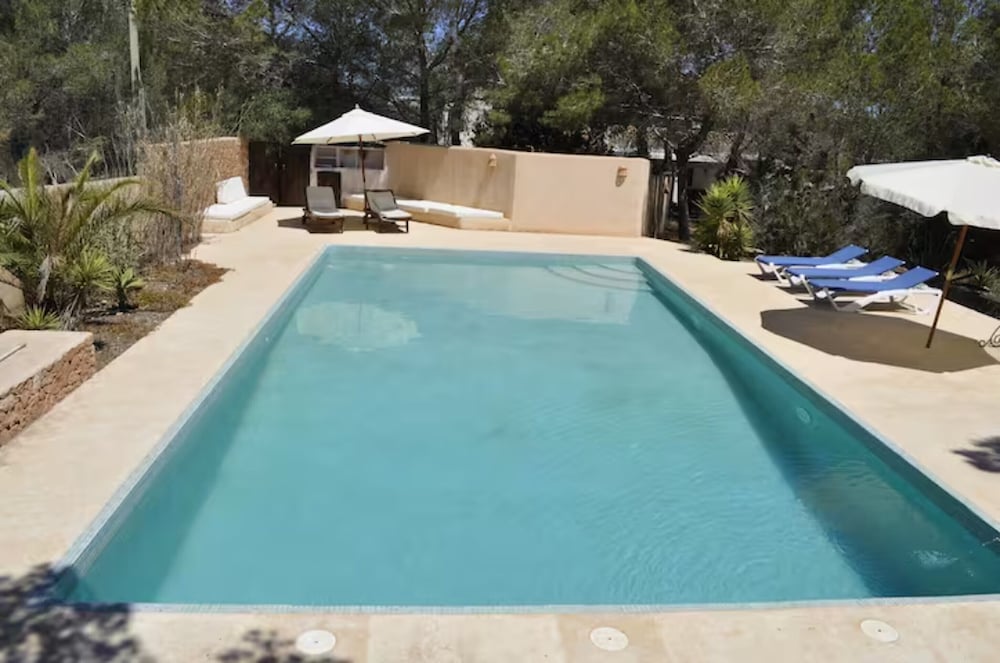
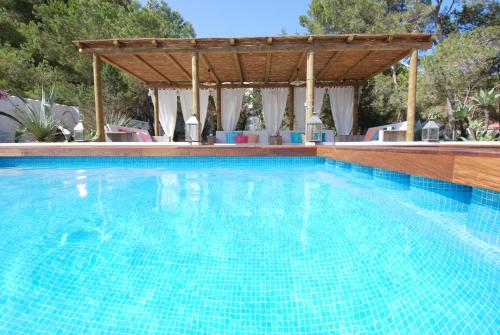
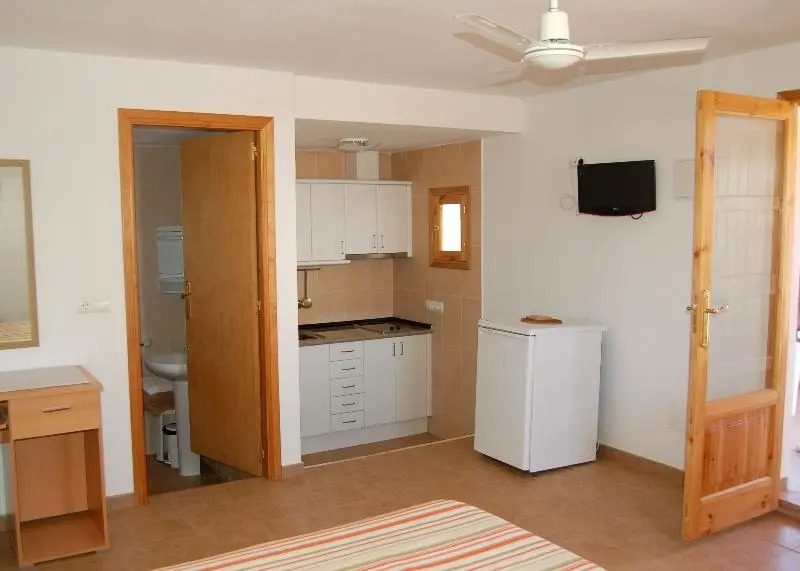
Stays in Sant Ferran
Stays in Sant Ferran: the first 12 of 19 stays in the IMPT hotel database in or close to Sant Ferran de ses Roques, five-star first, then four-star, then by guest score. Each button opens live prices for your dates in the IMPT app.
Sant Ferran de ses Roques sits near the middle of Formentera, on the road between Sant Francesc Xavier and Es Pujols. The Estany Pudent lagoon lies to the north and the Migjorn coast to the south. La Savina port is about 4.9 km away in a straight line, and the beaches at Es Pujols and Migjorn are a short cycle ride from the village.
How far is Sant Ferran de ses Roques from La Savina port?
About 4.9 km in a straight line. The road is a little longer, and the trip takes minutes by car, bus or bicycle. Ferries from Ibiza Town arrive at La Savina, where bicycles and cars can be hired. Allow time at the port in high season, when several boats can arrive close together and the road fills.
How do you reach Sant Ferran de ses Roques from Ibiza Airport?
Formentera has no airport. Fly to Ibiza (IBZ), then travel the short distance to Ibiza Town port and take a ferry to La Savina, about 30 to 35 minutes by fast ferry or roughly an hour by conventional ferry. From La Savina, Sant Ferran is a short drive, bus ride or cycle. Check ferry timetables before travelling, especially outside summer.
Can you stay in Sant Ferran de ses Roques without a car?
Yes. The village is flat and compact, bicycles can be hired locally, and island buses run along the main roads with more services in summer. The green routes connect the village with the lagoons, the coast and La Mola. A car helps for early starts and for Cap de Barbaria, but it is not needed for a week based here.
Which beaches are closest to Sant Ferran de ses Roques?
Es Pujols is the nearest, a short ride north-east, with a shallow sandy bay. South of the village, Platja de Migjorn runs for kilometres and rarely feels crowded. Cala Saona, a west-facing cove, is a longer ride or a short drive. Ses Illetes, beyond the lagoon, has the clearest shallow water and is busiest in July and August.
What can you see near Sant Ferran de ses Roques?
Ca na Costa, a megalithic tomb about 4,000 years old, is near Es Pujols. Sant Francesc Xavier has the fortified 18th-century church. The lagoons of Estany Pudent and Estany des Peix lie within Ses Salines Natural Park. Further out are the Far de la Mola and the Cap de Barbaria lighthouse, both reached by road and by the green routes.
What are evenings like in Sant Ferran de ses Roques?
Quiet. There is no club strip or promenade, so nights centre on a few places to eat, the square and, in summer, live music in some venues. Tables fill early in high season and many places take no bookings. Anyone wanting a later night heads to Es Pujols in season, a short cycle ride away, or accepts an early start instead.
Does Sant Ferran de ses Roques stay open in winter?
The village is lived in all year, so the grocery and some everyday places keep going. Much of the island's tourist business closes roughly from November to April, however, and kitchens and shops shorten their days. Check opening times directly before planning an evening out or a late arrival, particularly in May and October, when the season changes.
When is the best time to visit Sant Ferran de ses Roques?
May, June, September and October give warm sea, fewer people and open businesses. July and August are busiest, visitor vehicles are capped and the shallow beaches fill early. Sea temperatures are typically about 18 to 19 °C in May and 23 to 25 °C in September. Winter is quiet, with many closures, so check what is open before booking.