Mahón-Menorca cheese is the island's protected cheese, made from Menorcan cow's milk and rubbed with oil and paprika. Several farms welcome visitors, mostly around Es Mercadal and the slopes of Monte Toro.
All yearbest time
Es Mercadalnearest area to stay
17.0 kmfrom MAH, straight line
A farm visit on Menorca is a short, practical morning or afternoon: you see the cows, hear how the milk becomes cheese, walk past the drying and curing rooms, and finish with a tasting. The island's protected cheese is the point. Book ahead, because most farms receive visitors by arrangement rather than at fixed hours.
01
What the cheese is
Mahón-Menorca cheese is made on Menorca from the milk of the island's own breed of cow, a small, dark animal that grazes the fields around Es Mercadal and along the north coast. The cheese holds a protected designation of origin, which means the milk, the making and the maturing all happen here, under rules that the denomination sets and inspects. The result is a firm, slightly salty cheese with a rind that ranges from pale butter to deep orange.
It comes in three broad stages of maturity. Semi-cured is soft enough to spread and mild enough to eat in quantity; cured is firmer, saltier and better with a knife; the long-aged wheels are dry, sharp and best in small pieces. The rind is rubbed with oil and paprika as the cheese matures, which gives it colour and a faint pepperiness that the paste itself does not have. Ask which one you are tasting.
The cheese is named for the port, not for a town where it is made. The designation covers the whole island, so a farm in the west can make a cheese with the same name as one above Es Mercadal. Historically the wheels went out through Maó harbour to mainland Spain and beyond; the salt and the firm rind both helped it survive the crossing, and the cheese is still made to that logic, pressed hard and salted firmly.
The rind is rubbed with oil and paprika, and that is where the colour comes from.
02
How a farm visit works
Most visits run in the morning, when the animals are being fed and the milk is arriving, and last an hour or so. You will usually see the milking parlour, the vat where the curd is cut and heated, and the room where the wheels are turned and rubbed. The guide is normally someone from the family that farms the place, which means the questions you ask get answered properly.
The tasting at the end is the part most people remember. Expect a board of two or three maturities, bread, olive oil and perhaps a little jam or honey, with a glass of something local. Portions are small on purpose: the cheese is salty and rich, and a little goes a long way. If you like one of them, the farm usually sells wheels and wedges to take away, and will cut a piece to the size you ask for.
Book by messageRing or write to the farm before you travel, as most visits are arranged rather than fixed.
A whole morningThe visit and the tasting are unhurried, so do not squeeze them between two other stops.
Ask about languageSay when you book if the visit needs to be in English rather than Catalan or Spanish.
GroupsLarger parties should fix the date well ahead, because tasting rooms and kitchens are small.
Mahón-Menorca cheese on sale at the market in Maó03
Getting there
The cheese farms cluster inland, around Es Mercadal and on the lower slopes of Monte Toro, with others scattered across the island's interior. There is no formal cheese route to follow, so the practical approach is to pick one farm, reach it by car and combine it with a walk or a village. Roads are narrow and unsigned in places; a map that works offline is worth having.
A car makes the day simple: the farms sit off the main Maó to Ciutadella road, and buses on that road stop at Es Mercadal but rarely at the farm gates. Cycling works if you are comfortable on minor roads with traffic and heat. From Maó the drive is short; from Ciutadella it takes longer but the road across the middle is straightforward. Check current bus times with the island operator.
Check before you goFarms set their own visiting days and many close to visitors from November to April. Confirm with the farm, and check the Consell Insular de Menorca for current listings.
04
The best time to go
Spring is the best of it. From March the herds are out on the grass and there is real work going on in the yard, so a morning visit has something to watch as well as something to taste. Autumn is the other good window: the heat has gone, the light is long and the curing rooms are full from the year's making. High summer works, though mornings are kinder than afternoons.
Winter is quiet. Many farms that take visitors close from November to April, and the ones that keep working are busy with animals rather than with guests. If you are on the island out of season, ask whether a visit is possible rather than assuming it. The main towns stay open, and the cheese you buy in Maó or Ciutadella in January was made months earlier.
Whatever the season, the wind decides the day. The tramuntana blows from the north and makes an exposed farmyard cold even in May, while a still morning in October can be warmer than June. A visit is indoors for part of the time, which helps, but you will be outside. Check the forecast the night before and dress for the wind, not just the temperature. Rain is rare in summer and unpredictable in spring; a light waterproof costs nothing to carry.
05
How to taste it well
Serve it at room temperature, cut into thin wedges or rough shards, with bread that has some crust and a little oil. Semi-cured is the one to put on the table first; cured and aged come after, in that order, so the salt builds rather than overwhelms. On Menorca it often appears simply, with tomato, oil and pepper, or melted over vegetables. Keep it out of the fridge for half an hour before serving.
Buying is easy. Supermarkets on the island stock it, the markets in Maó and Ciutadella sell it, and the farms sell it at the door. Buying at the farm keeps more of the value with the people who made it, and you can taste before choosing. Wedges travel better than whole wheels; a vacuum-packed piece survives a flight home in hold luggage, though soft semi-cured does not improve with time.
Read the labelThe designation mark confirms the milk and the making both happened on Menorca.
Thin slicesCured and aged cheese is salty; a thin shard on bread is the right amount.
Room temperatureTake it out of the fridge half an hour before serving, never straight from the cold.
Bread and oilThe simplest way to eat it, and the way most islanders do.
Native Menorcan cows in a field, Menorca06
Doing it lightly
Dairy farming shapes this island as much as tourism does. The cows graze outside, the fields are bounded by dry stone walls that need mending, and the cheese exists because a protected designation keeps the whole chain, from grass to rind, on Menorca. Visiting a working farm means accepting mud, animals, flies and noise, and taking the place as it is rather than as a visitor attraction. Ask before photographing people at work.
Buy what you will eat. A wedge finished within a week is better than a wheel that dries out in a cupboard, and the farms will cut to size. Take a cool bag rather than asking for more plastic, refuse the extra bag when you can, and keep the rind, which is edible and carries most of the paprika. Leftover ends go into a sauce or over pasta, not into the bin.
Protect itThe designation keeps the milk, the making and the jobs on Menorca. Buying a piece at the farm or in a town market does more for that than any souvenir tin.
07
What to bring
You do not need much. A farm visit happens in a yard and a couple of working rooms, so wear shoes that can take muck and a layer you can take off, because the cheese rooms are warm and the yards are not. A cool bag in the boot matters more than anything else you carry: cheese bought at eleven in the morning will not enjoy a day on the beach.
Whether you need to book depends on the farm: some take visitors at set times, others only when the work allows. A short message the day before is normal courtesy and avoids a wasted drive. Groups and families with young children should say so when arranging, and anyone with a dairy allergy should ask about the tasting rather than assume there will be an alternative. Cash is useful in small villages.
Children are welcome at most farms, and the animals do the entertaining. Keep them away from machinery and from the milking area unless invited, and explain before you arrive that this is a workplace rather than a petting zoo. Pushchairs struggle on gravel and in yards; a carrier is easier. Dogs are usually better left behind, and should never be assumed welcome around dairy cattle. If anyone in the party is nervous of cattle, say so at the start; the family will keep the route calm.
Sturdy shoesYards are uneven and often wet, so sandals are a poor choice.
A cool bagThe most useful thing you can bring if you intend to buy cheese.
A spare layerCheese rooms run warm and the yard outside can be cold and windy.
A day's noticeA short message the day before is normal courtesy and saves a wasted drive.
08
What is nearby
Es Mercadal is the natural base: a small town at the foot of Monte Toro, with the sanctuary on top and views across the middle of the island. From there the road north runs to Fornells and the calas of the north coast, and the road east brings you to Maó and its long harbour. Combine the farm with a walk, a swim and a late lunch, and the day fills itself.
Nearby, the Camí de Cavalls passes through the same countryside, so a section on foot can bracket the visit, and the S'Albufera des Grau natural park is a short drive east for anyone who wants birds after cheese. Binibeca Vell and the south coast calas are a longer drive but doable in a day. If the weather turns, Maó harbour and the old town of Ciutadella fill a wet morning without difficulty.
Where to wake up
Stays near Mahón-Menorca cheese
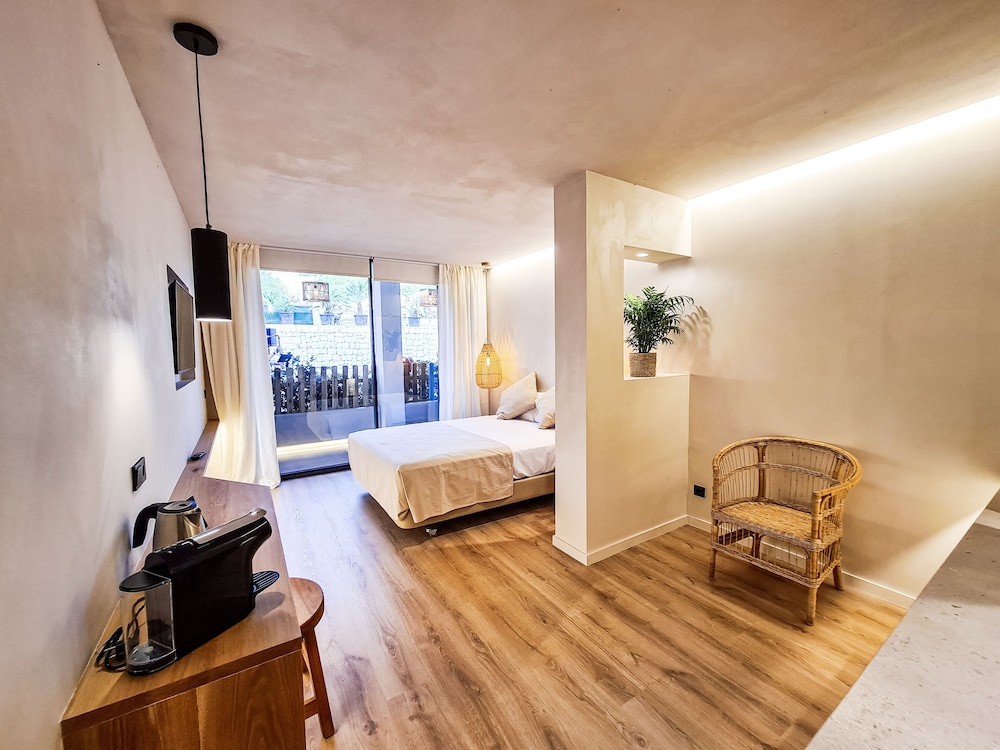
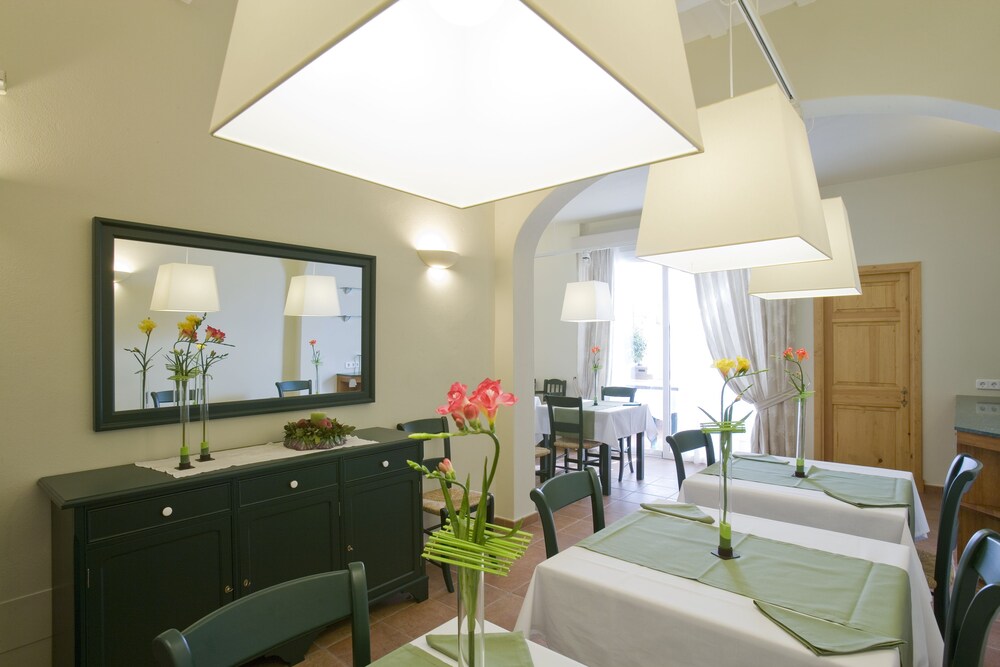
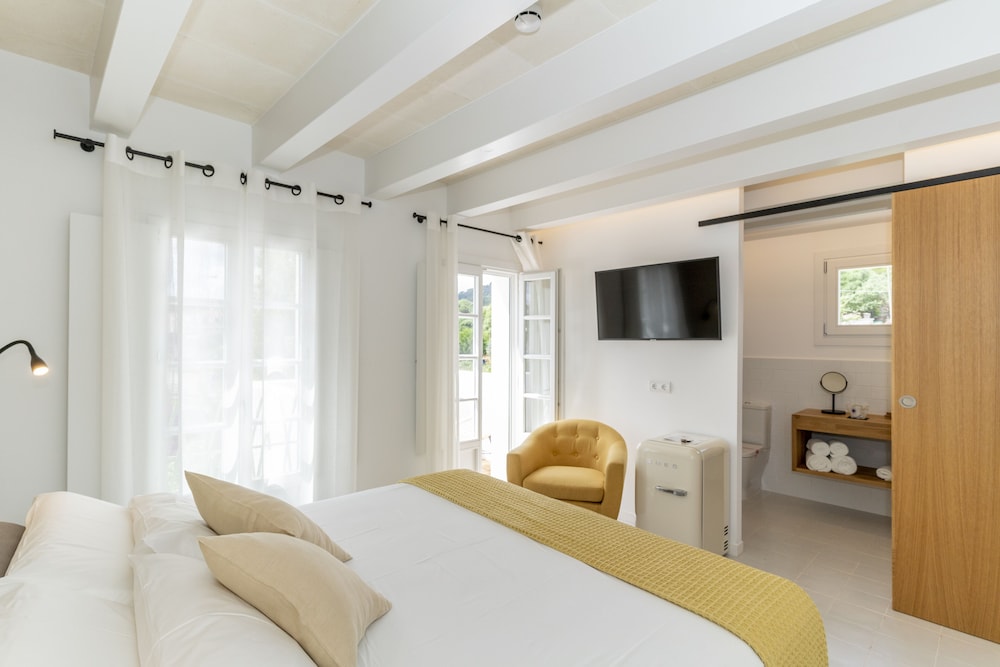
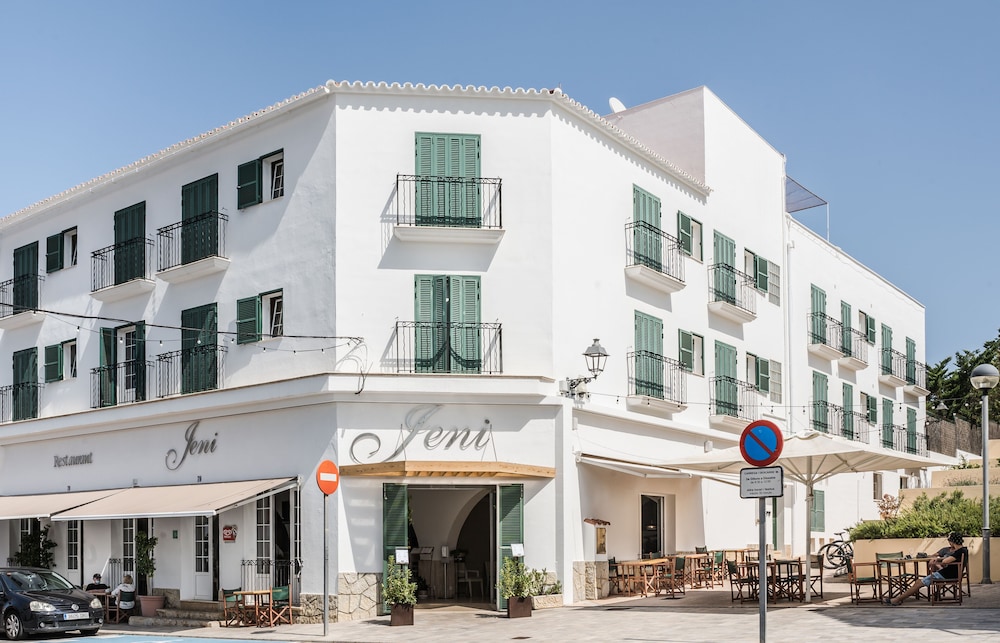
Stays near Mahón-Menorca cheese: the first 6 of 9 stays in the IMPT hotel database in or close to Es Mercadal and Monte Toro, the nearest area to Mahón-Menorca cheese, five-star first, then four-star, then by guest score. Each button opens live prices for your dates in the IMPT app.
It is a cow's milk cheese, made on Menorca from the milk of the island's own breed of cattle, which grazes outside for much of the year. The milk is curdled, the curd is cut, pressed into moulds with rounded corners, salted and matured. The rind is rubbed with oil and paprika while it ages. The protected designation of origin requires the milk, the making and the maturing to happen on Menorca.
Can you visit a farm that makes Mahón-Menorca cheese?
Yes, several farms on the island receive visitors, usually by arrangement rather than at fixed opening hours. A visit takes in the milking area, the vat room and the curing room, and ends with a tasting of two or three maturities. Some farms sell cheese at the door as well. Not every producer takes visitors, so ask before you plan a drive.
Where are the Mahón-Menorca cheese farms?
Most of the farms that welcome visitors sit in the middle of the island, around Es Mercadal and on the lower slopes of Monte Toro, with others scattered through the interior. The designation covers the whole island, so the name does not point to one village. The practical approach is to choose one farm, drive there, and combine it with the town, the sanctuary or a walk.
When is the best time to visit a Mahón-Menorca cheese farm?
Spring and autumn are the kindest. In spring the herds are out and the yard is busy; in autumn the heat has gone and the curing rooms are full. High summer works if you go in the morning. Many farms stop receiving visitors roughly from November to April, so ask about dates before building a day around one.
Do you need to book a Mahón-Menorca cheese visit?
Usually, yes. Farms are working dairies, not visitor centres, and the person who shows you around is often the person who also has animals to feed. A message or a call the day before is normal, and a week ahead is better in summer. Confirm the time, the language of the visit and whether a tasting is included.
Which Mahón-Menorca cheese should you buy?
It depends on how fast you will eat it. Semi-cured is mild, soft and best within a few weeks; cured is firmer and saltier and keeps far longer; long-aged wheels are dry and sharp and go a long way in small pieces. Taste before choosing where you can, and ask the farm to cut a wedge rather than a whole wheel.
How should you store Mahón-Menorca cheese at home?
Keep it in the least cold part of the fridge, with the cut face wrapped so it does not dry out, and bring it to room temperature half an hour before serving. Cured and aged pieces keep for months; semi-cured is best eaten within a few weeks. A little surface mould on the rind of a cured cheese can be cut away, but a piece that smells wrong should go.
Can you take Mahón-Menorca cheese home in hand luggage?
Cheese is not a liquid, so airport security is not the obstacle; the limits are your airline's cabin allowance and the rules of the country you fly to. A vacuum-packed wedge travels best, and firmer cured cheese survives a journey better than soft semi-cured. Check with your airline before buying a whole wheel, and wrap it well for hold luggage.
Why does Mahón-Menorca cheese have a protected designation of origin?
The designation is a quality scheme: it fixes where the cheese may be made, which milk it uses and how it is matured, and it is inspected. For Menorca it keeps the whole chain, grass, cattle, dairy and curing room, on the island, which matters where tourism earns more per square metre than farming. It also protects the name from copies made elsewhere.
Photo credits: Helge Høifødt, CC BY-SA 4.0, via Wikimedia Commons; lhourahane, CC BY 2.0, via Wikimedia Commons; Alejandro Muñoz Cabrisas, CC BY-SA 4.0, via Wikimedia Commons.
Watch
Menorca
Menorca's coast in three scenes, ending with sunset at Fornells.
Captions are built in; the transcript is on the Menorca page.
Video: Raymond Petrik, Angelo Esposito, Agusti Perez on Pexels