The Estany des Peix is the calm, shallow water beside La Savina. On a quiet morning it is the easiest place on Formentera to put a paddle in.
Calm daysbest time
La Savinanearest area to stay
1.1 kmfrom La Savina port, straight line
The Estany des Peix is a shallow lagoon on the west side of Formentera, separated from the sea by a narrow sandbar at La Savina. Its water is flat, waist deep in places and sheltered from most swell, which makes it a practical place to kayak or paddleboard, especially when the wind is light. It sits inside the Ses Salines Natural Park.
01
What the lagoon is
The Estany des Peix is one of two lagoons at the north end of Formentera, the other being the larger Estany Pudent. A thin strip of sand and dune separates it from the sea at La Savina, so water moves in and out slowly and the surface stays flat. The lagoon is shallow, with sandy and silty patches, and it warms faster in spring than the open sea does.
Both lagoons and the land around them fall within the Ses Salines Natural Park, which also covers Ses Illetes, the Espalmador islet and the sea between Formentera and Ibiza. That status matters for anyone on the water: the lagoon and its margins are protected habitat, not a playground with a free hand. Salt and birds are the reasons the place is looked after as it is.
The shape is simple. A long, enclosed basin with a narrow mouth near the port, edges of low rock, sand and salt-tolerant plants, and a few small boat houses and slipways on the landward side. It is not a dramatic landscape. Its appeal is the stillness, the light and the ease of getting onto the water without committing to the open coast.
It is not a dramatic landscape. Its appeal is the stillness and the ease of getting onto the water.
02
Getting to Estany des Peix
The lagoon begins at La Savina, the port where ferries from Ibiza Town arrive, so the approach is short and flat. From the port buildings, walk west along the shore or take the lanes behind the harbour to reach the sandbar and the lagoon edges. The distance is small enough to cover on foot with a board under one arm, though the last stretch may be soft sand.
By bicycle or scooter, the roads around La Savina and the lane running down the lagoon's eastern side give easy access, and there are places to leave a bike near the port. Parking near the port fills quickly in high summer, so arriving early or on foot is simpler. The island bus network reaches La Savina, but services thin out outside the season, so check the island operator's current timetable.
If you are coming from elsewhere on Formentera, La Savina is the natural base. Es Pujols, Sant Francesc Xavier and Sant Ferran de ses Roques are all a short ride south and east. The lagoon is also an easy first stop off the ferry, before the rest of the island fills in.
On footFrom the port, the lagoon edge is a short walk west along the shore.
By bikeLanes behind the harbour reach the lagoon side, with parking near the port.
By busIsland buses serve La Savina, though the timetable is thinner out of season.
By carPort parking is busy in summer; arrive early or park further out.
A boat shed on the shore of the Estany des Peix, La Savina beyond, Formentera03
The best time to paddle
Wind decides everything here. The lagoon is sheltered but not enclosed, and a strong breeze from the north or west can push chop across open stretches and make the far side hard work. Calm days, usually early morning, are the best window. The light is also better then, before the sun climbs and the water turns bright and flat.
Spring and early summer give the pleasantest conditions: the water has warmed, the wind has not yet settled into its summer pattern and the lagoon is quiet. September and early October are similarly good, with warm water and fewer people. High summer is fine if you start early, but the middle of the day brings heat, glare and more traffic on the water.
Much of the visitor infrastructure around La Savina and Formentera generally closes roughly from November to April. The lagoon itself does not close, but rentals, guides and many nearby businesses do, so out of season you need your own craft and a plan for getting it there. Winter paddling is possible on a mild, still day, with a wetsuit and short ambitions.
Check before you goRental desks and guided trips are seasonal and open roughly April to October. Confirm current hours and whether booking is needed before you travel, and check the marine forecast for wind.
04
How to paddle it
Paddleboards and kayaks are both well suited. The lagoon is shallow enough that a board can be launched from the edge without a slipway, and a kayak can work the full length of the basin in an hour or so at an easy pace. Begin at the La Savina end and head along the quieter eastern shore, keeping away from moored boats and slipways where people are working.
Keep an eye on depth. Some patches are very shallow, and seagrass and silty bottom show through clear water. Standing up on a board in the shallows disturbs the bed, so paddle across on your knees or push out to slightly deeper water first. The lagoon's own meadows and margins are part of what the natural park protects, and they recover slowly.
Rentals are available in and around La Savina in season, along with guided trips that use the lagoon as a calm introduction before heading out. If you are hiring, ask about the route, the wind forecast and what happens if conditions change. If you are paddling independently, treat the lagoon as a small enclosed water and keep the plan modest.
Start earlyMorning brings less wind, softer light and quieter water.
Stay off the bedPush out to deeper water before standing on a board.
Keep clearLeave moored boats, slipways and working edges alone.
Carry waterThere is little shade on the water and the sun is strong.
05
Rules and doing it lightly
The lagoon lies inside the Ses Salines Natural Park, so the usual care applies and then some. Do not land on the low vegetated margins or cross sand and dune areas on foot. Do not disturb birds, especially in spring and on the shallows where they feed. Take everything back with you, including food wrappings and anything that blows off a board, and leave shells and plants where they are.
Anchoring and mooring over posidonia meadows is regulated under a Balearic decree, and mooring buoys are installed in some bays in summer. A paddleboard or kayak does not anchor, but the principle holds: do not drag, stand on or scrape the seabed. Where the park office or local signage sets out rules for the lagoon, follow them, and ask at the natural park office if you are unsure what applies.
Doing it lightly also means thinking about numbers. The lagoon is small, and a crowd of boards in one corner spoils it for everyone and for the wildlife. Spread out, keep voices low, and if the water is busy, come back another time. The point of paddling here is quiet, and quiet is easy to lose.
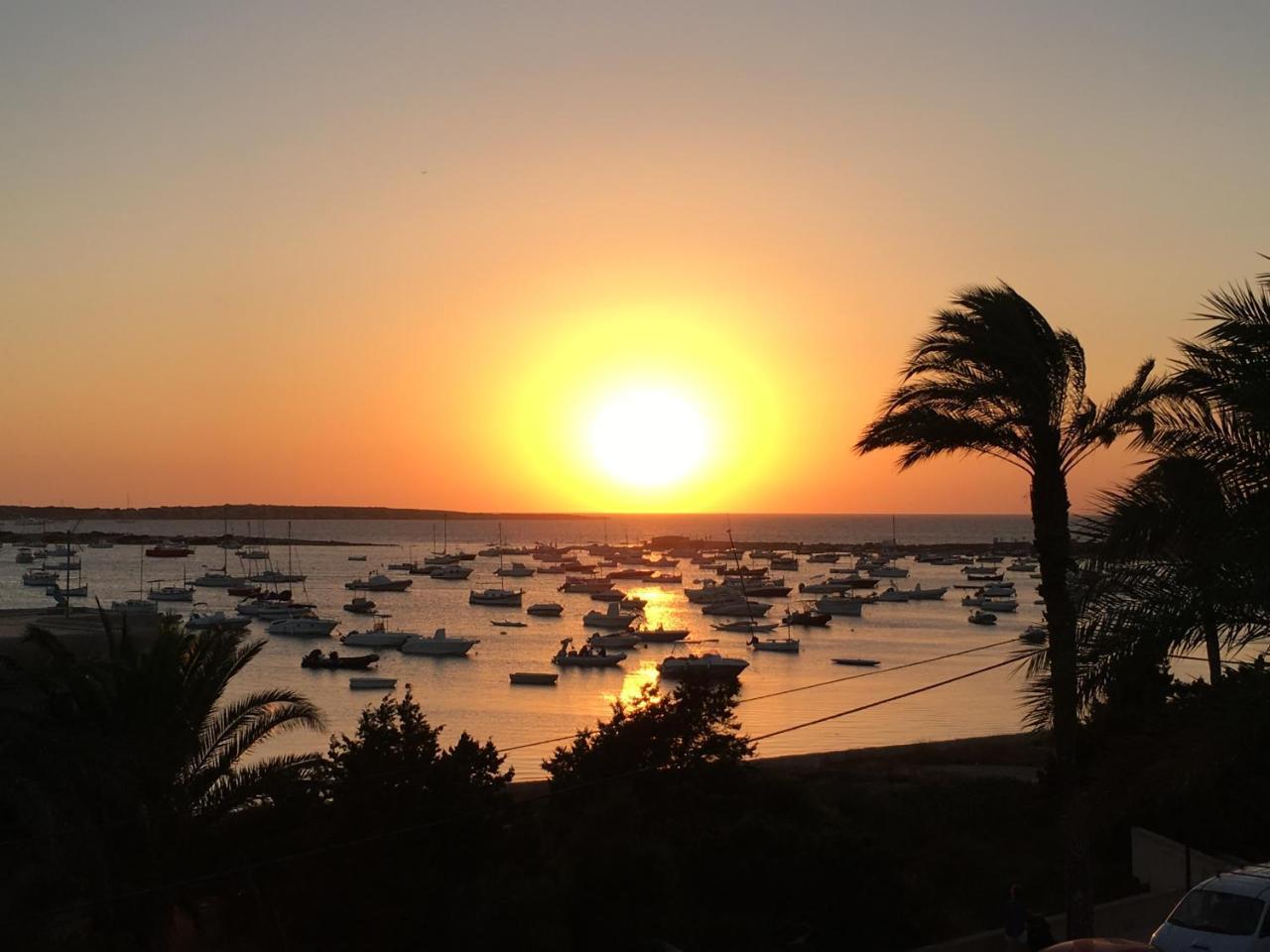
A boat on the Estany des Peix at dusk, Es Vedrà on the horizon, Formentera
Protect itThe lagoon is protected habitat within the Ses Salines Natural Park. Keep off the vegetated margins, give birds room and leave the seabed undisturbed.
06
What to bring
A hat, sunglasses, sun protection and drinking water are the basics. The lagoon has almost no shade, and reflected light off flat water is stronger than it looks. Wear footwear that can get wet for launching and landing on rough edges, and bring a light long-sleeved layer for the early morning and for the ride back. A dry bag keeps a phone and a map dry.
If you are paddling independently, bring your own board or kayak, a pump, a leash and a repair patch. A buoyancy aid is worth carrying, particularly with children or on any day when the wind might pick up. A waterproof watch or a phone in a dry case helps you keep to a sensible turnaround time rather than drifting past it.
For a first session, less is more. A board, a paddle, water and a hat will do. Anything valuable left on the shore should stay with someone or go in a bag that closes. There are no facilities out on the lagoon edges, so plan food, water and toilets around La Savina before or after rather than mid-paddle.
Sun coverHat, sunglasses and high-factor sun protection, with a long-sleeved layer.
WaterCarry more than you think, since there is no shade on the water.
FootwearSomething that can get wet for rough, stony launching edges.
Dry bagKeeps a phone and any paperwork dry and out of the water.
07
What is nearby
La Savina is the port and the natural place to start or finish. It has the ferry terminal, a handful of streets, places to eat in season and access to the sandbar and the lagoon. From the port, the coast turns north towards Ses Illetes, where the sand is white and the water shallow and clear, and the Espalmador islet sits beyond, reachable by boat in season.
South along the west coast, Cala Saona is a small cove under low cliffs and a good place for a late swim and the sunset. Inland, Sant Francesc Xavier is the island's capital, with its fortified church, and Sant Ferran de ses Roques is a small village on the road east. Es Pujols, further east, has the island's busiest summer streets and the megalithic tomb of Ca na Costa nearby.
For a fuller day, the green routes for walking and cycling cross the island and link the villages and the coast without much traffic. Birdwatchers do well at the lagoons, where the shallows and margins draw waders and waterbirds, particularly on passage. If the wind rules out paddling, the lagoons still reward a slow walk with binoculars.
Check before you goVehicle numbers on Formentera are capped in high season. Check the Consell de Formentera before bringing or hiring a car, and confirm bus and ferry times with the operators.
08
Practical notes
Sea temperature in the lagoon runs warmer than the open sea in spring, but the typical Mediterranean figures still apply offshore: roughly 18-19 °C in May, 22-23 °C in June and 25-26 °C in August. A short wetsuit or top is useful early and late in the season, and for anyone who feels the cold. In February and March the water is around 14-15 °C, which is cold enough to keep sessions short.
The emergency number is 112. Mobile coverage around La Savina is generally good, but do not rely on it out on the water. Tell someone where you are going and when you expect to be back, even for a short paddle, and keep the session inside the lagoon rather than crossing to the open coast unless you know the conditions and the boat traffic.
The tourist tax, the Balearic sustainable tourism tax, is charged per person per night by your accommodation, at rates that depend on the type and category of the property and the season. Rates change and children under 16 are exempt, so check the Govern de les Illes Balears site for what applies to your stay rather than assuming a figure.
EmergencyDial 112 for emergency services anywhere in Spain.
Water temperatureWarmer in the lagoon than offshore, but cold early and late in the year.
Tourist taxCharged per person per night by your accommodation; check current rates.
Off seasonMany businesses close roughly November to April; confirm before travelling.
Where to wake up
Stays near the Estany des Peix
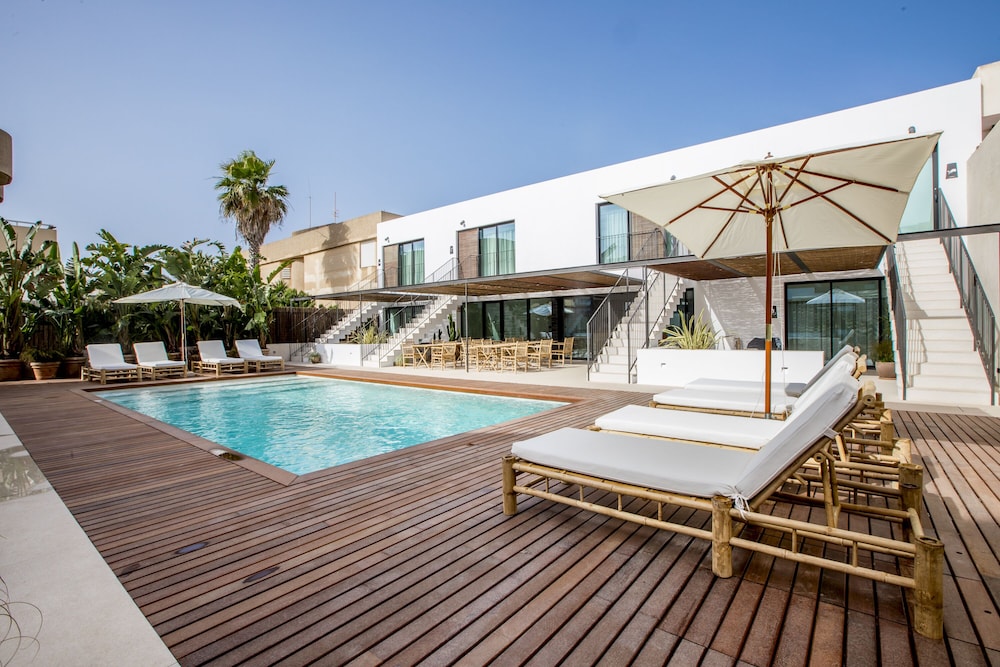
Stays near the Estany des Peix: the first 6 of 24 stays in the IMPT hotel database in or close to La Savina, the nearest area to Paddle the Estany des Peix, five-star first, then four-star, then by guest score. Each button opens live prices for your dates in the IMPT app.
Is the Estany des Peix good for beginners on a paddleboard?
Yes. The Estany des Peix is shallow, enclosed and sheltered from most swell, so the water stays flat on calm days. Launch from the edge near La Savina, push out to slightly deeper water before standing, and keep to the quieter eastern shore. Wind is the main variable, so pick a still morning for a first session.
Do you need your own kayak to paddle the Estany des Peix?
Not necessarily. Rental desks around La Savina hire boards and kayaks in season, roughly April to October, and guided trips use the lagoon as a calm introduction. Outside those months, most rental businesses close, so you need your own craft. Confirm current opening and whether booking is needed before you travel.
When is the best time of year to paddle the Estany des Peix?
Spring and early summer are the pleasantest, with warm water, lighter wind and few people. September and early October are similar. In high summer, start early before the heat and the breeze build. Winter paddling is possible on a mild, still day with a wetsuit, but rentals and guides are closed.
Can you swim in the Estany des Peix?
The lagoon is shallow and warm, and people do wade and swim near the edges, but it is protected habitat rather than a beach. Keep off the vegetated margins, avoid stirring up the silty bed, and use the open sea beaches nearby for a proper swim. There are no lifeguards or facilities at the lagoon.
What wildlife might you see while paddling the Estany des Peix?
The shallows and margins draw waterbirds and waders, particularly on passage in spring and autumn. The lagoon sits inside the Ses Salines Natural Park, so give birds room and do not approach the edges where they feed. Keep voices low and keep a distance, especially in nesting season.
Is the Estany des Peix inside a protected area?
Yes. The lagoon lies within the Ses Salines Natural Park, which also covers Ses Illetes, the Espalmador islet and the sea between Formentera and Ibiza. That means care over the seabed, no landing on vegetated margins, no disturbance to birds and no litter. Local signage and the natural park office set out what applies.
How do you reach the Estany des Peix from La Savina?
The lagoon begins right at La Savina, the ferry port. Walk west along the shore or take the lanes behind the harbour to the sandbar and the lagoon edges. It is a short distance on foot, though the last stretch can be soft sand. Bikes and scooters use the lanes on the eastern side.
Do you need a permit to paddle the Estany des Peix?
Paddling a kayak or board on the lagoon does not normally require a permit, but the water is protected habitat and rules can change. Anchoring and mooring over posidonia meadows is regulated under a Balearic decree. Check current signage and ask at the natural park office if you are unsure what applies to the lagoon.
What else is there to do near the Estany des Peix?
La Savina is the port and an easy base. Ses Illetes and the Espalmador islet lie north along the coast, Cala Saona is south for a sunset swim, and Sant Francesc Xavier and Sant Ferran de ses Roques are a short ride inland. The signposted green routes link the villages and coast for walking and cycling.