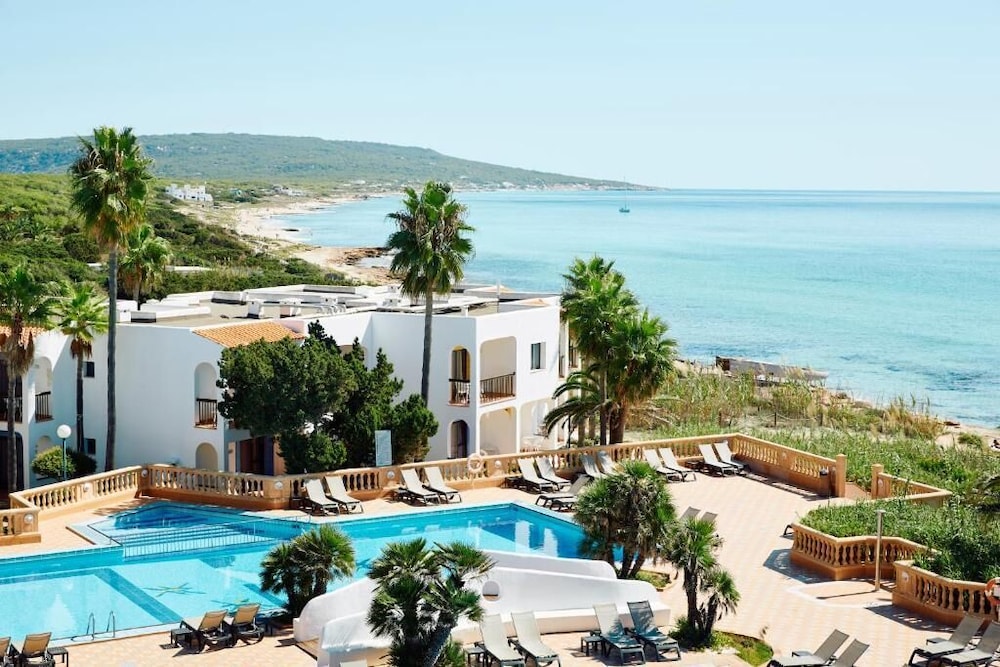
A long, open beach on the south coast of Formentera, backed by dunes and juniper, about 7.6 km from La Savina. What the Migjorn coast is like and how to base yourself here.
7.6 kmfrom La Savina port, straight line
38stays in the IMPT hotel database
Southcoast
Platja de Migjorn is not one beach but a long stretch of the south coast of Formentera, running east from Es Pujols towards Es Caló de Sant Agustí. Sand, low dunes and juniper sit behind it, and the water stays shallow a long way out. It suits people who want space, walking and slow days.
01
A long, open south coast
Platja de Migjorn is the southern edge of Formentera, a long line of sand that runs east from the outskirts of Es Pujols towards Es Caló de Sant Agustí. It is not one cove with a single car park and a single entrance. The beach repeats itself in stretches, divided by low rocky platforms and small points, and each stretch has its own track down from the road that crosses the island.
Behind the sand sit low dunes held together by juniper and mastic, and behind those the flat farmland of the island's centre. Because the coast faces open water and the seabed shelves gently, the sea here is usually calm and shallow a long way out, though a swell from the south can change that in an afternoon. Posidonia meadows offshore keep the water clear. There is little shade of any kind.
02
Beaches along the coast
The Migjorn coast is best understood in stages. At the western end, the beach runs into Es Pujols, where the village sits right behind the sand and access is easiest. East of there the stretches grow longer and emptier, reached by sandy tracks that leave the road between Sant Francesc Xavier and Es Caló. In high summer those tracks fill early, and the parking at the end of each is small.
Towards Es Caló the sand gives way to flat rock and the small boat houses that mark the eastern end of the beach. Inland, the Estany Pudent sits behind the western end of the coast, with shallow water, reeds and birds. A short drive west, Cala Saona is a different beach altogether, a small cove enclosed by low cliffs and popular at sunset. Each part of the coast has a different feel.
Access is the thing to plan. Each stretch has a track from the road, most of them unsigned and some of them rough. In July and August the small clearings at the end fill by mid-morning, and cars park along the verge, which narrows the track for everyone. Arriving early, or coming by bike, avoids most of it. Out of season, half the tracks are empty and the beach is quiet all day.
Es PujolsThe western end of the beach, with the village behind it and the easiest access.
The middle stretchesLong sections reached by tracks off the island road, with no facilities and plenty of room.
Es CalóThe eastern end, where sand turns to rock and boat houses line the shore.
Cala SaonaA small cove on the west coast, a short drive away and at its best in the evening.
Estany PudentThe shallow lagoon behind the western end of the beach, with reeds, birds and a path beside the water.
Platja de Migjorn at Es Mal Pas, Formentera03
Who it suits
Migjorn suits people who want a week of slow days rather than a programme. The water is shallow close in, which works well for children, and the length of the beach means there is usually space even in August. The beach is long enough that you can walk for an hour and still find an empty stretch. It also suits walkers and cyclists, since the green routes cross the island behind the dunes and the villages are close.
Much of the beach has no bar, no sunbeds and no shade, so a base here means carrying what you need for the day. Evenings are quiet. In season the nearest bars and shops are at Es Pujols, and year-round the villages of Sant Ferran de ses Roques and Sant Francesc Xavier have the most life. For a first visit of two or three nights, staying in a village and visiting the beach by day may work better. It does not suit anyone who wants everything on the doorstep.
The beach is long enough that you can walk for an hour and still find an empty stretch.
04
Evenings and food
Food on this coast follows the season. In summer there are beach bars and small places behind the sand at Es Pujols and near Es Caló, and most of them shut when the season ends. Year-round, the villages inland do the work: Sant Ferran de ses Roques has a cluster of places around its square, and Sant Francesc Xavier has more, along with the island's market. Fish, bread, tomatoes and olive oil are what to look for.
Evenings are the quiet part. The south coast faces open sea and the sun sets to the west, so the last light is best seen from Cala Saona or from Cap de Barbaria, both a short drive away. After that, people eat late and go to bed early. Out of season, the choice narrows to the villages, and in the depths of winter some kitchens close altogether, so it is worth checking before you set out.
05
Getting there and arrival
Formentera has no airport. The route is a flight to Ibiza (IBZ), a transfer to Ibiza Town port, and a ferry to La Savina. Fast ferries take about half an hour; conventional ferries take about an hour. Sailings are frequent in season and fewer in winter. From La Savina, Platja de Migjorn is about 7.6 km away in a straight line, and a little further by road. Bicycles can be hired near the port, and island buses run from La Savina.
From the airport, the simplest approach is a bus or taxi to Ibiza Town and the port, since the ferry leaves from there. Allow time between landing and sailing, particularly in August. On the island, the road from La Savina passes Es Pujols and Sant Ferran de ses Roques before turning east, and tracks lead down to the beach from it. Drivers should expect the last stretch to be sandy and narrow.
A boardwalk over the dunes at Platja de Migjorn, Formentera
Check before you goFormentera caps visitor vehicles in high season, and ferry timetables change through the year. Check the Consell de Formentera and the ferry operators before booking.
06
Getting around the island
The island is flat and small, and the bicycle is the natural way to move around it. Signposted green routes, the circuits verds, link the villages, the lagoons and the coast, and many are on quiet tracks rather than roads. Distances are short: from the beach to Sant Francesc Xavier or Sant Ferran de ses Roques is a matter of a few kilometres. In summer, cycling in the middle of the day is hot work, so early and late are better.
Buses run between the port, the villages and the main beaches, with more services in summer and a reduced timetable out of season. Taxis are limited in number. Anyone bringing a car should know that parking at the beach tracks is small and fills early in July and August, and that some tracks are better left alone in a low vehicle. Scooters are another option, with the same caveats about sand.
The green routes are signposted and mostly flat, and they link the lagoons, the villages and the coast without putting you on the main road. A bicycle with a basket or a small pannier carries water and shade for the day. Locks matter in the villages. Lights are worth having if you plan to ride back after sunset, since the tracks between the beach and the road are unlit.
By bikeThe green routes and quiet lanes make the villages and the beach easy to link.
By busIsland buses connect La Savina, the villages and the main beaches, with fewer services out of season.
On footPaths lead from the road down to the sand, and the beach itself is walkable for a long way.
By carUseful for carrying water and shade, but beach parking is limited in high summer.
07
When to go
Late spring and early autumn are the best of it. In May and June the water is warming and the beach is quiet on weekdays; in September and early October the sea is still warm and the light softens. August is the busiest month, when the island fills and the beach tracks are contested. Sea temperatures run from about 18-19 °C in May to about 25-26 °C in August.
Out of season, much of the tourism business closes from roughly November to April. Beach bars, seasonal buses and many restaurants shut, and the beach is left to walkers and residents. The main villages stay open year-round, ferries and flights are fewer, and the weather is uncertain: some winter days are mild and clear, others wet and windy. The quiet has its own appeal, but plan around shorter days and check what is open before you arrive.
08
Visit lightly
The beach looks the way it does because of what lies offshore. Posidonia oceanica, a seagrass found only in the Mediterranean, grows in meadows off this coast and holds the sand in place, keeps the water clear and shelters fish. Anchoring over the meadows is regulated by a Balearic decree and mooring buoys are installed in some bays in summer. Take a buoy where one exists, or anchor on sand.
On land, the dunes behind the sand are held by juniper and other low scrub with deep roots, and they are easily damaged by feet. Keep to the paths between the beach and the road, and do not pick or cut the plants for shade. The Pitiusan wall lizard lives here and on the islets, and it is harmless. Litter, cigarette ends and picnic remains all end up in the sea eventually.
Stay on pathsThe dunes are held together by juniper roots and wear quickly underfoot.
Anchor on sandMooring buoys are installed in some bays in summer; use one where it exists.
Carry waterThere is little shade and no reliable supply along the middle stretches of beach.
Leave no traceTake everything back to the village, including fruit peel and cigarette ends.
Protect itThe posidonia meadows, the dunes and the juniper are what make this coast. Keep off the dunes, anchor on sand and take your litter away.
Where to wake up
Stays in Migjorn
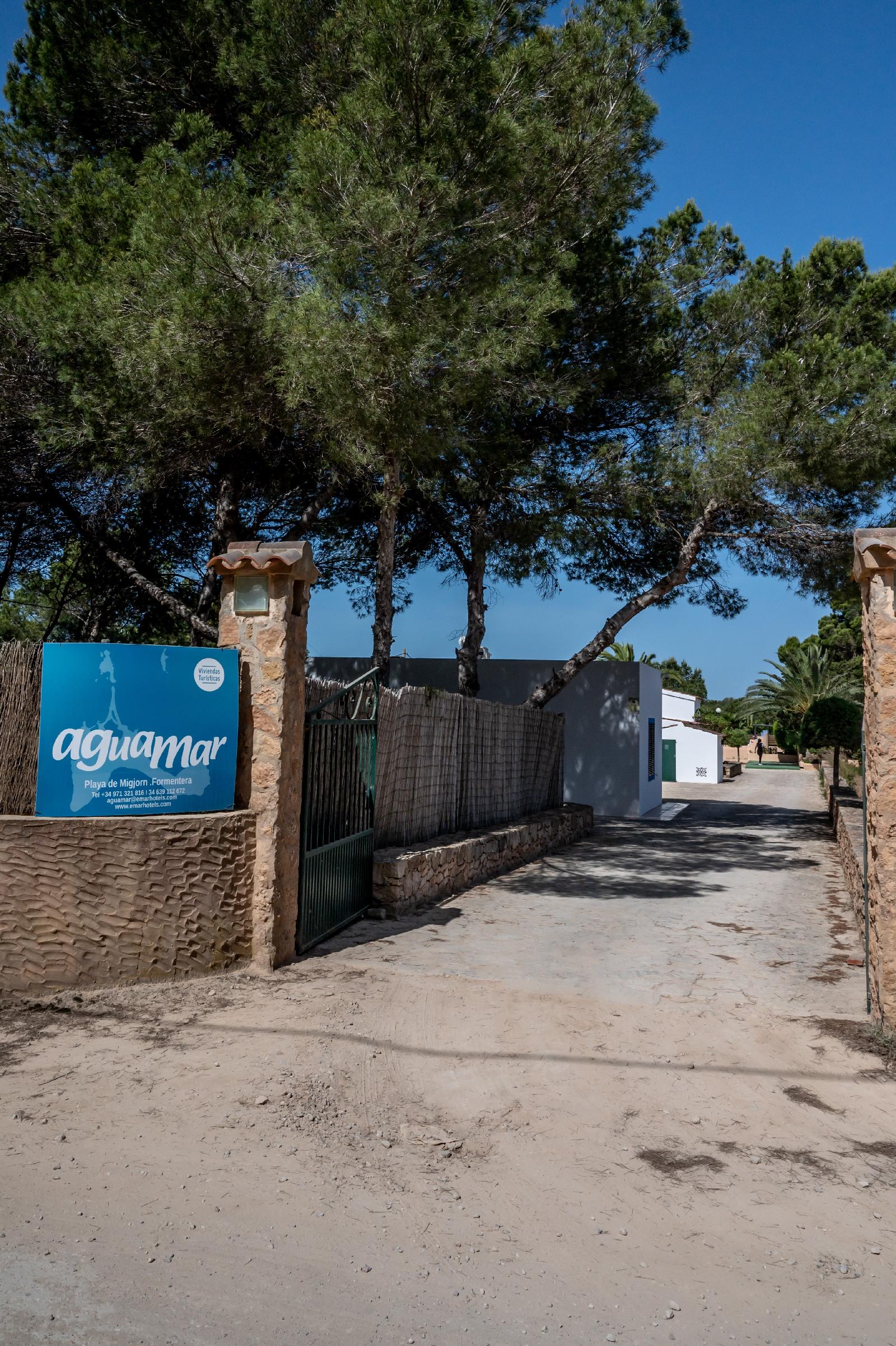
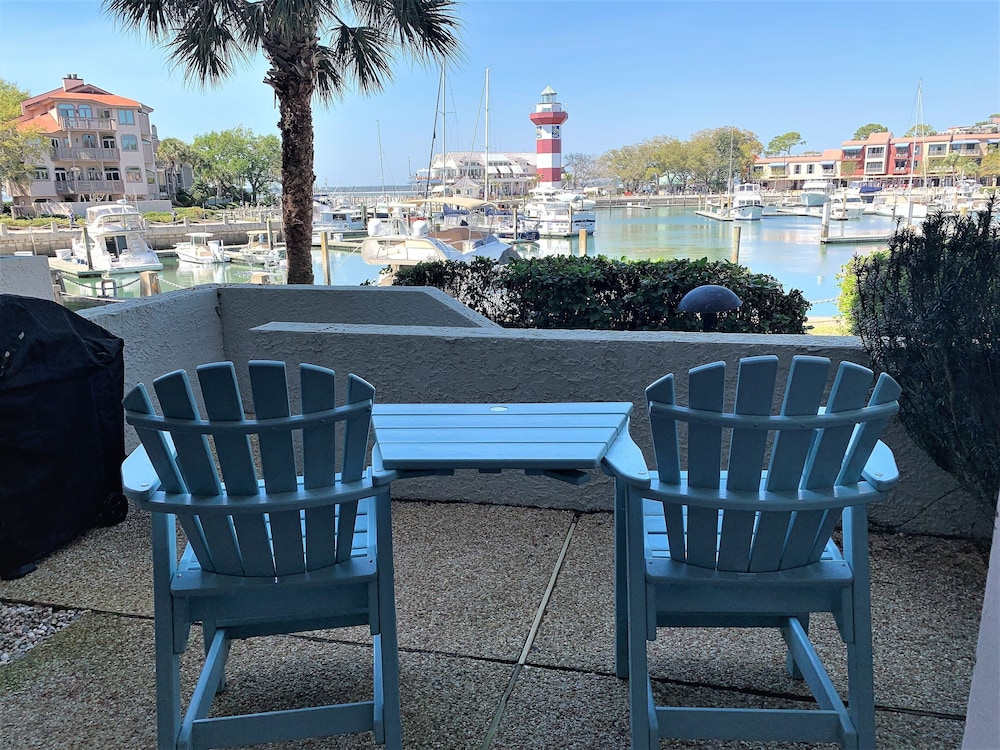
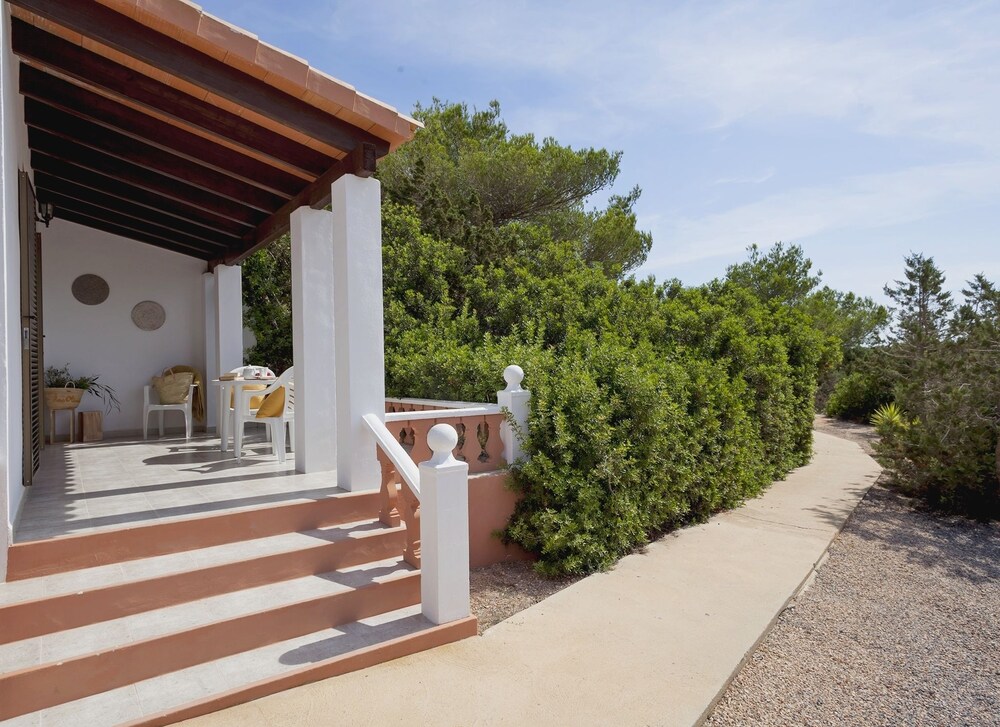
Stays in Migjorn: the first 12 of 38 stays in the IMPT hotel database in or close to Platja de Migjorn, five-star first, then four-star, then by guest score. Each button opens live prices for your dates in the IMPT app.
Platja de Migjorn is the long beach along the south coast of Formentera, running east from the edge of Es Pujols towards Es Caló de Sant Agustí. It faces open sea, with the Estany Pudent and the island's flat farmland behind it. It is not a single cove but a series of sand stretches divided by low rock.
How far is Platja de Migjorn from La Savina?
The beach lies about 7.6 km from La Savina in a straight line, and a little more by road. By bike the ride from the port is short and mostly flat, depending on where you stop. Buses run between La Savina, the villages and the main beach accesses, with more services in summer, and taxis cover the last stretch.
Is there an airport at Platja de Migjorn?
No. Formentera has no airport at all. Visitors fly to Ibiza (IBZ), travel to Ibiza Town port, and take a ferry to La Savina, from where Platja de Migjorn is a short drive or cycle. Fast ferries take about half an hour, conventional ferries about an hour, with fewer sailings in winter.
Which part of Platja de Migjorn is best for children?
The shallow water suits children all along the coast, and the western end near Es Pujols has the easiest access, the shortest walk from the road and the most facilities in season. Families who want quiet may prefer the middle stretches of Platja de Migjorn, but should bring shade, water and everything else they need for the day.
Can you get to Platja de Migjorn without a car?
Yes. Buses run from La Savina and the villages towards the main beach accesses, with more services in summer, and bicycles can be hired near the port. The green routes are signposted and mostly flat. Some of the smaller tracks down to the sand are a walk from the nearest stop, so plan the last part of the journey.
Are there restaurants and bars at Platja de Migjorn?
In summer there are beach bars and small places at Es Pujols and near Es Caló, and most close when the season ends. The middle stretches of Platja de Migjorn have nothing at all. Year-round, Sant Ferran de ses Roques and Sant Francesc Xavier have the widest choice. Out of season, check what is open before you set out.
What is the sea like at Platja de Migjorn?
The seabed shelves gently, so the water at Platja de Migjorn is shallow a good way out and usually calm, though a swell from the south can change it quickly. Posidonia meadows offshore keep the water clear. Typical sea temperatures run from about 18-19 °C in May to about 25-26 °C in August, dropping through the autumn.
When is the best time to visit Platja de Migjorn?
May, June, September and early October are the most comfortable. Platja de Migjorn is quieter than in August, the water is warm enough for long swims, and the light is softer. August brings crowds and full beach tracks. From roughly November to April much of the seasonal business closes and services are fewer.
Is Platja de Migjorn a good place to base yourself?
For a quiet week it works well, especially for walkers, cyclists and families with small children. There is little on the beach itself, so most people base themselves in Es Pujols, Sant Ferran de ses Roques or Sant Francesc Xavier and come down to the sand for the day. That arrangement suits a first visit.
Photo credits: Formesar, CC BY-SA 4.0, via Wikimedia Commons; Joan Gené, CC0, via Wikimedia Commons; diluvi.com Anna i Adria, CC BY 2.0, via Wikimedia Commons.
Watch
Formentera
Formentera from a drone: white sand, shallow turquoise water and boats at anchor.
Captions are built in; the transcript is on the Formentera page.